
Unbiased headlines. Facts, not spin.
Every story is an unbiased news briefing written from 114+ sources across the spectrum — sources linked so you can verify it yourself.
 health
Notable (5/10)
October 10, 2026 at 03:58 AM
health
Notable (5/10)
October 10, 2026 at 03:58 AM
Longevity Supplement Nicotinamide Riboside Fails to Slow Early Parkinson's in 410-Patient Phase III Trial, JAMA Study Finds
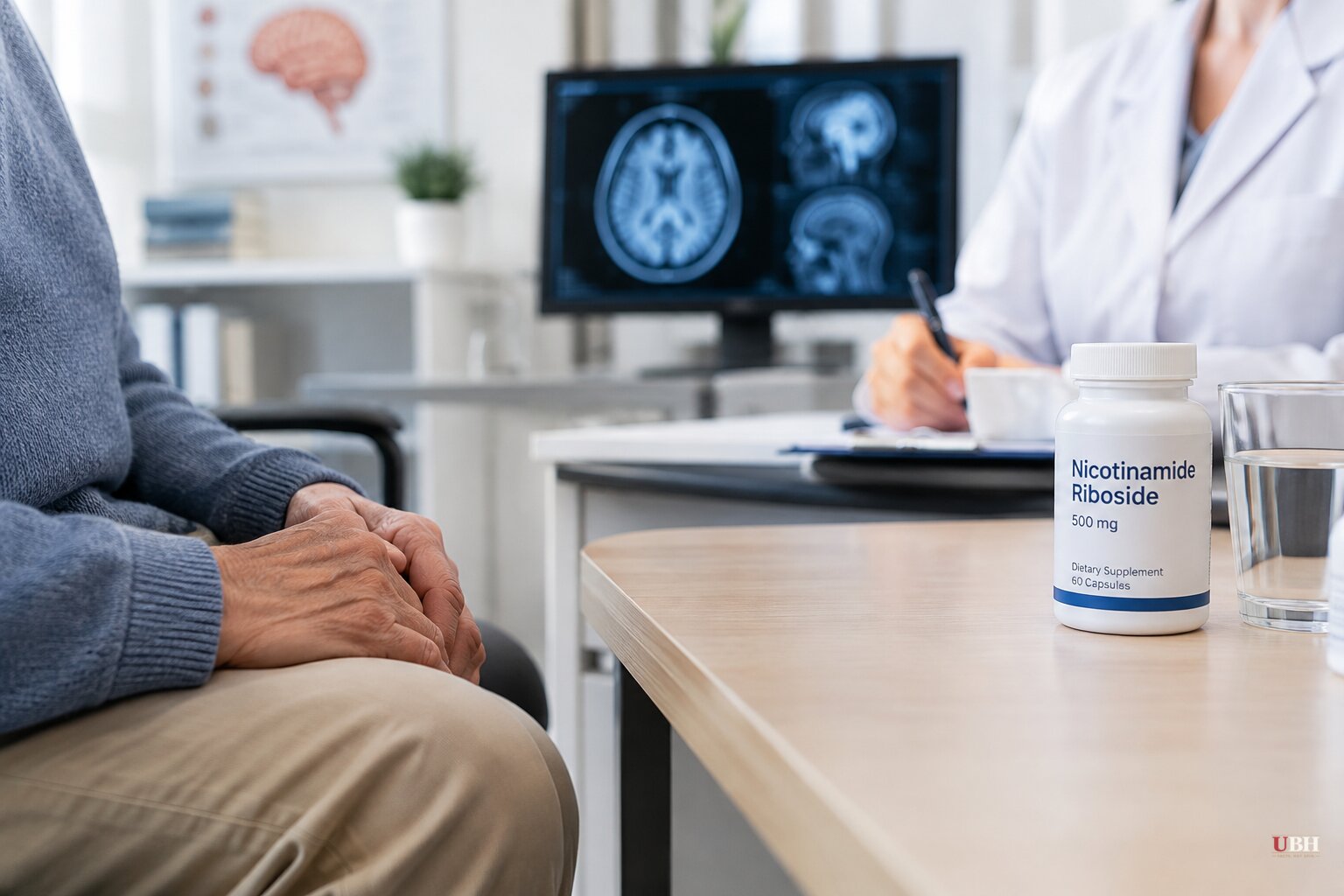
A large, rigorous trial has put a popular longevity supplement to the test in Parkinson's disease. It did not work.
The NOPARK study, published in JAMA, found that nicotinamide riboside (NR) gave no clinical benefit to people with early Parkinson's. On average, patients taking it did slightly worse than those taking a placebo.
What the trial tested
NR is a form of vitamin B3 that raises cellular levels of NAD, a molecule involved in energy metabolism, DNA repair and inflammation control. It is sold over the counter as a longevity supplement.
The case for trying it in Parkinson's was not frivolous. Animal studies and small human trials had suggested that boosting NAD might protect the dopamine-producing neurons that Parkinson's destroys. Charalampos Tzoulis, PhD, of Haukeland University Hospital and the University of Bergen, led the work.
The phase III trial randomized 410 patients at 11 centers in Norway. Participants were double-blinded and took either 500 mg of NR twice daily or a matching placebo for 52 weeks.
Enrollees had been diagnosed within the previous two years, had a Hoehn and Yahr stage below 3, showed confirmatory dopamine transporter imaging findings, and were on stable dopaminergic treatment. The mean age was 66 and 66% were men. People with dementia, atypical parkinsonism or recent high-dose vitamin B3 use were excluded.
Tzoulis says it is the largest trial to date of an NAD-boosting treatment in a neurologic disorder.
The numbers
The primary outcome was the change in MDS-UPDRS total score, which combines a motor exam with patients' reports of daily living. A higher score means more severe symptoms.
After 52 weeks, the NR group's score worsened by an average of 2.45 points. The placebo group changed little, trending slightly toward improvement. The adjusted difference was 2.72 points in favor of placebo (95% CI 0.47 to 4.98, P=0.02).
Nonmotor symptoms also worsened more in the NR group (P=0.009). Brain imaging showed no evidence that NR either slowed or sped up changes in the dopamine system.
The researchers describe the gap as statistically significant but modest, and below the commonly used threshold for a clinically important difference. The finding is not that NR caused major harm; it is that a year of treatment produced no benefit and a small signal in the wrong direction.
Safety data
Serious adverse events occurred in 8.3% of the NR group and 14.1% of the placebo group. Hypertension was the most common adverse event in both arms, and most events were judged unrelated or unlikely to be related to treatment.
One participant in the NR group had a cardiac arrest and died.
Biology that didn't pay off
The trial did confirm that the supplement does what it claims at the molecular level. "NR clearly increased NAD metabolism, but this did not translate into clinical improvement," Tzoulis said in a statement.
"We had a strong biological rationale for testing this treatment, and earlier, smaller clinical studies had produced encouraging findings," he said. "Our results therefore do not support NR as a treatment to slow Parkinson's disease."
That gap between a changed biomarker and a changed patient outcome is the whole lesson. Raising a molecule's level is not the same as helping the person who takes it.
What the authors do and don't conclude
The researchers do not recommend that people with Parkinson's use NR or other NAD-boosting supplements outside controlled clinical studies.
They also stop short of writing off the whole approach. The findings, they say, do not rule out benefit from NAD-boosting treatments in other diseases, where effects may differ and would need to be tested separately in controlled trials. The negative result also does not establish that NAD metabolism is irrelevant to Parkinson's, only that raising NAD availability with NR did not help here.
Tzoulis thanked participants and the 11 centers involved. "Although the results were not what we had hoped for, their contribution has answered an important medical question and provided valuable guidance for future research," he said.
What comes next
People with Parkinson's who already take NAD-boosting supplements have a clear question for their neurologists. The trial tested one dose, 500 mg twice daily, of one compound over one year, in patients with early disease. Whether other NAD precursors, doses, disease stages or conditions behave differently is not answered by NOPARK, and the authors say that has to be settled in controlled trials rather than by consumer use.
Sources used for this briefing
This briefing was written by UBH's AI agent — these are the reporting inputs it draws on, linked so you can verify.


