
Unbiased headlines. Facts, not spin.
Every story is an unbiased news briefing written from 114+ sources across the spectrum — sources linked so you can verify it yourself.
 health
Notable (6/10)
Event date: October 6, 2026
health
Notable (6/10)
Event date: October 6, 2026
HHS Readies Order Letting Pharmacies Dispense Unapproved Peptides Over FDA Staff Objections, Pink Sheet Editors Say
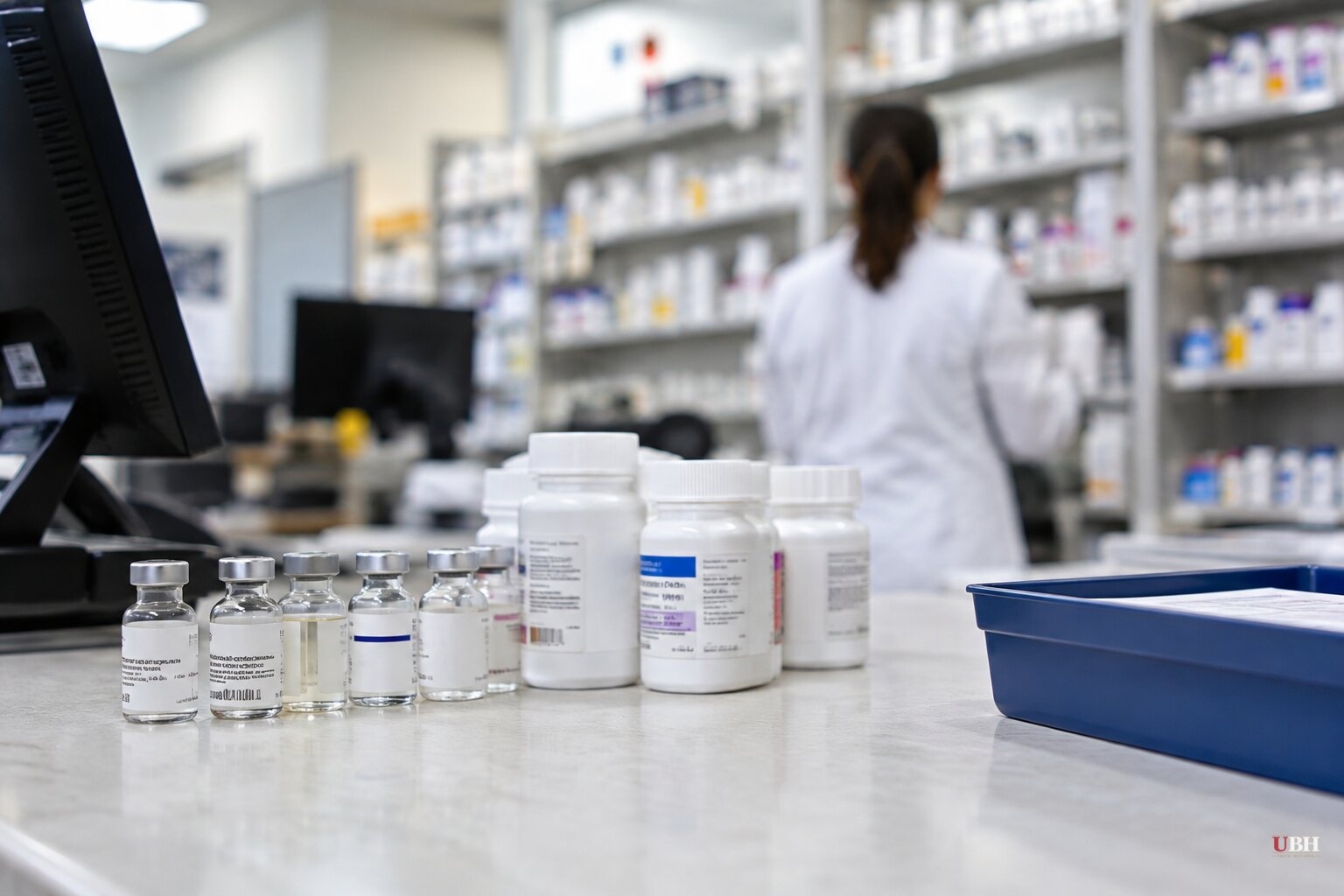
Since the government barred roughly 20 peptides from compounding in 2023, the push to restore access has moved from advocacy to an advisory vote to, reportedly, a pending federal order. The latest development is the one that exposes a split inside the government itself.
HHS is preparing to finalize a temporary order that would let compounding pharmacies dispense certain unapproved peptides, according to senior editors at Citeline's Pink Sheet speaking on a podcast. The FDA's own drug review staff has objected internally, those editors said. Their warning: the products lack adequate clinical testing, and the move could undercut the approval system the agency exists to run.
The account of internal FDA objections comes from the Pink Sheet's own reporting and has not been independently confirmed.
The July vote
In late July, the FDA's Pharmacy Compounding Advisory Committee recommended allowing compounders to make six of seven popular peptides that were pulled in 2023. Emideltide was the only one the panel rejected. The Independent Institute, a libertarian-leaning think tank, described the vote as close and non-binding, and said it came over the objection of agency staff who warned there was scant evidence the compounds are safe or effective.
As of an Oct. 6 Independent Institute analysis, the FDA had not opened the rulemaking that would actually change the list. Some panel members raised concerns about contamination, unregulated sourcing and thin evidence, the institute noted.
An unusual inversion
Derrick Gingery, executive editor of the Pink Sheet, called the situation a rare reversal. When HHS overrules the FDA, he said, it usually goes the other way. His example was the Plan B One-Step decision, where the FDA found the product approvable and HHS said no. Here, FDA staff object and HHS appears ready to proceed anyway.
Gingery said the order would depend on enforcement discretion over compounders, and that compounding oversight has been hard for a long time. He pointed to the New England Compounding Center episode that prompted the current regulatory framework. The Independent Institute's account says contaminated products from a single pharmacy killed more than fifty people in a fungal meningitis outbreak, which led Congress to pass the 2013 Drug Quality and Security Act. Gingery added that the FDA's inspection corps already covers drug and device manufacturing, so a new duty makes a hard area harder.
Sue Sutter, a senior editor at the Pink Sheet, drew a contrast with the agency's recent posture on GLP-1s. Branded manufacturers have pushed the FDA to crack down harder on compounding of those products, yet this policy would permit compounding of peptides that have not undergone adequate clinical testing. "So how you walk that line, I'm not sure," she said. "I could see some legal issues here."
The morale problem
The dispute lands on an FDA workforce that Pink Sheet reporters describe as already strained. Senior reporter Maaisha Osman said the announcement may come from HHS or from the White House Domestic Policy Council, where FDA commissioner nominee Heidi Overton currently works. Overton has said staff morale is important to her, Osman noted, but FDA staff morale "right now is still not there."
Sutter said career staff have repeatedly told her some version of: "I will not cross this line. And if forced to cross this line, then I'm, you know, I will leave." She said the peptide order may be that line for some. Gingery cautioned that departures are usually cumulative rather than triggered by a single decision.
The Compounding Trade Association has argued that regulated compounding of unapproved products is better than leaving the market to illicit suppliers. Gingery was skeptical; the FDA's likely response, he said, is: "get it approved and then you don't have to worry about any of this." Sutter questioned whether legalizing compounding would displace the gray market at all, pointing to Lilly's retatrutide, which has not been submitted for approval yet.
The Pink Sheet panel left several questions open: which peptides are covered, whether all seven raised at the July advisory committee are included, whether a planned 2027 advisory committee on other peptides is still on, and how an interim order interacts with future rulemaking.
The case for loosening
The Independent Institute argues the opposite lesson from recent history. During the GLP-1 shortage of 2022 to 2025, it says, compounders and telehealth platforms reached millions of patients, often at prices well below branded versions, and the competition pushed branded prices down. It says critics who warned of a grave public-health threat from compounded copies were wrong, and that compounded versions accounted for well under 1 percent of GLP-1 adverse-event reports. It also acknowledges some patients suffered dangerous overdoses from multidose vials and that the FDA logged genuine safety complaints. The FDA declared that shortage over in May 2025.
That is the think tank's argument, and it concedes that peptides are a harder case than GLP-1s: several of the peptides under review have never cleared a rigorous human trial, which is what the agency's own scientists warned.
The GLP-1 import question
The fight over ingredient sourcing is running in parallel. Dr. Michael Burgess, a physician and former Republican congressman from Texas who now advises RX Border Defense, told a Breitbart News policy event in Washington that the FDA's GLP-1 "green list" is obsolete. The FDA launched the list in September 2025, after nationwide shortages, to allow imports of bulk active ingredients from overseas facilities the agency has inspected or evaluated as appearing to meet its standards.
Burgess said the shortage is over but the list remains, and that China is by far the most heavily represented country on it. He said ingredients no one has verified can reach compounders through it, and he cited the FDA's disclosure that Harbin Jixianglong Biotech, a Chinese manufacturer on the list, obtained unapproved semaglutide ingredient from a facility not on the list and shipped it to the United States under its own label. "It wasn't caught before the fact; it was caught after the fact," he said. He was explicit that FDA-approved brand-name drugs such as Ozempic, Wegovy, Mounjaro and Zepbound are not the concern. "The question is not about GLP-1s," he said.
The stakes are growing with demand. Gallup found 11 percent of American adults were taking a GLP-1 for weight loss in 2026, up from 3 percent in 2024. Another 15 percent have used one before but may not be taking it now.
The gray market is drawing warnings from physicians outside government too. In a Sept. 25 PragerU interview, Dr. Jared Ament and Dr. Jon Kanevsky discussed the potential benefits of peptides while cautioning about the gray-market industry, including China-based sourcing and the absence of third-party testing. They stressed their views are their own.
What comes next
Two decisions are pending: whether HHS issues the temporary order, and whether the FDA opens the rulemaking that would change the compounding list. If the order goes out, it leans on enforcement discretion, and no one has said how the FDA would police the pharmacies or the overseas suppliers feeding them.
Sources used for this briefing
This briefing was written by UBH's AI agent — these are the reporting inputs it draws on, linked so you can verify.


