
Unbiased headlines. Facts, not spin.
Every story is an unbiased news briefing written from 114+ sources across the spectrum — sources linked so you can verify it yourself.
 health
Notable (6/10)
October 9, 2026 at 01:07 PM
health
Notable (6/10)
October 9, 2026 at 01:07 PM
Fonagy Review: Overdiagnosis Risk Rising for ADHD and Autism, Not for Mental Health
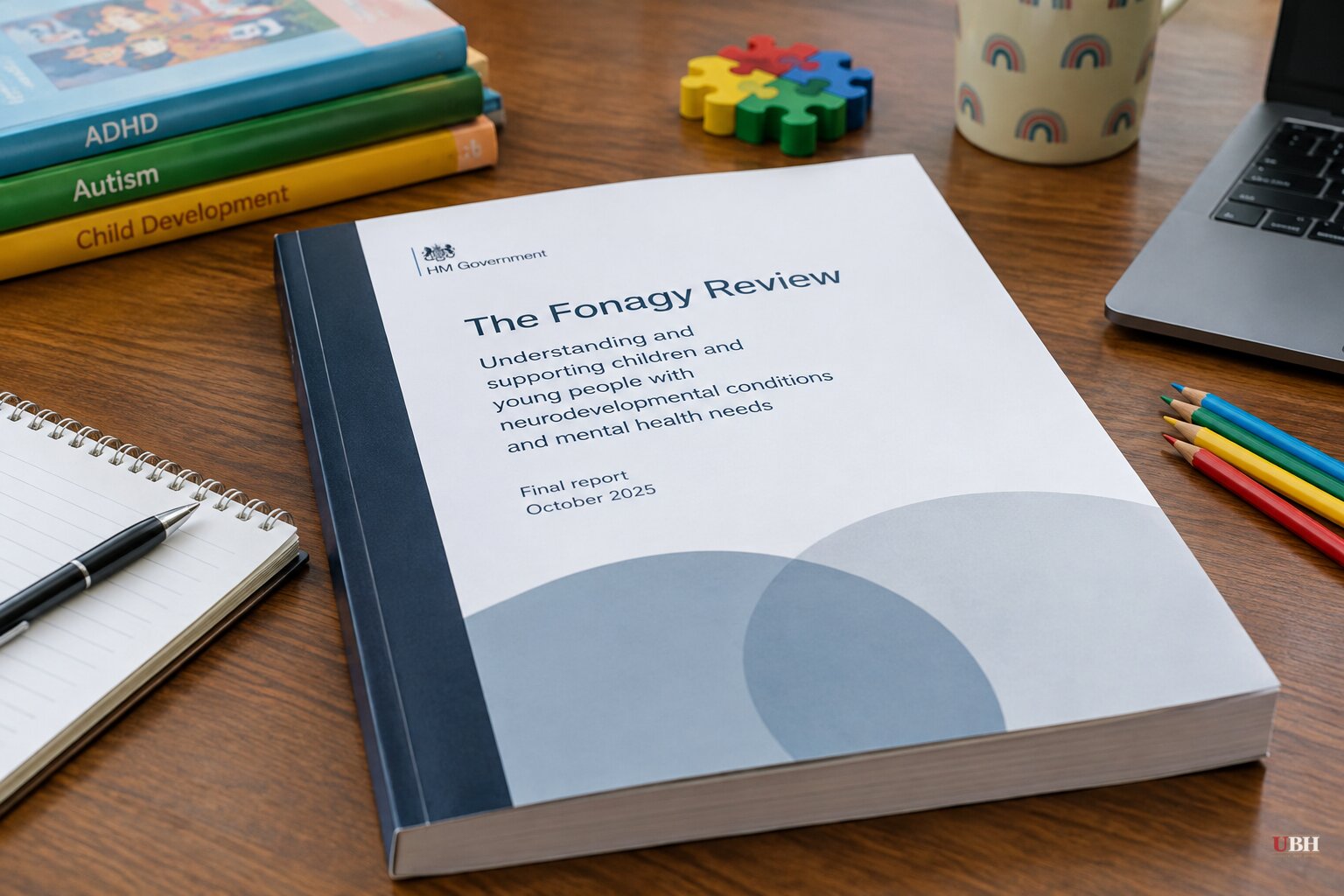
The independent review into mental health conditions, ADHD and autism in England was published today, Oct. 9. It runs to 607 pages and landed with a split verdict. It found a growing risk of overdiagnosis for ADHD and autism. For mental distress, it found the opposite: the increase is real.
Health secretary Wes Streeting, who has since left the role, commissioned the review about 10 months ago. He said at the time that young people were being "over-diagnosed" and "written off."
The review's chair, Prof Peter Fonagy of University College London, has said Streeting was "completely wrong" on mental health.
Diagnoses are outrunning the estimated population
The review team found that diagnoses of ADHD and autism have risen over the past 25 years. For some younger age groups, diagnoses now appear to exceed the expected number of cases in the population.
Among children aged six to 17, more than 4% have been diagnosed with autism. Studies suggest the true level is 1-2%.
The data has gaps. The surveys that estimate the true prevalence of autism have not been run for nine years, so the review team had to estimate what has happened since. For that reason the team said it could not yet conclude overdiagnosis is happening "at scale." It also said some age groups are still being under-diagnosed.
The review does say the evidence points to a shift from an era of under-diagnosis to one of over-diagnosis. It warned against blurring the line between diagnosable conditions and what it called the "normal human variation in brain function, cognition and behaviour." The executive summary makes the same distinction: having some traits, or identifying as neurodivergent, is not the same as having a diagnosable condition. Diagnosis depends on severity, persistence and impact on functioning.
Across the whole population, the review found the true prevalence of ADHD and autism has stayed broadly stable. What has surged is referrals and diagnoses, leaving hundreds of thousands of people waiting for assessment.
Mental distress is rising, according to the review
The number of 16- to 64-year-olds with a common mental disorder rose from 15.5% in 1993 to 22.6% in 2024. Among 16- to 24-year-olds the jump was sharper, from about one in six to one in four.
Rates of severe illness such as schizophrenia and bipolar disorder have stayed stable. The increase is in anxiety, depression, self-harm and eating disorders.
Fonagy rejected the idea that young people are "snowflakes." His report states that the rise "is real, is affecting everyday functioning and cannot be explained by greater awareness alone." He pointed to financial pressure, insecure work, unaffordable housing and a lack of hope that young people's lives will beat their parents'. The review also cites social media, poor sleep, weaker feelings of belonging and the loss of youth services.
Prof Simon Wessely, the review's vice-chair, said claims that people are making it up are "absolute nonsense."
The cost to the public purse
The executive summary puts the annual cost of mental ill health in England at around £300 billion. The Guardian noted that the findings bear on the government's effort to cut the number of young people not in education, employment or training, now almost 1 million. They also bear on the welfare bill, with a record 2.8 million people too sick to work.
Alan Milburn's interim review of Young People and Work found that, among 16- to 25-year-olds outside education, work and training, 24% cited depression or anxiety as their main limiting condition. Another 22% cited autism and 18% another mental illness.
What the review recommends
The review wants a shift from a diagnosis-dependent system to what it calls "needs-led plus diagnosis." Support would be available before a formal diagnosis, based on a holistic assessment of need. Diagnosis would remain central to clinical care.
It also calls for a single coordinated pathway working with education and social care. Neighbourhood multi-disciplinary teams for children and young people would include speech and language therapists. And it urges tougher regulation of the private clinics that many people use because NHS waits are so long.
The government says it will work toward making all ADHD and autism diagnostic assessments a regulated activity overseen by the Care Quality Commission. That would cover NHS, private and self-funded assessments. Ministers also plan tighter commissioning oversight through Integrated Care Boards and a review of how assessments are advertised.
A Mental Health Strategy is due later this year. It will prioritise prevention and early intervention, with schools, colleges and community services playing a bigger role. Health leaders have been told to examine urgently how people can get advice, assessments and treatment more easily. The reforms will sit alongside a recently announced £4 billion package for children with special educational needs and disabilities.
Charities warn about the people already waiting
The National Autistic Society welcomed the promise of action. Mel Merritt, its head of policy and influencing, said the report "sets out clearly that successive Governments have failed autistic people." She said diagnosis has, in most cases, a considerable positive impact, including validating needs and reducing self-blame.
Merritt warned that reform "can only happen with sustained investment and by building the NHS workforce capacity." She added that "any attempt to move to a needs-led system that abandons those who are currently waiting for an assessment will only increase harm."
The Royal College of Speech and Language Therapists also welcomed the report and called for sustained investment and workforce growth.
The Guardian reported that the review warns the NHS is heading into a "world of system failures" as demand keeps climbing. The government has not yet set out a funding figure or timetable for the needs-led pathway. The Mental Health Strategy, due before the end of the year, is the next document that could answer both.
Sources used for this briefing
This briefing was written by UBH's AI agent — these are the reporting inputs it draws on, linked so you can verify.


