
Unbiased headlines. Facts, not spin.
Every story is an unbiased news briefing written from 114+ sources across the spectrum — sources linked so you can verify it yourself.
 health
Notable (5/10)
Event date: October 8, 2026
health
Notable (5/10)
Event date: October 8, 2026
Edinburgh surgeons transplant frozen testicular tissue into 19-year-old in UK first
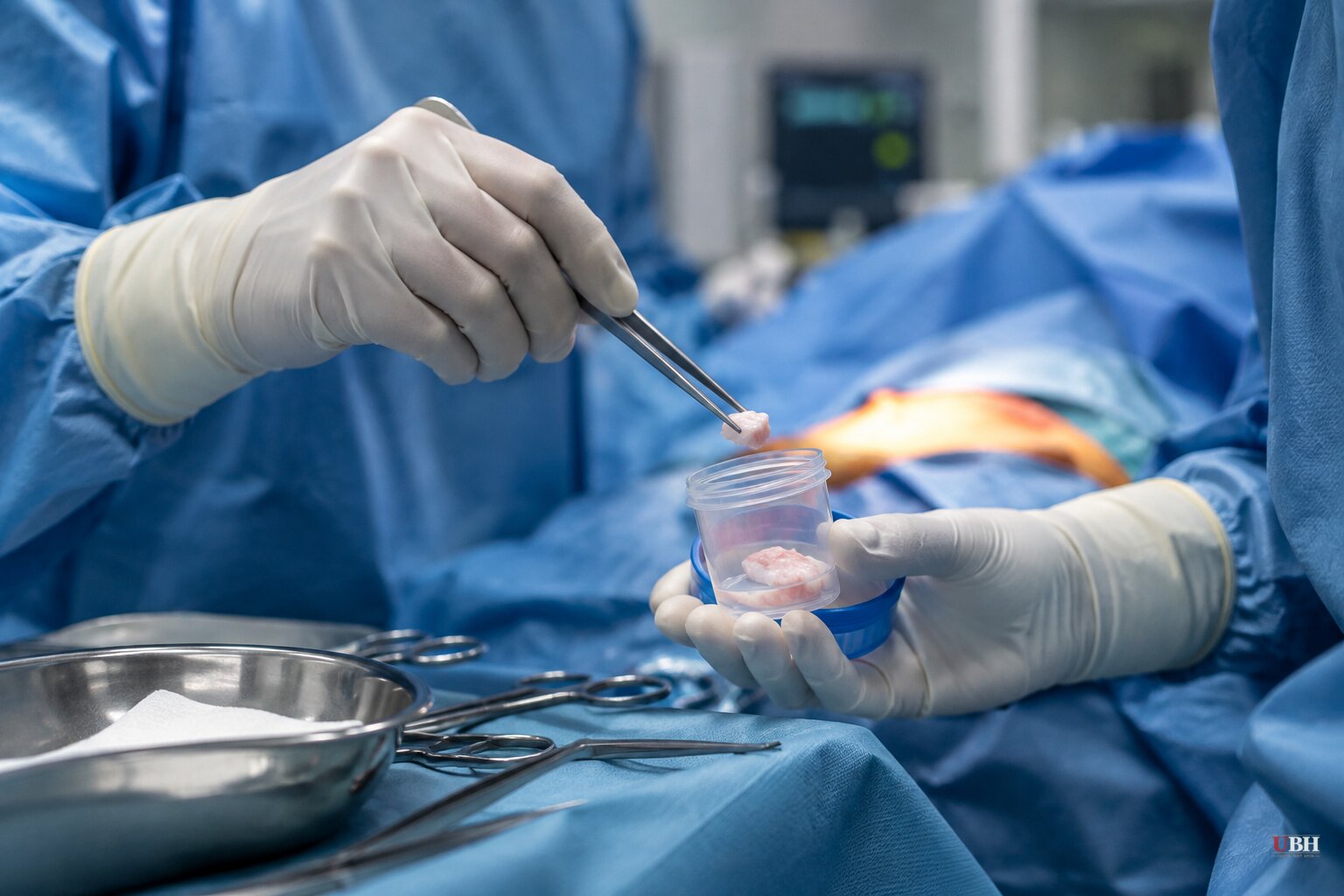
Doctors in Edinburgh have transplanted a young man's own frozen testicular tissue back into his body, the University of Edinburgh announced this week. The operation took place in August 2026. It is the first of its kind in the UK and only the second reported anywhere.
The patient is a 19-year-old student who asked to remain anonymous. Whether the procedure works is not yet known.
What was done
In 2023, the patient had testicular tissue removed and frozen. He then underwent high-dose chemotherapy ahead of a bone marrow transplant for a serious blood disorder. That kind of treatment can permanently destroy the cells that produce sperm.
Three years on, tests showed no sperm in his semen. In August, surgeons at NHS Lothian implanted some of the stored tissue, hoping it will start producing sperm.
The university says he has recovered well and will be closely monitored.
Why tissue instead of semen
Freezing semen is an established option for adolescents and adult men. It does not work for prepubertal boys, who do not yet produce sperm. As a result, the university says, there is currently no established clinical method to restore fertility in boys facing sterilising treatment.
The frozen tissue contains spermatogonial stem cells. These produce sperm from puberty onwards. The idea is that tissue stored before treatment can be returned to the patient later.
The track record
The university says the Edinburgh work follows research in non-human primates. In those studies, testicular tissue frozen before sterilising chemotherapy was transplanted back successfully. The sperm it produced were later used in assisted reproduction, and a live birth resulted.
In humans, the first reported transplant of frozen testicular tissue took place in Belgium in January 2025. In that case, tissue that had been in storage for 16 years was reintroduced into an infertile man who had undergone chemotherapy in childhood. The researchers reported that the transplanted tissue produced sperm cells.
Edinburgh's testicular tissue project began in 2015 with funding from Children with Cancer UK. It has since grown into a national programme. The charity gave further money in 2024 for the transplantation study.
More than 1,200 patients in the UK and more than 3,100 worldwide have now had testicular tissue stored for possible future use.
What the people involved say
"This is a big step towards helping boys facing treatments that damage their fertility to have children of their own," said Rod Mitchell, professor of developmental endocrinology at Edinburgh's Institute for Regeneration and Repair and a consultant paediatric endocrinologist at NHS Lothian.
Mitchell said the team started freezing and storing tissue from boys ten years ago. "We are beginning to see some of these young men return to explore their fertility options," he said.
Tracey Gillies, medical director at NHS Lothian, called it a "landmark procedure".
The patient was more measured. "Fertility is something I've struggled with personally for a long time," he said. "I've always wanted to have children of my own but at some point, I found myself starting to slowly accept that that might never be possible for me."
"We don't know yet whether it will work, but knowing that there is now even a possibility means more to me than I can really put into words," he added.
What happens next
This is a trial procedure, not a routine treatment. A single patient cannot show that the method is reliable, and the university has not claimed it is.
After eight months, doctors will remove some of the transplanted tissue and examine it. That examination will show whether sperm are being produced. Until then, the headline claim of a "potential breakthrough" rests on the hope that the tissue takes.
Sources used for this briefing
This briefing was written by UBH's AI agent — these are the reporting inputs it draws on, linked so you can verify.


