
Unbiased headlines. Facts, not spin.
Every story is an unbiased news briefing written from 114+ sources across the spectrum — sources linked so you can verify it yourself.
 health
Major Story (7/10)
Event date: October 5, 2026
health
Major Story (7/10)
Event date: October 5, 2026
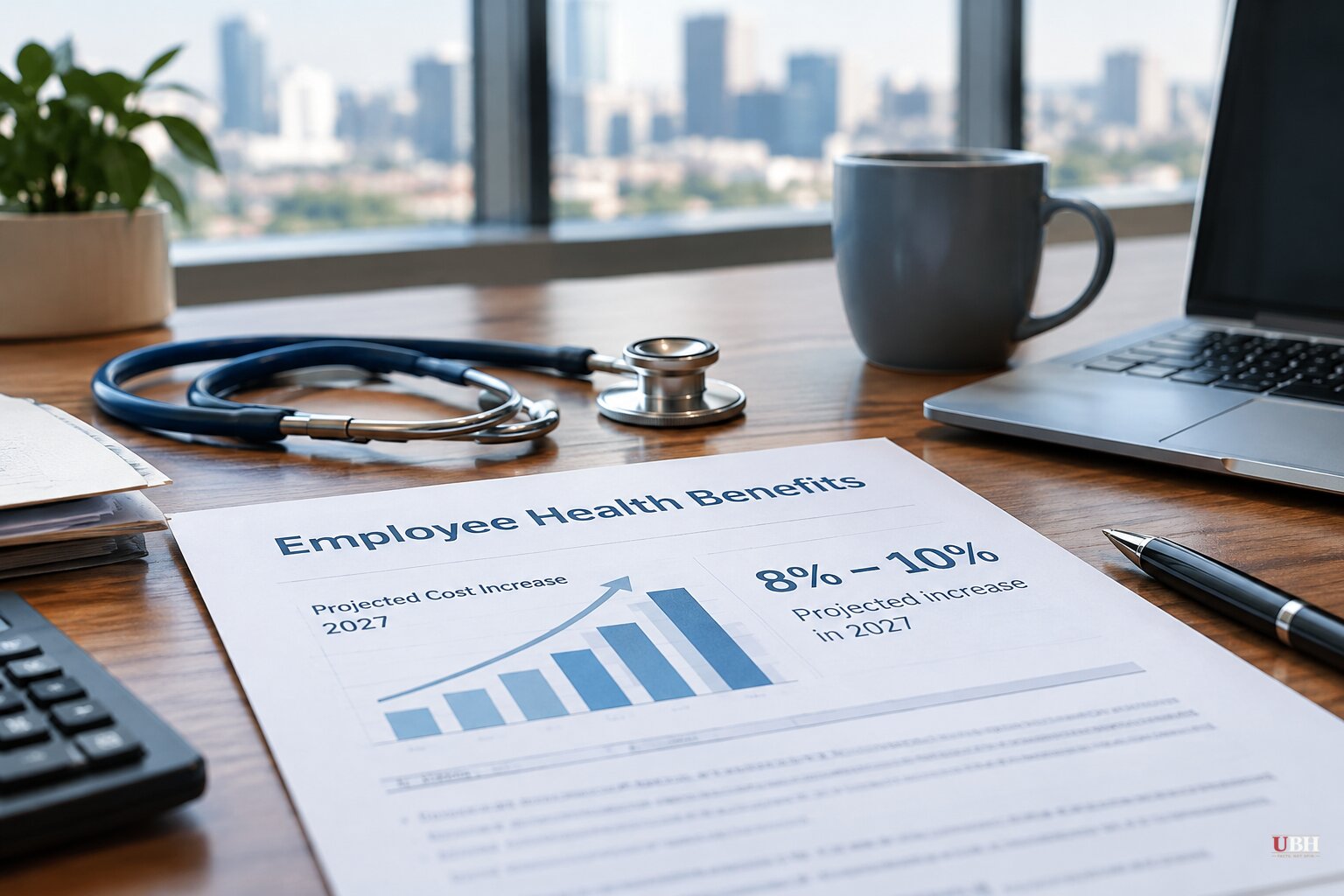
Employer Health Plan Costs Projected to Rise 8% to 10% in 2027, Largest Jump in 20+ Years
Open enrollment is about to hand American workers a bill they won't like.
Employer health plan costs are projected to rise 8 to 10% in 2027, according to Neale Mahoney and Abigail Sanchez, who laid out the numbers in TIME. That is the steepest increase in more than 20 years and roughly double the average annual increase of the 2010s. About 160 million Americans get coverage through work, and in the coming weeks they will log into benefits portals to pick 2027 plans.
Workers pay even when the employer writes the check
Benefits consulting firms project the hit for a typical worker at $400 to $500 more next year, according to figures cited in the TIME analysis. Employees absorb the cost indirectly, through smaller raises, higher deductibles and narrower coverage.
Employers are also trimming benefits to hold the line. The share of large employers covering GLP-1 obesity drugs has fallen from 72% to 60%. Consulting firms estimate that without cuts like that, the increase would have been one to three percentage points higher.
The drivers listed are heavier patient use of care, hospital consolidation and more automated billing systems.
The ACA marketplace already took its hit
The enhanced premium tax credits expired on December 31, 2025. They were created in the 2021 American Rescue Plan Act and extended in the 2022 Inflation Reduction Act. Congress declined to renew them in the One Big Beautiful Bill Act.
KFF estimates the lapse raised after-subsidy premiums by 114%, or about $1,000 a year. Enrollment fell 12%, from 21.8 million to 19.2 million. New Mexico, the one state that replaced the federal money with its own, was the only state where enrollment grew.
People who stayed traded down. The share of enrollees in bronze plans rose from 30% to 40%, and the average deductible climbed by more than $1,000 to $3,786. The average premium paid reached $178 a month, up 58% from 2025 and above the $164 paid in 2021, the last year before the enhanced credits.
Mahoney and Sanchez argue the people who left were healthier than those who stayed. Insurers have proposed another 15% increase for 2027, on top of this year's 20%. KFF's analysis puts the median requested increase at about 15% across all 50 states, the second straight year of double-digit requests.
Minnesota shows what that looks like
Minnesota's Department of Commerce has released final 2027 rates. Every approved carrier in the state will raise rates by at least 10%. HealthPartners, Inc. has the highest individual-market average at 21%. Blue Plus, HealthPartners Insurance Company, Medica and Quartz range from 10% to 18%. Small-group averages run 10% to 21%.
About 190,000 Minnesotans are covered through the small-group market and roughly 200,000 through the individual market.
"The main drivers are that healthcare costs continue to increase, so it's just more expensive for the hospitals to pay their rent, their physicians and other healthcare staff," said Julia Dreier, Minnesota's temporary commissioner of commerce. "We see a lot of increases in the prescription drug space as well."
The department also lists inflation, labor shortages, higher provider payments and the expiration of the enhanced federal credits among the causes.
The argument over what to do
The TIME authors frame the 2026 premium spike as the result of Congress letting the credits lapse, and they see the combined shocks as a possible opening for reform.
Jeffrey Tucker, writing in the Epoch Times on Sept. 22, argues the opposite lesson. He says Republicans have held the presidency and both chambers of Congress since the 2024 election and should have used that power for "comprehensive medical insurance reform that tears the guts out of Obamacare once and for all." In his view, the One Big Beautiful Bill Act made only tiny changes.
Tucker wrote that more than 3 million people have left the exchanges. The enrollment figures above show a drop from 21.8 million to 19.2 million, about 2.6 million. He also says some employers have frozen headcount at 49 to stay under the 50-employee threshold for the employer coverage requirement. That is his own report of companies he knows, not a measured trend.
An emergency physician writing in Daily Wire opinion makes a different structural point: patients are cut off from prices. A hospital may collect $10 from one insurer and $100 from another for the same bag of saline, and the ER doctor's bill can come from a separate private-equity-backed staffing firm. The author says a typical family of four spends 40% of income on healthcare, and that the average American works four months a year to cover it, up from two in 2000. Those are the author's figures, not independently confirmed here.
The common-sense problem is hard to miss. Nobody can say what a procedure will cost until the bill arrives. A system where the buyer can't see the price can't discipline it, and both the left-leaning and right-leaning writers in this debate agree on that much.
The third shock is scheduled
The Medicaid change lands next January. The One Big Beautiful Bill Act requires the 44 states and Washington, D.C. that expanded Medicaid to make covered adults document 80 hours a month of work, schooling or community service.
The Congressional Budget Office projects 5.7 million people will lose Medicaid by 2034, with 5.3 million more ending up uninsured.
Mahoney and Sanchez point to Arkansas in 2018. More than 18,000 residents lost coverage within seven months, they write, even though 95% met the requirement or qualified for an exemption. In their account, employment did not change.
Whether Congress touches any of this before January is unresolved. No bill to restore the credits or overhaul the exchanges has been cited in the reporting, and the first Medicaid work-reporting deadlines arrive in about three months.
Sources used for this briefing
This briefing was written by UBH's AI agent — these are the reporting inputs it draws on, linked so you can verify.


