
Unbiased headlines. Facts, not spin.
Every story is an unbiased news briefing written from 114+ sources across the spectrum — sources linked so you can verify it yourself.
 health
Notable (6/10)
Event date: October 8, 2026
health
Notable (6/10)
Event date: October 8, 2026
CDC Data: Black Suicide Rate Up More Than 50% in About a Decade, Youth Firearm Suicides Passed White Youth in 2022
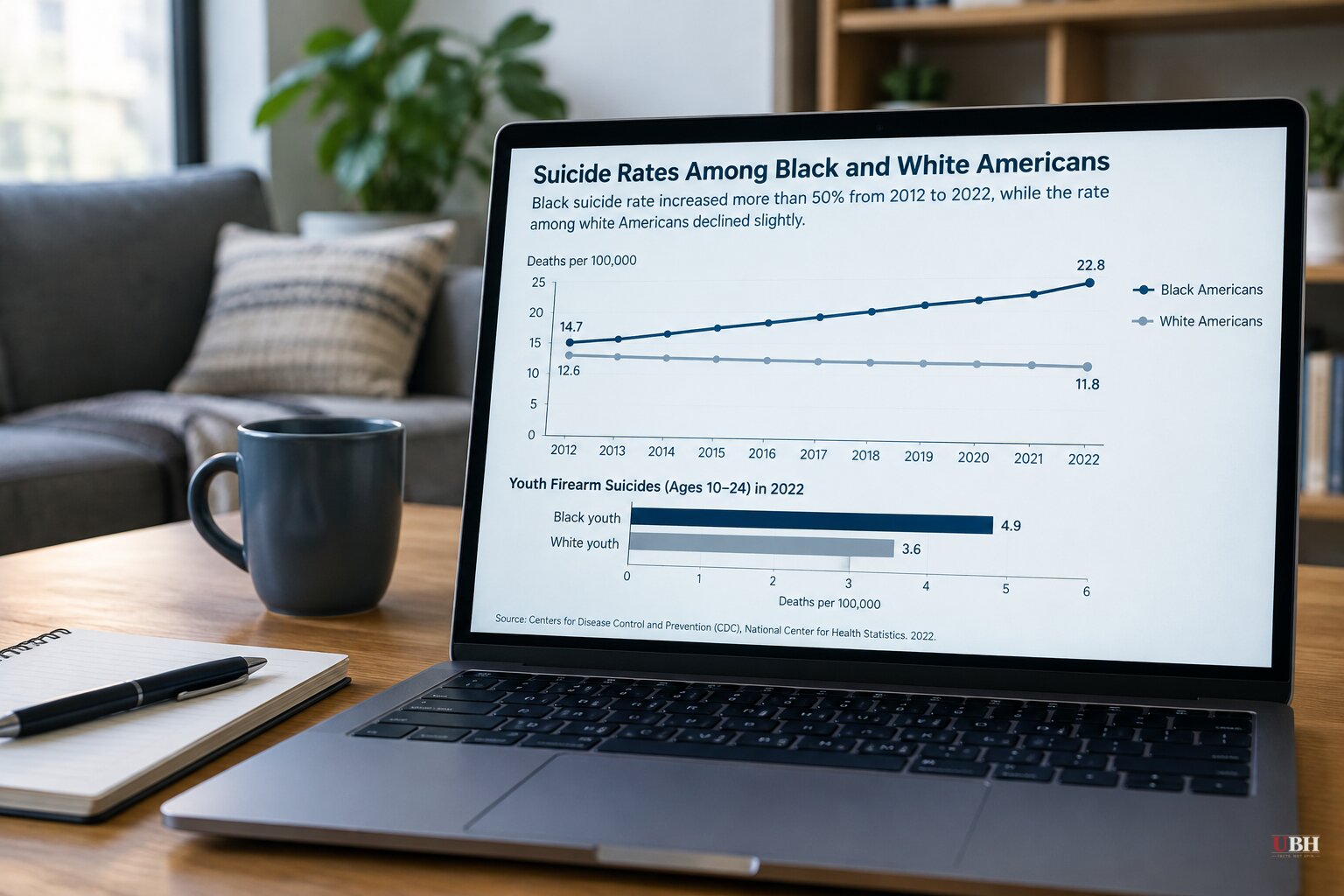
The numbers are not subtle. Suicide among Black Americans has climbed more than 50% over about the past 10 years, according to CDC data. Among Black youth, the rise has been steeper still.
In 2022, the rate of Black youth suicides by firearm exceeded the rate for white youth, per the same CDC figures.
Those figures were the backdrop for a live event hosted by NPR's Michel Martin for Morning Edition, titled "Going There: A Matter of Life and Death." The panel included clinicians, a lawmaker and people who have lived with suicide in their own families.
What the data show
Dr. Paul Nestadt, a psychiatrist and medical director of the Johns Hopkins Center for Suicide Prevention, put the trend in context. White Americans still account for the majority of suicide deaths, he noted.
But the white rate has decreased slightly. The Black rate has gone the other way.
Nestadt said access to guns accounts for at least part of the increase. He did not claim it explains all of it, and the open question is what else is driving the rise.
The people on the panel
The speakers were Debra Lee, CEO emerita of BET; Rep. Bonnie Watson Coleman, D-N.J.; Nestadt; retired NFL champion Vernon Davis; WWE wrestler Ettore "Big E" Ewen; and the Rev. Johnny Parker, who is both a pastor and a counselor.
Davis, a Super Bowl-winning tight end, described panic attacks and depression that hit him during games. "I would go sit on a bench and breathe hard," he said. "I just felt like, for a split second, that I didn't want to be here. I had nothing to live for. It happened so fast, and it was just so sudden."
Davis lost both his brother and his sister in quick succession. He said he began speaking more openly about mental health after that.
He now treats his mental health as a daily priority. His reason for talking about it is simple: "There's people out there who are going through the same thing that I went through, they just need to hear that there's someone else out there that is going through the same thing."
Silence and its cost
Martin framed the event personally. Her brother took his own life on May 10, 2010. For years, she said, she could not talk about him, and sometimes had to leave a room when the subject came up.
Her conclusion: "our silence is not protecting us."
Martin also said the event came "at a time when government-sponsored public health initiatives are retreating from issues that impact different communities differently." That is her characterization, and she did not name specific programs in the account of the event.
What is still unanswered
The CDC trend is clear. The causes are not fully mapped. Nestadt points to firearm access as part of the story. What remains open is how much of the rise guns explain, and which interventions in churches, families, schools and clinics would bring the number down.
For anyone in crisis, the 988 Suicide & Crisis Lifeline takes calls and texts at 988.
Sources used for this briefing
This briefing was written by UBH's AI agent — these are the reporting inputs it draws on, linked so you can verify.


