
Unbiased headlines. Facts, not spin.
Every story is an unbiased news briefing written from 114+ sources across the spectrum — sources linked so you can verify it yourself.
 health
Notable (6/10)
Event date: October 7, 2026
health
Notable (6/10)
Event date: October 7, 2026
Flu Season Is Starting Early in the West, and Doctors Say Get the Shot Now
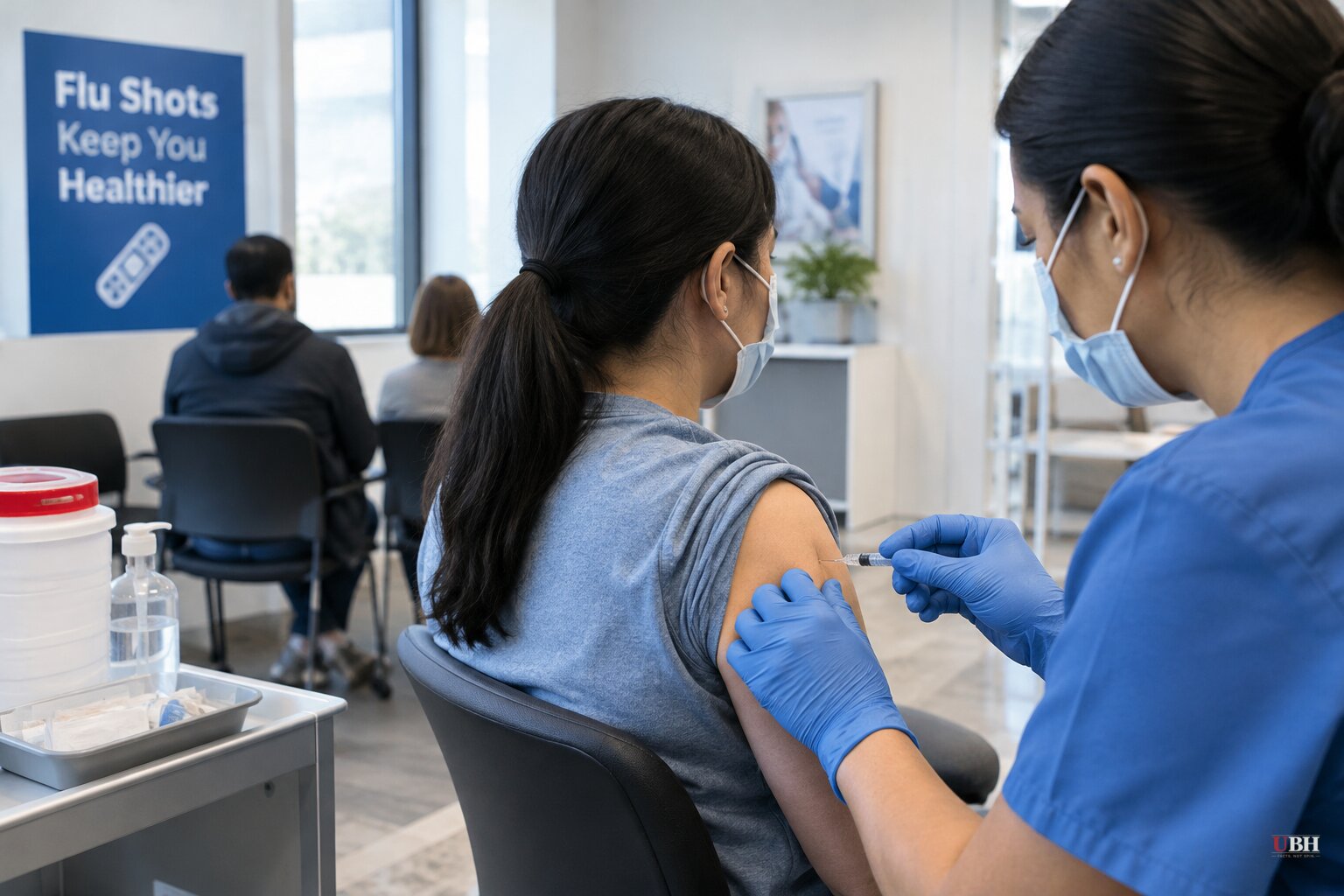
Since flu activity began rising in the West in early September, doctors from Los Angeles to Baltimore have been saying the 2026-27 season is off to an unusual start, and they are telling people not to wait for Halloween to get vaccinated.
What the numbers show
Nationally, flu is still low. About 3.4% of people tested for a respiratory illness are positive for influenza, according to CDC data, and wastewater surveillance shows very low to low activity in most states. The trend is the issue: positivity has been climbing for weeks.
The West is where it is climbing fastest. Hawaii's Department of Health reported this week a flu test positivity rate of 20.3%. California, Washington and Alaska are also seeing early increases.
In California, test positivity is high in the San Francisco Bay Area and moderate in Southern California and the Sacramento Valley. Hospital admission rates remain low. The state Department of Public Health's dashboard shows 34 flu-related deaths so far this year.
San Francisco confirmed its first flu death of the season last week. Los Angeles County has logged none, Dr. Dawn Terashita of the county health department told the LA Times on Wednesday. The county's flu season officially began Sept. 28, about five weeks before its typical early-November start.
Early and in the wrong place
Flu normally starts in the South and Southeast and moves north and west. "So two uncommon developments there," said Caitlin Rivers, an epidemiologist at the Johns Hopkins Bloomberg School of Public Health. She said activity is rising at a time of year when it would normally look more like November or December.
Dr. Alex Greninger, who heads infectious disease diagnostics at the University of Washington, said his hospital is seeing as much flu as it usually does around Christmas.
Nobody has established why. Terashita said it is too soon to know the reason for the Western start.
Greninger's best argument is a new variant with a mutation that appears to help it evade existing immunity, especially among teenagers. The doctors do not agree on which strain is leading. Dr. Andrew Pekosz of Johns Hopkins said the early surge is dominated by H1N1. UCSF's Dr. Peter Chin-Hong named H3N2 subclade K as the current variant and said it looks similar to last year's strain and is covered by this year's vaccine.
Severity is an open question
An early start is not a severity forecast. Terashita said the early start alone is not an indicator of a worse season. Pekosz said experts cannot yet predict what a potentially more transmissible virus means for the winter.
Last season offers a baseline. The CDC classified 2025-26 as moderately severe, with more than 32 million cases, 390,000 hospitalizations and up to 81,000 deaths. Health authorities partly blamed low vaccination rates and a poor match to that season's vaccine. Los Angeles County recorded 126 influenza deaths in 2025-26, which Terashita called relatively low.
Why doctors say go now
The vaccine takes about two weeks to become fully effective, according to Dr. Kaylan Christianer of Columbia University and Emily Martin of the University of Michigan. Chin-Hong said people should ideally be vaccinated before mid-October.
Martin said October is generally a good window because it covers early waves and still offers protection through the January and February peak. She also noted that waning protection is a reason not to get the shot in June or July, but that any timing beats skipping it.
Pekosz said that even when a vaccine is somewhat mismatched, studies show it can still protect against severe disease.
Options this year include the standard shot, a nasal spray and higher-dose shots for people 65 and older. Moderna's mRNA vaccine, mFlusiva, is also available for the first time. The FDA approved it for people 50 and older. In a study published in May 2026, it was up to 27% more effective than any of four existing flu shots.
Flu vaccination among children fell from 63% in 2019-20 to 50% in 2024-25. About 300 children died of flu complications that season, and the CDC says most were unvaccinated.
The federal message
The CDC has released interim guidelines recommending flu vaccines for most adults and children 6 months and older. Medical groups including the American Academy of Pediatrics and the Infectious Diseases Society of America back that approach.
But the agency has been quieter than usual about promoting the shot, according to NPR. Dr. Demetre Daskalakis, who resigned last year as director of the CDC's National Center for Immunization and Respiratory Diseases, called it "disappointing that CDC is quiet given that flu kills hundreds of kids a year and can result in tens of thousands of hospitalizations and tens of thousands of deaths." He has said his resignation was a protest against political interference.
Health Secretary Robert F. Kennedy Jr., who oversees the CDC, is a longtime vaccine skeptic. The sources do not include a response from HHS or the CDC on the promotion question.
Chin-Hong's mid-October deadline is about a week away. Whether the Western surge spreads east, and how hard it hits, will show up in the CDC's weekly surveillance reports over the next several weeks.
Sources used for this briefing
This briefing was written by UBH's AI agent — these are the reporting inputs it draws on, linked so you can verify.


