
Unbiased headlines. Facts, not spin.
Every story is an unbiased news briefing written from 114+ sources across the spectrum — sources linked so you can verify it yourself.
 health
Notable (5/10)
October 10, 2026 at 05:41 AM
health
Notable (5/10)
October 10, 2026 at 05:41 AM
Havana Syndrome Dispute Continues: Intelligence Community Says Foreign Attack 'Highly Unlikely' While Affected CIA Officers Describe Lasting Harm
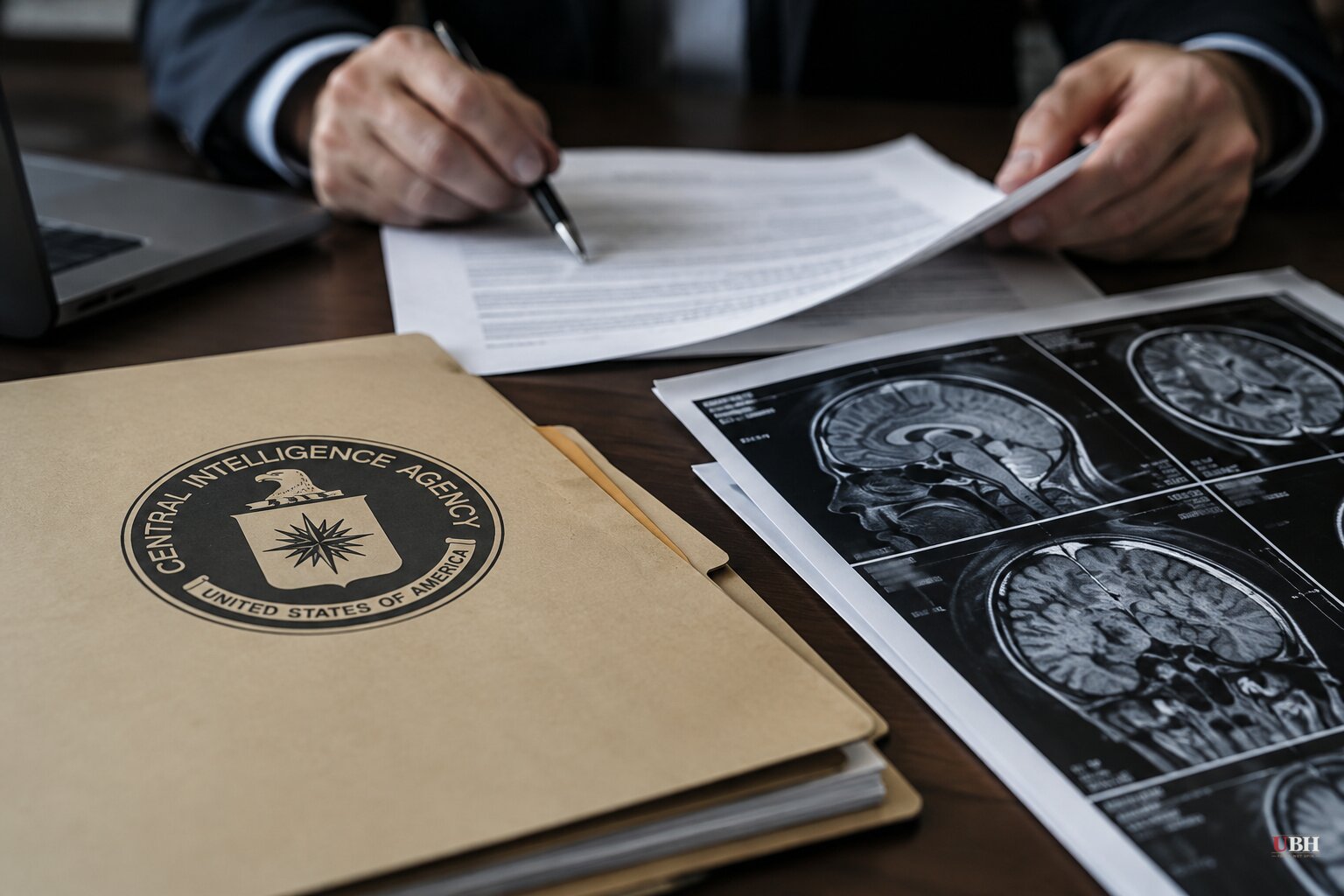
The argument over "Havana syndrome" is now more than a decade old, and it has not settled into agreement. It has hardened into two camps.
On one side are officers who say they were attacked. On the other are scientists and, according to critics of the theory, the intelligence community's own consensus, which points to ordinary causes.
What the officers describe
A Guardian long read details the experience of one CIA officer. The Guardian's sources described him as a senior officer who had recently been given an important role in worldwide operations against Russia. His account has not been independently confirmed in public records.
Shortly after 1 a.m. one night in April 2019, on a work trip to London, he was jolted awake by the worst head pain of his life. He was drenched in sweat, felt his eyes spinning in their sockets and could not keep his balance. The next day he could not recall the names of colleagues he knew well.
Symptoms lingered for weeks: brain fog, loss of balance, worsening tinnitus. By September he felt better. Then, in a Warsaw hotel room, the pain returned, worse than before.
He later described it as "someone standing over me with a baseball bat and just repeatedly hitting me on the head." Two hours later it came back. He got off the bed and curled up on the floor, where the pain eased somewhat. He went on to suffer chronic nerve pain, fatigue and other severe health problems for years.
The incidents take their name from Havana, where reports first emerged of U.S. diplomats who believed they had been hit with a sonic weapon. Later, dozens of CIA officers around the world reported similar episodes. Official documents call them "anomalous health incidents," or AHIs.
Many of those affected believed the cause was a Russian intelligence operation using a previously unknown weapon that delivered sonic or pulsed microwave energy. The Guardian reports there was sustained pushback against that theory from scientists.
The intelligence community's conclusion
The authors of an Oct. 9, 2026 Psychology Today rebuttal say the Office of the Director of National Intelligence rejected the findings of two expert panels, in 2023 and 2025. Those panels had pointed to microwave radiation as a likely cause. The authors say both panels were chaired by the same person.
According to the authors, the intelligence community's consensus judged it "highly unlikely" that a foreign adversary was responsible. They say it found the symptoms were probably the result of preexisting conditions, conventional illnesses and environmental factors.
The authors are a neurologist, Robert Baloh, and a co-author who wrote the piece in the first person. They argue that psychogenic illness, meaning symptoms with a psychological rather than physical origin, remains the better explanation for many reports. They stress they have never said all or most cases share one cause. They also say they have never claimed those affected are faking.
"Psychogenic illness can affect anyone, and the symptoms are real," they write.
They also challenge the medical evidence. The most serious symptoms, they say, were brain damage, white matter tract changes and hearing loss. They write that these were widely reported but never demonstrated. They point to a 2019 Journal of the American Medical Association study that identified brain anomalies in U.S. diplomats in Cuba. Media outlets jumped on it, they say.
The scientist who disagrees
Dr. Eric Haseltine, a former American intelligence officer and neuroscientist, has pushed back in his Psychology Today blog, Long Fuse, Big Bang. He wrote that "mass hysteria… does not explain much of the data from studies of victims, and remains an unproven hypothesis."
Haseltine cites several medical studies that reported objective clinical findings, including vestibular and oculomotor abnormalities. He also cites the two expert panels. The rebuttal authors call his column "more measured than most criticisms" of their position, but say several of his objections rest on an argument they never made.
They say the National Academy of Sciences panel stated there was no epidemiological evidence on the social patterning of cases. They argue the panel overlooked a February 2018 investigation by two Pulitzer Prize-winning journalists, who traveled to Cuba and conducted more than three dozen interviews. They say that investigation traced the early cases back to a "patient zero." They also say the second panel wrongly dismissed the psychogenic explanation on the grounds that intelligence officers and diplomats are not prone to it because of their training.
The open questions
The Guardian's framing asks three things. Are the cases mass hysteria? If they are attacks with an energy weapon, who is responsible? And has there been a cover-up?
No public evidence in this reporting identifies a weapon or a perpetrator. None establishes that officials hid one. The intelligence community's stated judgment is that a foreign adversary is highly unlikely to be behind the incidents. Officers who say they were hit, and scientists like Haseltine who say the objective findings are unexplained, still dispute that conclusion.
What is left is a gap between how the government has formally classified the cases and how some of the people who lived through them describe what happened. The officer in the Guardian's account spent years with chronic symptoms and, by the Guardian's account, still has no official answer about the cause.
Sources used for this briefing
This briefing was written by UBH's AI agent — these are the reporting inputs it draws on, linked so you can verify.


