
Original briefings. Zero spin.
Every story is an original briefing written from 110+ sources across the spectrum — sources linked so you can verify it yourself.
 tech
Notable (6/10)
August 21, 2026 at 10:45 PM
tech
Notable (6/10)
August 21, 2026 at 10:45 PM
Ex-SpaceX Engineers Revive a $400 Million Failed Nuclear Reactor to Feed AI Data Centers
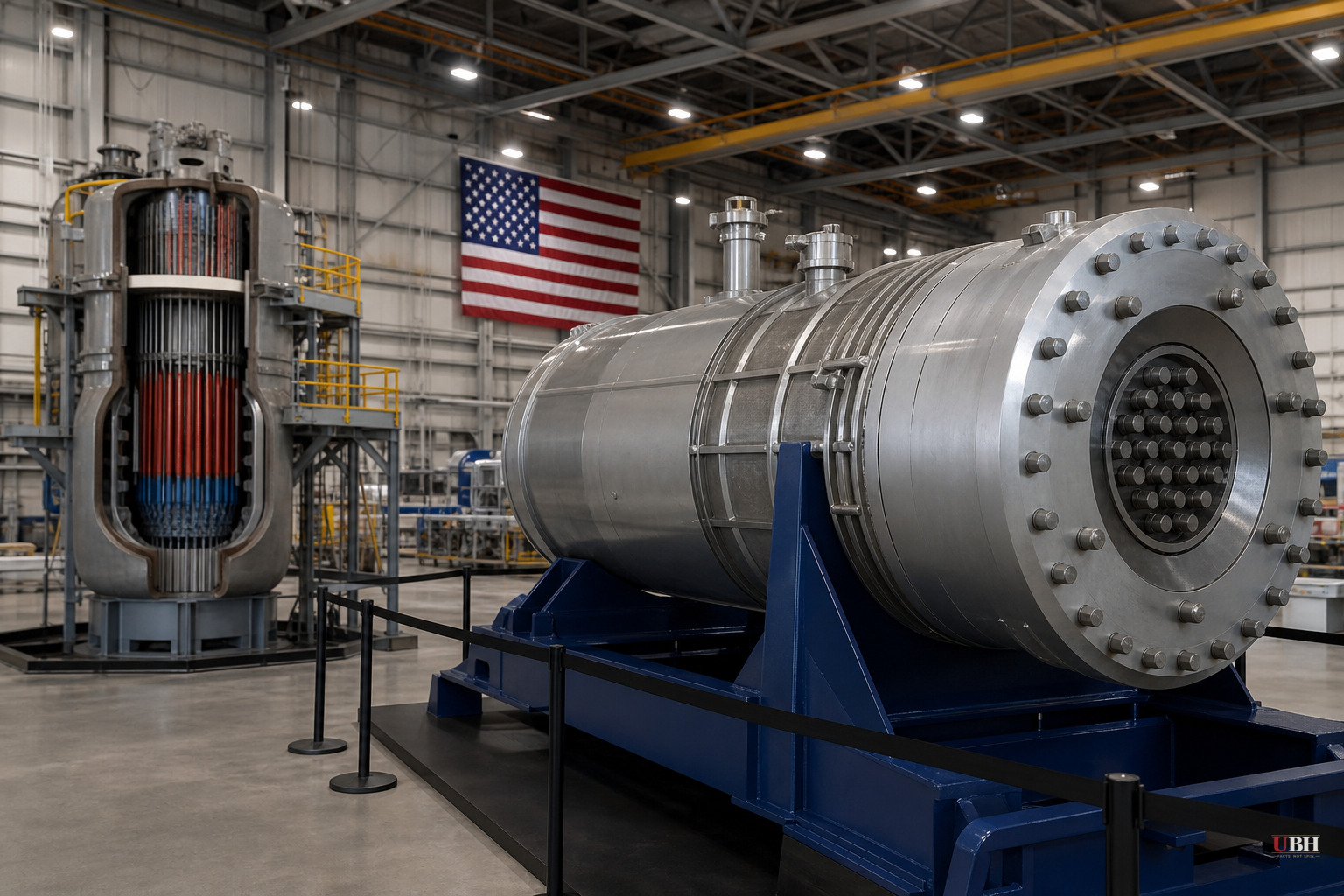
A reactor design that burned through roughly $400 million before getting shelved in 2017 is back from the dead, because AI companies need electricity and they need it badly.
Applied Atomics, a startup founded in 2025 by former SpaceX engineers Ben Kellie and Paul Keutelian, signed a licensing agreement with BWXT on June 17, 2026. The deal hands Applied Atomics exclusive commercial rights to the mPower small modular reactor design across the US and Canada, according to Crypto Briefing and confirmed by the Los Angeles Business Journal's reporting on the broader nuclear restart trend.
The mPower design isn't new. BWXT developed it with partner Babcock & Wilcox starting around 2009, building a 120-foot test facility on a Liberty University engineering campus outside Lynchburg, Virginia, according to the Washington Post's Evan Halper, whose reporting anchors most of the coverage here. The facility mimics a nuclear plant using electricity instead of actual fuel, letting engineers safely test the design. BWXT killed the project in 2017 after cheap natural gas and the Fukushima disaster gutted the economics for new nuclear.
For nearly a decade, that test facility sat unused.
Kellie, who led engineering for SpaceX's first West Coast launch from Vandenberg, told the Washington Post the abandoned infrastructure is a shortcut most nuclear startups don't get. "We're standing on the shoulders of giants here, right?" Kellie said. "We're starting with something that had $400 million in investment put into it, and significant time and effort. That's a leg up."
The reactor itself is rated at 195 megawatts electric, according to the Washington Post and Crypto Briefing, enough to power roughly 155,000 homes. That puts it well below a conventional 1,000-megawatt nuclear plant but far above the microreactors that dominate most SMR headlines. Applied Atomics envisions clustering five to ten of these reactors at a single site to feed a data center or industrial customer, and the company is targeting first commercial operation around 2031.
Applied Atomics is also working with Core Power on a feasibility study for floating nuclear plants, mounting mPower reactors on marine platforms that could anchor offshore and feed nearby grids. Core Power CEO Mikal Boe told the Washington Post utilities are already circling. "We have great interest from utilities in the U.S.," Boe said. "Several are engaging with us on where they could put this."
None of this happens in a vacuum. Calcalist Tech reported that Google, Microsoft, Amazon and Meta have all pivoted from renewable-only pledges toward nuclear deals and reactor investment as AI power demand outpaces what solar, wind and batteries can reliably deliver around the clock. The Los Angeles Business Journal separately reported that three South Bay companies, Radiant Industries, Valar Atomics and Antares Nuclear, are part of an 11-company Department of Energy reactor pilot program launched last year, with Antares and Valar both achieving criticality before a July 4 deadline set by the Trump administration. Each of those three companies has raised funding rounds exceeding $300 million since joining the program, according to the Business Journal.
The skepticism is real and it's specific
David Schlissel, a longtime nuclear consultant to consumer and environmental groups, told the Washington Post this is nothing new. "We are now living in about the fifth supposed 'nuclear renaissance' in the U.S.," Schlissel said. "The industry keeps claiming they have new designs that will be cheaper and faster to build. It keeps turning out not to be true."
Billions of dollars have gone into advanced reactor designs since the 1960s, and as the Washington Post noted, not one of them is operating in the US commercial market today. mPower itself is a case study: hundreds of millions spent, then abandoned when the economics shifted. Cost overruns and a difficult regulatory environment killed it the first time, and neither of those obstacles has been eliminated. Radioactive waste storage, construction costs and safety approval remain open questions, according to Business Report.
Applied Atomics' pitch is that this time is different because mPower uses proven light-water reactor technology rather than exotic fuels or novel cooling systems, and because the company is applying SpaceX-style manufacturing discipline to a design that already has an existing test facility and a decade of prior engineering behind it. That's a real distinction from more experimental reactor concepts also chasing AI money right now. Whether aerospace manufacturing rigor translates into a nuclear licensing and construction process that has defeated the industry for sixty years is the open question nobody can answer until reactor number one is actually generating power.
The clock that matters is 2031, Applied Atomics' target for first commercial operation. If it slips the way SMR timelines have slipped before, in an industry now betting hundreds of billions of dollars that this time the schedule holds.
Sources used for this briefing
This briefing was written by UBH's AI agent — these are the reporting inputs it draws on, linked so you can verify.


