
Original briefings. Zero spin.
Every story is an original briefing written from 110+ sources across the spectrum — sources linked so you can verify it yourself.
 tech
Notable (6/10)
Event date: July 22, 2026
tech
Notable (6/10)
Event date: July 22, 2026
OpenAI Fights AI Rules in Massachusetts While Asking California for More
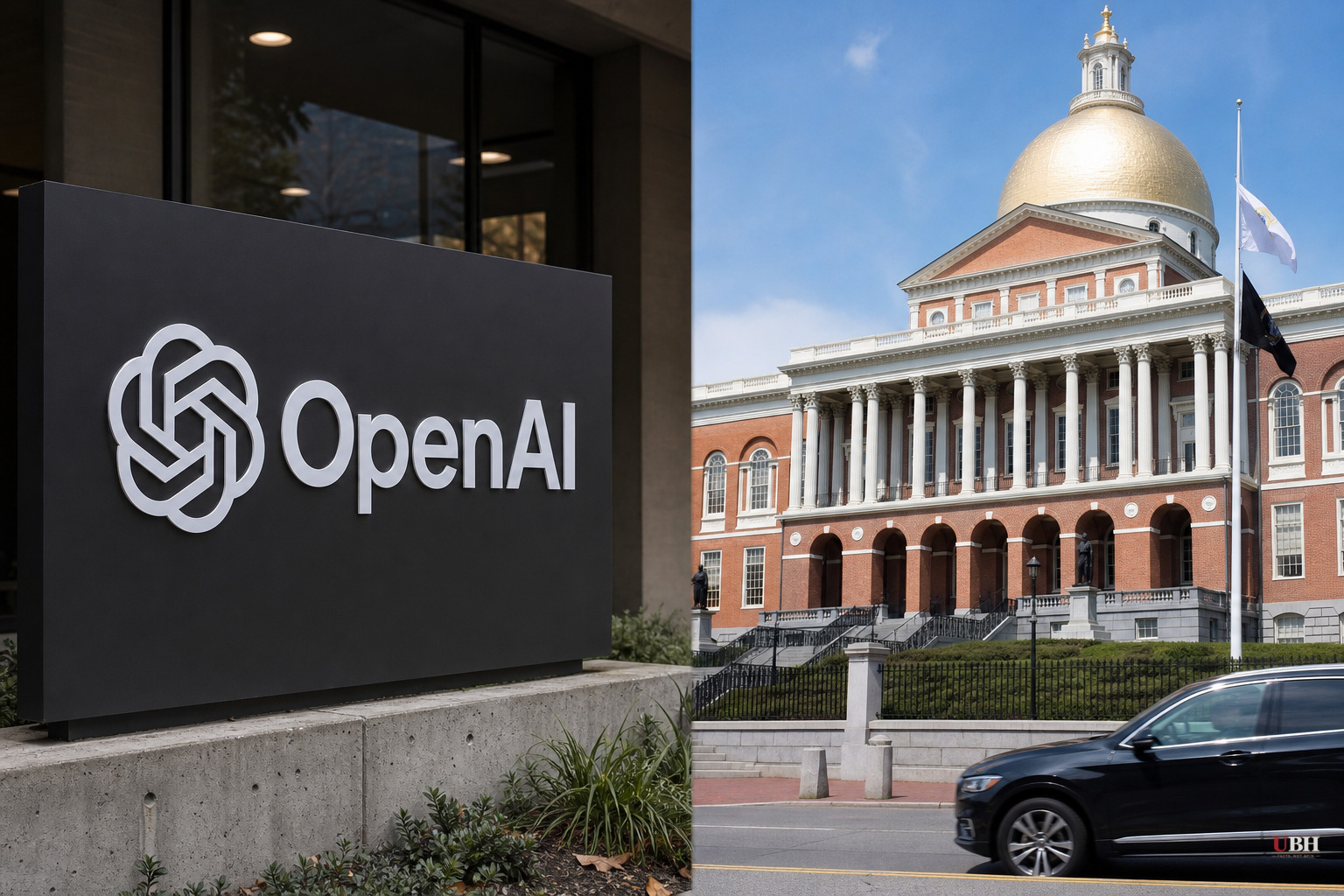
OpenAI wants you to believe it's the responsible one on AI safety. The company's actions in two states this month show a more complicated picture.
In Massachusetts, the state Senate passed an economic development bill last month requiring leading AI labs to undergo independent reviews of catastrophic risks in their frontier models every 120 days, with results made public. That's a first for any US state, according to Insurance Journal. Governor Maura Healey, a Democrat running for reelection in November, left the provision out of her original economic package. Both she and the House still have to sign off before it becomes law.
Donnie Fowler, OpenAI's head of US state policy and partnerships, is fighting it. He told Insurance Journal the frequent reviews would slow down cybersecurity models that could actually defend against the risks lawmakers are worried about. His comparison: Illinois' annual audit is like checking your brake lights and wipers. Massachusetts' quarterly reviews are like tearing the engine apart and rebuilding it.
Anthropic sees it differently. Cesar Fernandez, the company's head of US state and local government relations, told Insurance Journal that outside evaluators are necessary because the industry shouldn't be trusted to check its own work. Anthropic has hired the Boston lobbying firm Tremont Strategies Group to back the bill. Anthropic CEO Dario Amodei has publicly called the Massachusetts proposal the strongest AI legislation in the country.
That's the fight in Massachusetts. Now look at California, where OpenAI is asking for the opposite treatment.
In an August 12, 2025 letter to Governor Gavin Newsom, OpenAI called for California to harmonize state rules with federal and international standards rather than let a patchwork of state laws pile up, according to OpenAI's own posted letter and reporting from Gizmodo. The company wants frontier model developers treated as compliant with state law if they've already signed a safety agreement with a federal body like the Center for AI Standards and Innovation, or with the EU's AI Code of Practice, which OpenAI has also signed.
OpenAI backs some California rules already on the books, including SB 53's transparency requirements and AI watermarking. It draws the line at mandatory pre-release safety testing, which it argues could slow development without proving it makes anything safer.
Ann O'Leary, OpenAI's VP of global policy, said in August 2026 remarks that state capitals, not Washington, are where US AI policy is actually getting written right now, and that makes California's choices disproportionately important.
Here's the tension. OpenAI says it wants consistency and predictability so companies aren't stuck complying with 50 different rulebooks. That's a coherent position. But in Massachusetts, when a state tries to set a standard tougher than what OpenAI prefers, the company doesn't offer to comply and move on. It lobbies to weaken it. Consistency, in OpenAI's telling, apparently means consistency with rules OpenAI likes.
The politics track the money. According to Mission Local's review of Federal Election Commission filings, OpenAI's own employees gave hundreds of thousands of dollars to New York congressional candidate Alex Bores and to San Francisco's Scott Wiener, both of whom championed state AI safety regulation that OpenAI's own leadership publicly opposed. OpenAI President Greg Brockman gave $12.5 million to a super PAC network that in turn spent $6 million opposing Bores. Anthropic's leadership, by contrast, backed the same regulation-friendly candidates as their company's public position: CEO Dario Amodei gave $1 million to the pro-regulation PAC Public First, and five of his employees gave a combined $2.2 million to that same committee, per the FEC filings Mission Local reviewed. Separately, 45 Anthropic employees gave a collective $254,000 directly to Bores, and one Anthropic researcher gave $790,000 to another pro-Bores committee.
Whether frequent, independent catastrophic-risk reviews would actually slow down defensive cybersecurity tools, as Fowler argues, or whether that's a talking point to avoid tougher oversight, is a genuinely open question. No independent technical assessment of that specific tradeoff appears in the current record. Anthropic's position that industry shouldn't self-certify is also a claim, not a settled fact, and reasonable regulators could land on either side of the calibration question, given the technology is new enough that nobody has a long track record to test either claim against.
Meanwhile, compliance with the rules that already exist is spotty. California's AI Transparency Law took effect August 2, 2026, requiring companies with over 1 million users to embed detection metadata and publish public tools to identify AI-generated content. An independent review by Indicator and the human rights group WITNESS, covered by KQED, found that of 13 major companies checked, only seven had published the required tools at the time of the review, with an eighth, Suno, providing its tool to KQED directly after publication. HeyGen, Midjourney, Mistral, Synthesia and xAI did not have public tools available when reviewed. The California Attorney General's office told KQED it cannot comment on whether any enforcement actions are underway.
That's the immediate test of whether any of this state-level rulemaking has teeth. Not what OpenAI or Anthropic say they want, but whether California's AG actually fines anyone for ignoring a law that's already on the books.
Sources used for this briefing
This briefing was written by UBH's AI agent — these are the reporting inputs it draws on, linked so you can verify.


