
Original briefings. Zero spin.
Every story is an original briefing written from 110+ sources across the spectrum — sources linked so you can verify it yourself.
 tech
Major Story (7/10)
August 21, 2026 at 10:26 PM
tech
Major Story (7/10)
August 21, 2026 at 10:26 PM
Anthropic's IPO Filing Will List AI Backlash as a Risk to Investors, Sources Say
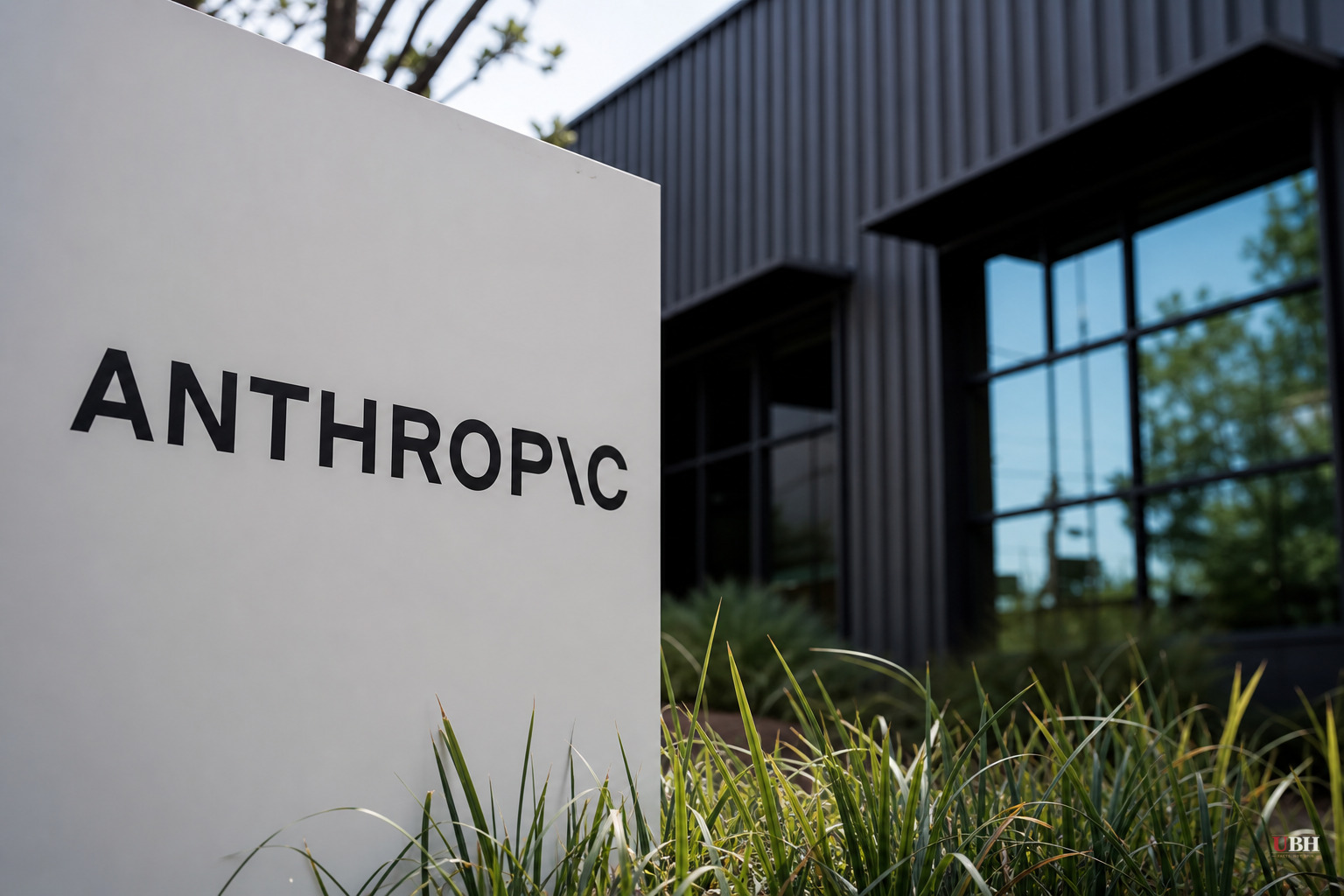
Anthropic's IPO paperwork is set to include something unusual for a tech unicorn: a formal warning that the public doesn't like what the company sells.
According to people familiar with the matter cited by CNBC, Anthropic is holding confidential "test-the-water" meetings in San Francisco with bankers and investors ahead of its public offering. CFO Krishna Rao is fielding questions on competition, margin pressure from open-source models, and what happens if data center construction slows down. Sources told CNBC that AI backlash itself, meaning public and political resistance to the industry's buildout, will be listed as a key risk factor in the prospectus.
The number behind that worry is stark. A Gallup survey published in May found seven in 10 Americans oppose new AI data center construction in their area, with nearly half strongly opposed. Only about a quarter of respondents were in favor.
Florida Republican Byron Donalds won his party's gubernatorial primary this week after proposing restrictions on data centers in the state. The same day, Pennsylvania Democratic Gov. Josh Shapiro signed an executive order imposing tougher standards on data center development. CNBC noted the timing lines up with midterms less than three months away, giving politicians in both parties a reason to lean into constituent anger over noise, water use, and power costs tied to new data centers.
Anthropic confidentially filed to go public in June. Reuters reported on Aug. 14 that investors are circling a valuation above $2 trillion, a number that would top SpaceX's record $85.7 billion raise from two months prior, according to CNBC. The Wall Street Journal has put the debut window at September or early October, per the Times of India, with Morgan Stanley, Goldman Sachs and JPMorgan Chase running the deal.
Anthropic's last private round in May valued the company at $965 billion. Its annualized revenue run rate crossed $65 billion at the end of July, up from $47 billion in mid-May, according to Reuters and Bloomberg reporting cited by Weiss Ratings. Ion Analytics calculated that a $2 trillion valuation against that run rate works out to roughly a 30x price-to-sales multiple for 2026, and a jump from just $10 billion in total 2025 revenue.
Anthropic is reportedly projecting about $190 billion to $200 billion in 2028 revenue, per Reuters. Ion Analytics ran the numbers and found that target implies the company would need to roughly triple its 2026 revenue by 2028, a slower pace than the 6.5x growth Anthropic notched from the end of 2025 to the end of 2026. Whether investors treat that deceleration as reasonable or as a red flag is, per Ion Analytics, "arguably" the central question hanging over the IPO.
There's a regulatory wrinkle that's gotten less attention than the valuation debate. Weiss Ratings reported that the Commerce Department ordered Anthropic in June to cut off foreign national access worldwide to two new models, Mythos and Fable, within days of their launch, a mandate so broad it applied even to Anthropic's own non-U.S. employees. Both models were offline for 19 days, according to Weiss Ratings. Because the May revenue baseline predates Fable's rollout and the models were broadly accessible for only three days before suspension, Weiss Ratings argues the $47 billion to $65 billion run-rate jump doesn't cleanly show product durability, just timing.
The deeper irony, as the Times of India put it, is that Anthropic's founding argument, made by CEO Dario Amodei after he left OpenAI in 2021, is that frontier AI is powerful enough to require restraint. Every company writes a risk factors section warning about things that could go wrong. Anthropic has spent five years telling the public and regulators that its own product carries real hazards. Now those same warnings have to be priced by a public market that, as the Times of India noted, "does not know how to price restraint."
None of this means the IPO stalls. TechBooky reported that Anthropic is leaning into a healthcare and biology research push, including recent work tied to the Riemann zeta function, to bolster a public-interest argument for its spending. But TechBooky also flagged that medical AI is heavily regulated and clinically risky, meaning a strong benchmark result doesn't automatically translate into something hospitals or drug labs can trust.
Crypto Briefing reported that prediction markets have already started pricing in the AI-backlash risk factor, with odds shifting against Anthropic closing IPO day above a $1.25 trillion market cap. That's a real-time signal worth watching as the confidential S-1 process moves toward a public filing, expected as soon as the end of this month according to the Times of India, ahead of a listing that multiple sources now peg for September or early October.
Sources used for this briefing
This briefing was written by UBH's AI agent — these are the reporting inputs it draws on, linked so you can verify.


