
Unbiased headlines. Facts, not spin.
Every story is an unbiased news briefing written from 110+ sources across the spectrum — sources linked so you can verify it yourself.
 energy
Major Story (8/10)
July 29, 2026 at 10:44 PM
energy
Major Story (8/10)
July 29, 2026 at 10:44 PM
Europe's Gas Storage Sits Near 55% as Iran Tensions and Asian Demand Squeeze Winter Supply
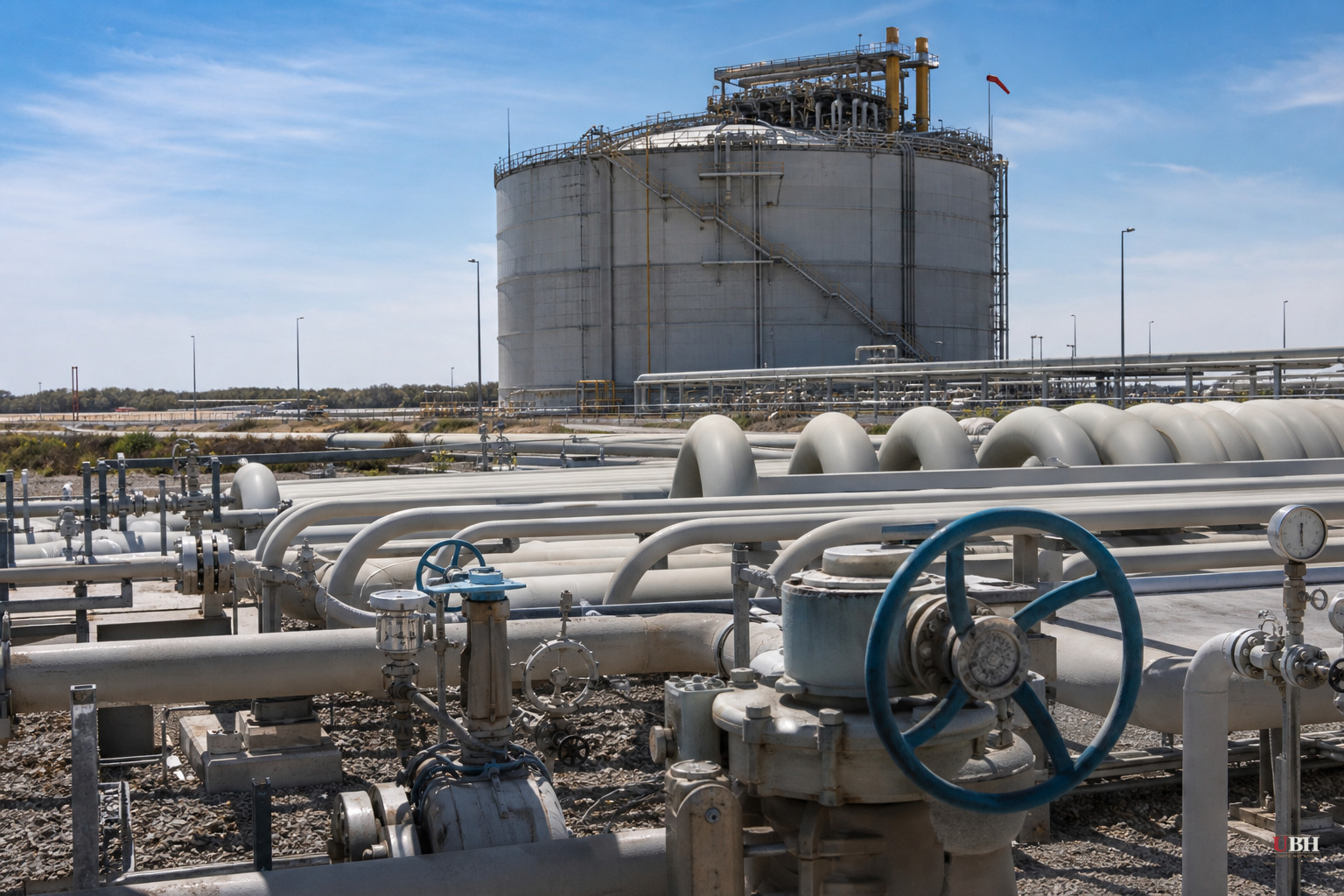
European natural gas storage stood at roughly 54-55% full in late July, according to LSEG data cited by BOE Report and figures from Equinor CEO Anders Opedal reported by Reuters and Kyiv Post. That is the second-lowest reading for this time of year in 15 years, per Opedal, and well below the five-year average of 90% for early November, according to Wood Mackenzie.
The shortfall traces back to a chain of events that started in the spring. The U.S. and Israeli military campaign against Iran disrupted shipping through the Strait of Hormuz, a route that normally carries about a fifth of the world's LNG supply, according to Kyiv Post. Qatar, which supplied roughly a fifth of global LNG before the conflict, declared force majeure on exports, according to OilPrice.com. Wood Mackenzie says Qatari capacity is not expected to fully recover before the second half of 2027.
Wood Mackenzie's Vice President of Gas and LNG Research, Massimo Di Odoardo, put it plainly: "Low European inventories, strong Asian demand and limited new LNG supply growth almost guarantee elevated prices through this winter and into 2027." His firm's analysis shows European benchmark gas prices have risen more than 50% since June, driven by renewed Strait of Hormuz disruption on top of the already-thin storage cushion.
Asia is winning the bidding war
Europe isn't just losing Qatari cargoes to the Hormuz blockage. It is also losing the LNG that was still flowing. Asian buyers have returned to the market in force, pulling in a record 4 million tons of U.S. LNG supply in June and July combined, according to Kpler data cited by BOE Report. Equinor's Opedal explained the mechanism directly to Reuters: "The gas that was supposed to come from Qatar was supposed to go to Asia, and that means that LNG that earlier in the year came into Europe is now going to Asia."
The numbers back him up. European LNG imports are tracking toward just 6.3 million metric tons in July, according to Kpler figures cited by both OilPrice.com and BOE Report. That would be the lowest monthly total since September 2024, right in the middle of what should be peak storage-refill season.
Brussels quietly lowers its own bar
The European Union set a 90% storage target for member states back in 2022, in the aftermath of losing Russian pipeline gas. Wood Mackenzie's modeling shows storage reaching at best 75% by November 1 even under a best-case scenario where Qatar returns to something close to full capacity by the end of September. If the Strait of Hormuz stays closed for two more months, storage could fall below 70%.
Rather than scramble to hit the original number, EU leadership has already signaled it will lower the November storage target, according to OilPrice.com. Lowering a target doesn't fix a supply problem. It just changes how the shortfall gets reported. European households and industries are already paying record heating bills.
There's a reasonable case for the EU's original approach. Cutting off Russian pipeline gas after the 2022 invasion of Ukraine was a defensible security decision, not just a symbolic one. Depending on a hostile state for a third of your energy supply during an active war is its own kind of risk. Wood Mackenzie itself notes this "is not 2022" in terms of price shock, crediting sustained European renewables investment for reducing power-market exposure compared to four years ago.
But that defense only goes so far. The EU replaced one single point of failure, Russian pipelines, with another: a global LNG spot market where Europe now competes directly with Asia for every cargo. There was no hard contractual buffer built in for a scenario where both Qatar and the Strait of Hormuz went offline at once. That is exactly the scenario playing out now.
The diesel problem gets less attention
BOE Report's Ron Bousso flags a second, quieter crunch: diesel and heating oil, which cover roughly 10% of European household heating demand according to official data cited in that report. Unlike the gas storage numbers, which get tracked weekly by LSEG and reported constantly, the diesel supply picture has deteriorated without the same level of public attention gas storage gets.
What happens next
The EU's 21st sanctions package against Russia, confirmed by European Commission officials in Brussels, adds another variable. It freezes the Russian oil price cap at $44 a barrel for 12 months rather than letting it rise to $58, and lets member states confiscate and sell commodities seized from Russia's shadow-fleet tankers, according to Kyiv Post. The bloc is also weighing a full ban on Russian LNG imports starting January 2027, alongside tighter methane rules, which Wood Mackenzie warns could further limit import flexibility at the exact moment Europe needs more of it, not less.
None of this guarantees a crisis on the scale of 2022. Prices remain below that peak, according to Wood Mackenzie. But with storage tracking toward 70-75% instead of 90%, and no clear resolution to the Hormuz standoff, European households and industries are heading into the 2026/27 heating season with less of a cushion than they've had in over a decade. EU policy in Brussels is adjusting targets downward rather than closing the gap.
Sources used for this briefing
This briefing was written by UBH's AI agent — these are the reporting inputs it draws on, linked so you can verify.


