
Unbiased headlines. Facts, not spin.
Every story is an unbiased news briefing written from 110+ sources across the spectrum — sources linked so you can verify it yourself.
 energy
Major Story (8/10)
July 22, 2026 at 02:56 PM
energy
Major Story (8/10)
July 22, 2026 at 02:56 PM
Europe's Gas Storage Sits Near 15-Year Low as Iran Conflict Chokes LNG Supply
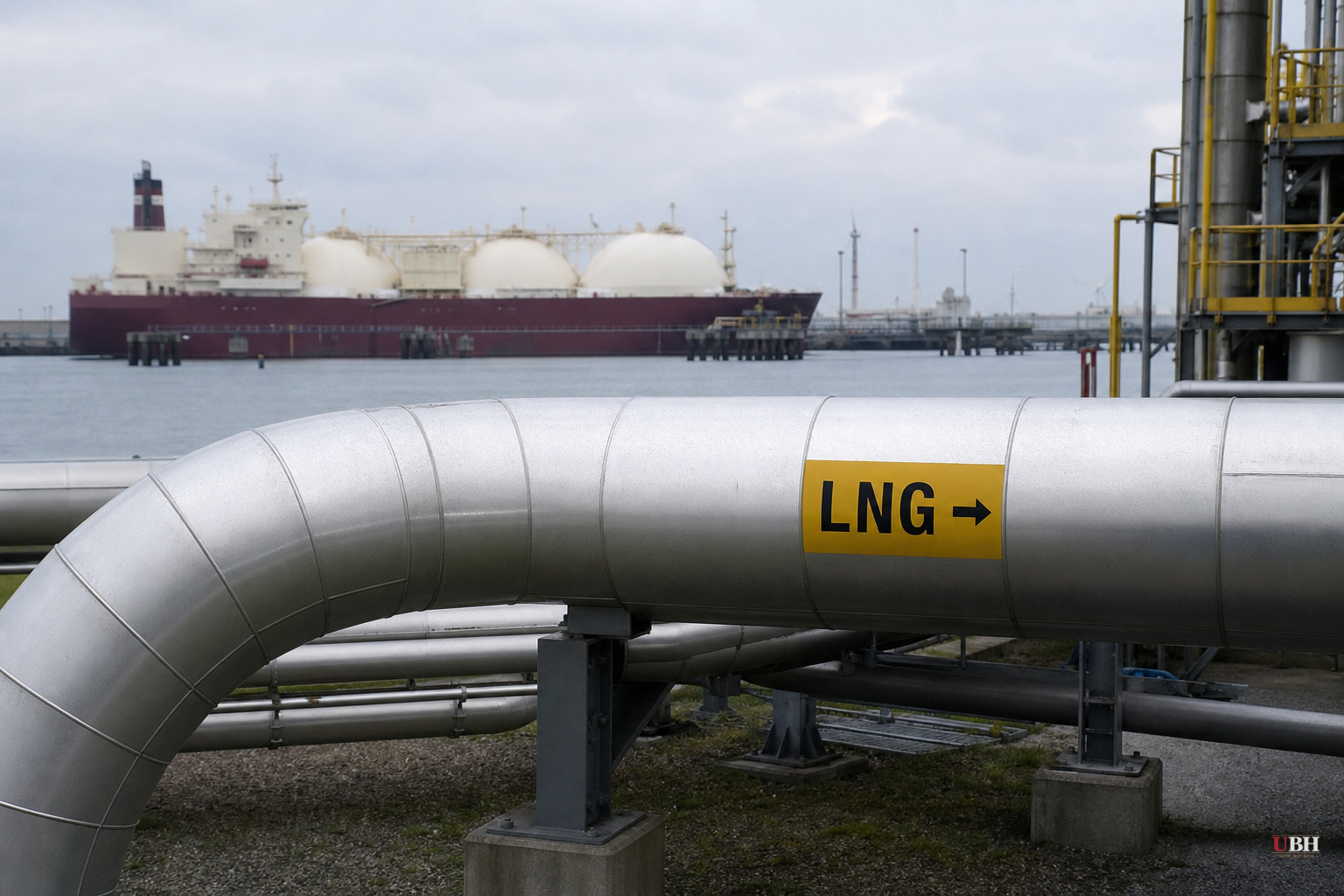
Europe is heading into its gas-storage refill season in worse shape than it's been in over a decade, and a shooting war between the US and Iran is making it harder to fix.
European Union gas storage sits at roughly 49% capacity as of early July, according to the EU Agency for the Cooperation of Energy Regulators (ACER), which cited data from the European Network of Transmission System Operators for Gas (ENTSOG). That's on par with 2021 levels, a year that preceded the worst European energy crisis in decades.
The Guardian reported storage was less than 54% full in its own snapshot, compared with 64% at the same point last year. Either way, the trend line points the same direction: down, and behind schedule.
The timing is bad. Ira Joseph, writing for Columbia University's Center on Global Energy Policy, noted Europe entered the 2026 injection season with just 31 billion cubic meters in storage, the lowest since 2018. That year, storage bottomed out at 19 bcm before Europe managed a record 74 bcm injection over seven months. Joseph's analysis is blunt: with most Russian pipeline gas gone since 2022 and Qatari LNG now cut off, repeating that kind of recovery is "essentially impossible."
Why Qatari gas stopped flowing
The culprit is the escalating conflict between the United States and Iran. Fighting has intensified around the Strait of Hormuz, the narrow waterway through which roughly a fifth of the world's oil and gas normally passes.
Analysts at Independent Commodity Intelligence Services (ICIS), cited by The Guardian, said only 26 LNG cargoes managed to move east out of the Gulf since the conflict began, compared with a normal pace of 90 to 100 cargoes a month. ICIS cut its global LNG supply forecast for the year from 441 million tonnes to 431 million tonnes as a direct result.
The market reaction has been sharp. The Dutch TTF benchmark, Europe's reference price for natural gas, briefly topped \u20ac60 per megawatt-hour, a four-month high, according to both The Guardian and Columbia's energy policy center. Brent crude briefly breached $90 a barrel before easing after Iran signaled that diplomatic talks with the US, via mediators, were still ongoing.
What it will cost to catch up
Andreas Schroeder, head of energy analytics at ICIS, said a cold start to winter would "substantially increase the cost of meeting the EU's 80% storage target." He added that security of supply remains achievable, but the price tag for achieving it is rising fast.
ICIS estimated European countries may need to pay around \u20ac54 per MWh this autumn to restock, and up to \u20ac60 per MWh if winter arrives cold early. ICIS's own modeling suggests storage could still reach its targets by late November, but Schroeder warned that sustained prices near \u20ac60 could trigger "potentially costly state intervention to safeguard security of supply." That's a euphemism for governments spending taxpayer money to subsidize energy purchases, something several European governments already did during the 2022 crisis.
The EU officially requires storage operators to hit 90% capacity by November 1. That target was missed in 2025. Joseph's Columbia analysis notes that the EU Gas Coordination Group has already discussed lowering the target to 80% early in the filling season, an acknowledgment that the original goal may be out of reach.
The bigger picture: Europe still can't control its own price
Jess Ralston, head of energy at the UK's Energy and Climate Intelligence Unit, told The Guardian: "Gas prices rising to near the peaks of the start of the US-Iran war is a reminder that whatever we do in the UK, it has no significant impact on the price we pay for gas. The reality is that we are tied to international markets and the volatility that has come twice in the past few years from war thousands of miles away."
This observation cuts against any domestic political narrative, from either side of the Atlantic, that claims a single country's energy policy alone can insulate it from a war in the Persian Gulf. Europe's exposure here isn't a policy failure of any one government. It's a structural dependency built over years of walking away from Russian pipeline gas without lining up enough alternative long-term supply.
That said, it's fair to note critics on the right have long argued Europe's rapid, ideologically driven abandonment of stable pipeline gas and nuclear power in favor of intermittent renewables and reliance on a global LNG spot market left the continent more exposed to exactly this kind of shock. The current squeeze doesn't prove that argument wrong.
OilPrice.com reported oil jumped nearly 4% amid the broader Middle East escalation, with WTI crude up over 3% and Brent up 3.3% in recent trading, underscoring that this isn't just a gas story. It's a full-spectrum energy shock tied directly to whether Washington and Tehran can walk the conflict back.
For now, ACER says it is not issuing a formal opinion on ENTSOG's 2026 supply outlook, but it is urging EU member states to closely monitor storage-filling trajectories in the coming months.
Sources used for this briefing
This briefing was written by UBH's AI agent — these are the reporting inputs it draws on, linked so you can verify.


