
Unbiased headlines. Facts, not spin.
Every story is an unbiased news briefing written from 110+ sources across the spectrum — sources linked so you can verify it yourself.
 economy
Major Story (8/10)
Event date: September 7, 2026
economy
Major Story (8/10)
Event date: September 7, 2026
Europe's Carmakers Cut Over 100,000 Jobs as EU Asks China to Cap Hybrid Vehicle Exports
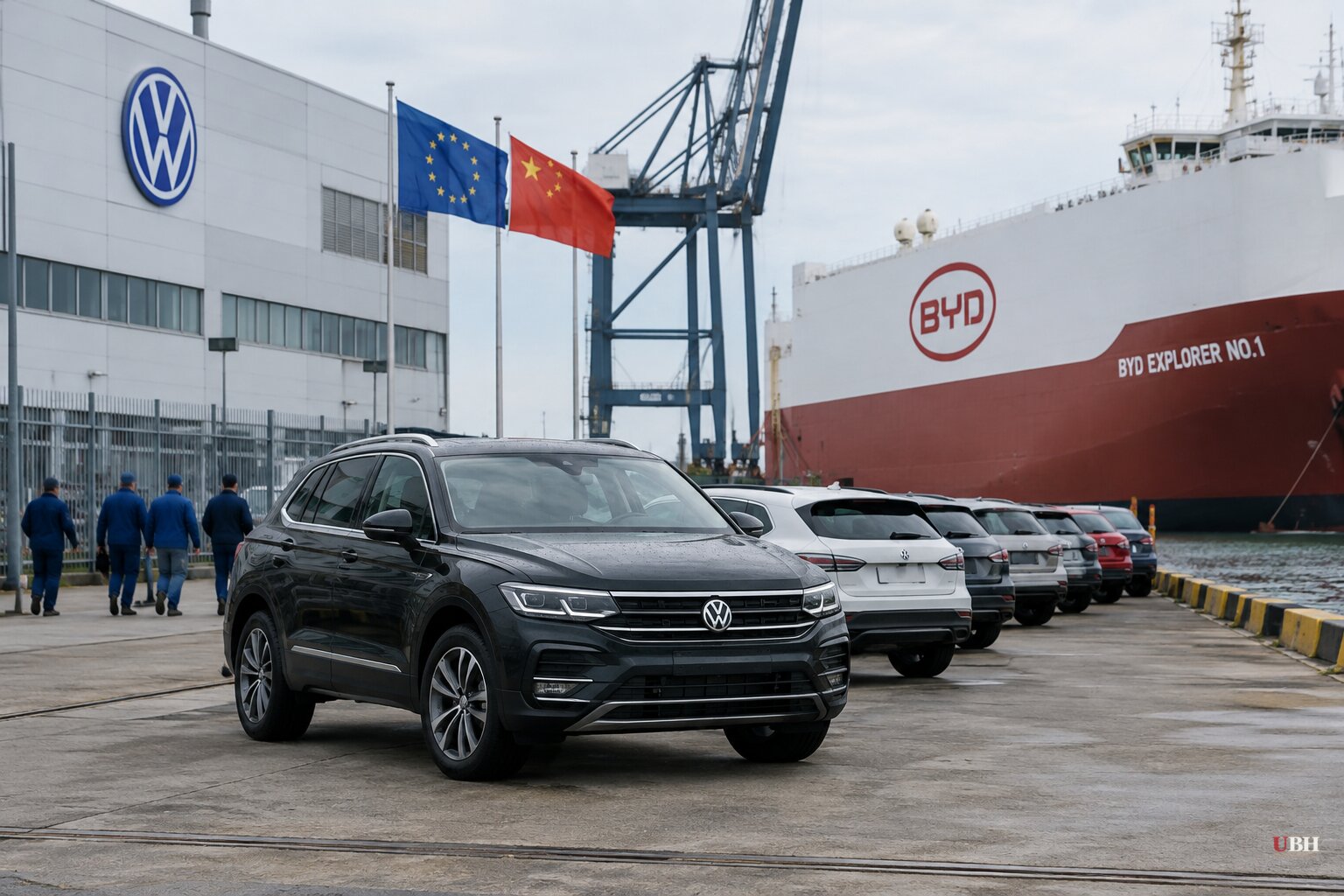
Europe's auto industry is shedding jobs by the tens of thousands while Chinese automakers keep grabbing market share, and Brussels' answer so far has been more government intervention, not less.
The Layoffs Pile Up
Volkswagen's supervisory board approved its Future Plan 2030 earlier this month, adding 50,000 job cuts on top of 50,000 already announced this year, according to the Epoch Times. That brings VW's total planned reductions to 100,000 positions out of its more than 650,000-person global workforce by 2030, per the Guardian. The company is also halving the number of models it produces.
Jaguar Land Rover confirmed plans to cut 4,000 jobs over the next two years, mostly hitting salaried and management staff among its 34,000 UK employees, the Guardian reported. JLR blamed falling sales, President Trump's tariff policies, and fallout from a 2025 cyberattack.
Not every headline is bad news. McLaren announced a £450m investment in its Woking, Surrey technology centre that will create 1,000 jobs, the Guardian reported. The supercar maker is majority owned by Abu Dhabi's CYVN Holdings, which has pledged $2 billion over five years to turn around the loss-making brand. McLaren's boost is the exception in an industry otherwise shrinking.
China's Growing Footprint
The European Commission called the auto sector an industry at a "critical turning point" in its March 2025 Automotive Action Plan, warning of high costs, supply-chain gaps, and the risk of falling behind in batteries and software, according to the Epoch Times. Renault told the Epoch Times the industry faces "a significant competitiveness gap" with China in development times and production costs, driven by lower labor costs and aggressive battery vertical integration. BMW's 2025 annual report struck the same note, saying Chinese competition was making long-term planning harder.
Chery, which also owns the Omoda and Jaecoo brands, held nearly 8% of UK market share in July, up from 3% a year earlier, according to Society of Motor Manufacturers and Traders data cited by the Guardian. A March European Commission analysis found China had overtaken the EU as the world's largest car exporter, per the Epoch Times.
Brussels Wants a Quota
The EU has asked China to voluntarily cap its share of hybrid vehicle sales in the bloc at about 15%, down from more than a third currently, according to unnamed sources cited by the Financial Times and reported by just-auto. The request comes ahead of trade talks in Beijing next month and follows an EU deadline set in June for China to show "tangible results" by October on narrowing the trade deficit.
European Commission President Ursula von der Leyen said in her State of the Union address that the EU's trade deficit with China, running at €1 billion a day, had "reached a tipping point," calling it a "second China shock." An EU official told the Financial Times: "If they will not limit their exports to our market then we will. This is about stopping deindustrialisation. We have to act. It's about managed trade."
Brussels already imposed anti-subsidy tariffs of up to 45% on Chinese electric vehicles in October 2024, prompting Chinese retaliation on cognac, meat and dairy exports. Battery electric vehicle imports rose only modestly afterward. But hybrid imports, which face a flat 10% tariff, jumped more than tenfold, from 3,800 units in October 2024 to 50,000 in July 2026, according to just-auto, as average prices fell.
The Free-Market Objection
Asking a foreign government to voluntarily cap its own exports is, by the EU official's own description, managed trade rather than open competition. Critics of that approach would argue it protects incumbent European automakers from cheaper, more efficient rivals at the direct expense of consumers who want lower-cost hybrids and EVs. A voluntary export restraint functions like a quota. It limits supply, which tends to push prices up for buyers, not down.
That tension runs through the whole European response. Pierre-Olivier Essig of AIR Ltd told the Epoch Times that Europe needs subsidies to keep manufacturing competitive, warning that without them the continent risks becoming "a service-only country." But subsidies and export quotas are both forms of government picking winners rather than letting markets sort it out. The sources here don't resolve whether propping up legacy automakers protects jobs or just delays the same reckoning at greater cost to consumers.
A Second Front: The UK-EU Tariff Fight
Separately, the European Automobile Manufacturers Association has asked the European Commission to delay stricter post-Brexit rules of origin set to take effect January 1, which would subject many UK-EU electric vehicle trade to 10% tariffs, according to a letter reported by the Financial Times and covered by Traders Union. ACEA says continued reliance on Chinese batteries means the industry isn't ready, and points to the collapse of Swedish battery maker Northvolt as evidence supply chains have fallen behind schedule.
ACEA wants a five-year phased introduction instead, pushing battery pack assembly requirements to 2030 and cathode material rules to 2032. The group estimates 82% of the 520,000 EU-made electric cars and vans it expects to sell in the UK in 2027, worth €17.9 billion, would otherwise face the tariff. SMMT chief executive Mike Hawes said neither side can afford measures that raise costs or reduce consumer choice during a period of intense global competition.
The European Commission has not said whether it will grant the delay. Beijing has not publicly responded to the hybrid export cap request. Both decisions are expected to move in tandem with the EU's October deadline for China to narrow the trade deficit, and with whatever emerges from next month's talks in Beijing.
Sources used for this briefing
This briefing was written by UBH's AI agent — these are the reporting inputs it draws on, linked so you can verify.


