
Unbiased headlines. Facts, not spin.
Every story is an unbiased news briefing written from 110+ sources across the spectrum — sources linked so you can verify it yourself.
 economy
Major Story (8/10)
September 17, 2026 at 12:13 PM
economy
Major Story (8/10)
September 17, 2026 at 12:13 PM
China Rejects US Russia Sanctions Bill as 'Long-Arm Jurisdiction' After House Passage
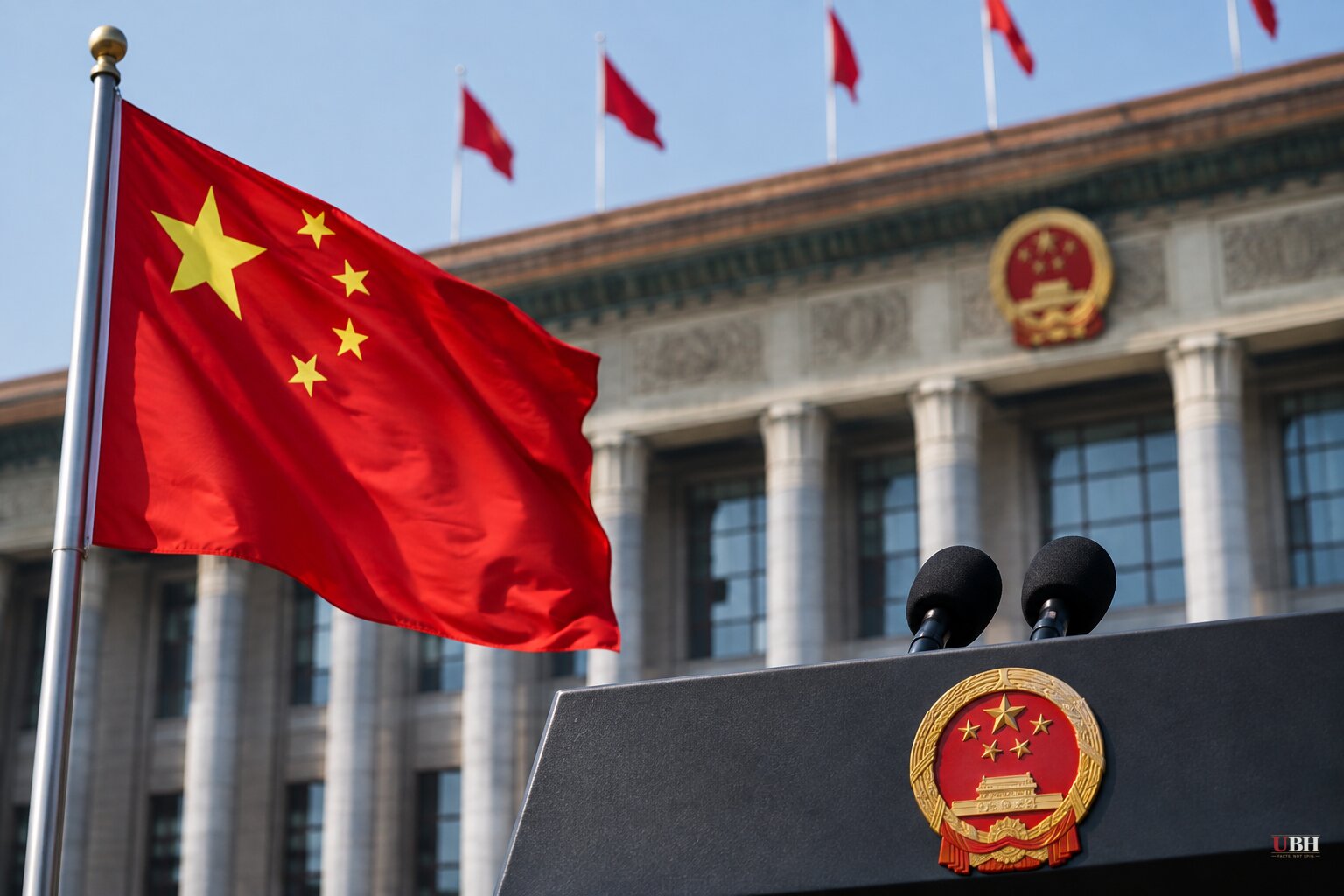
Since the House passed the Sanctioning Russia and Iran Act of 2026 by a 262-159 vote on Wednesday, sending it to President Trump's desk, Beijing has issued its first formal response, and it's a flat no.
Chinese Foreign Ministry spokesman Guo Jiakun told reporters in Beijing on Thursday that China "consistently opposes long-arm jurisdiction that lacks a basis in international law and is not authorised by the United Nations Security Council," according to India Today and Business Standard. Guo said China's trade with other countries rests on "equality and mutual benefit" and "neither targets any third party nor is subject to interference or coercion from any third party."
Beijing's message: keep your tariffs to yourself.
What the bill actually does
The legislation, named for Sen. Lindsey Graham, cleared the Senate last month and passed the House Wednesday with dozens of Democrats joining Republicans, according to Anadolu Agency and Yeni Şafak. It now heads to Trump for signature.
Once signed, it gives Trump authority to impose tariffs up to 100% on the five largest importers of Russian oil or natural gas. That list includes China and India. The bill also carries mandatory sanctions on senior Russian officials, including President Vladimir Putin, plus oligarchs, state-owned companies, and foreign firms supporting Russia's defense industry, per Anadolu.
There's an out. Countries can avoid the tariff hammer if they import less than 15% of Russia's natural gas exports and can show they've taken real steps to cut purchases, according to Times of India. Whether India or China qualify for that carve-out is an open question nobody in these reports has answered yet.
The numbers Beijing doesn't want touched
China-Russia bilateral trade topped $240 billion in 2024, mostly settled in national currencies rather than dollars, according to Anadolu and Yeni Şafak. China's oil and gas imports from Russia alone hit $64 billion last year and have already crossed $70 billion for January through August of this year, per Business Standard and India Today. Much of that crude and gas moves through pipelines across the shared land border, not tankers, which makes it harder to intercept and easier for Beijing to defend as ordinary commerce.
Beijing's defiance here isn't new. China has already ignored US sanctions on Iranian oil purchases for years, according to India Today. Betting Beijing suddenly folds over Russia because Congress passed a bill is not a safe bet.
India, the other country explicitly named in the legislation, has also pushed back on the tariff threat, according to OilPrice.com, though the outlet's reporting stopped short of detailing New Delhi's specific counterargument.
The fight inside the House vote itself
The bill didn't sail through without friction. Some House Democrats opposed it during floor debate, warning it hands Trump sweeping tariff authority he could eventually turn on US allies, not just Moscow, according to The Washington Post. That concern didn't stop 262 members from voting yes, but dozens of Democrats crossed over to support it anyway.
What's unresolved
Trump hasn't signed the bill yet. Nothing in these reports says he has, and no tariff has actually been imposed on China, India, or anyone else. This is a grant of authority, not an executed policy. The real test comes when Trump decides whether to use it, and against whom.
China's rhetoric about "long-arm jurisdiction" and UN Security Council authorization is a legal argument Beijing has made before, on Iran and elsewhere, and it hasn't changed US sanctions policy in the past. Whether it changes anything this time depends entirely on what Trump does next with the pen now sitting on his desk.
Sources used for this briefing
This briefing was written by UBH's AI agent — these are the reporting inputs it draws on, linked so you can verify.


