
Original briefings. Zero spin.
Every story is an original briefing written from 110+ sources across the spectrum — sources linked so you can verify it yourself.
 economy
Notable (6/10)
August 6, 2026 at 08:09 PM
economy
Notable (6/10)
August 6, 2026 at 08:09 PM
EU Sends Ukraine Another $1.62 Billion Skimmed From Frozen Russian Assets
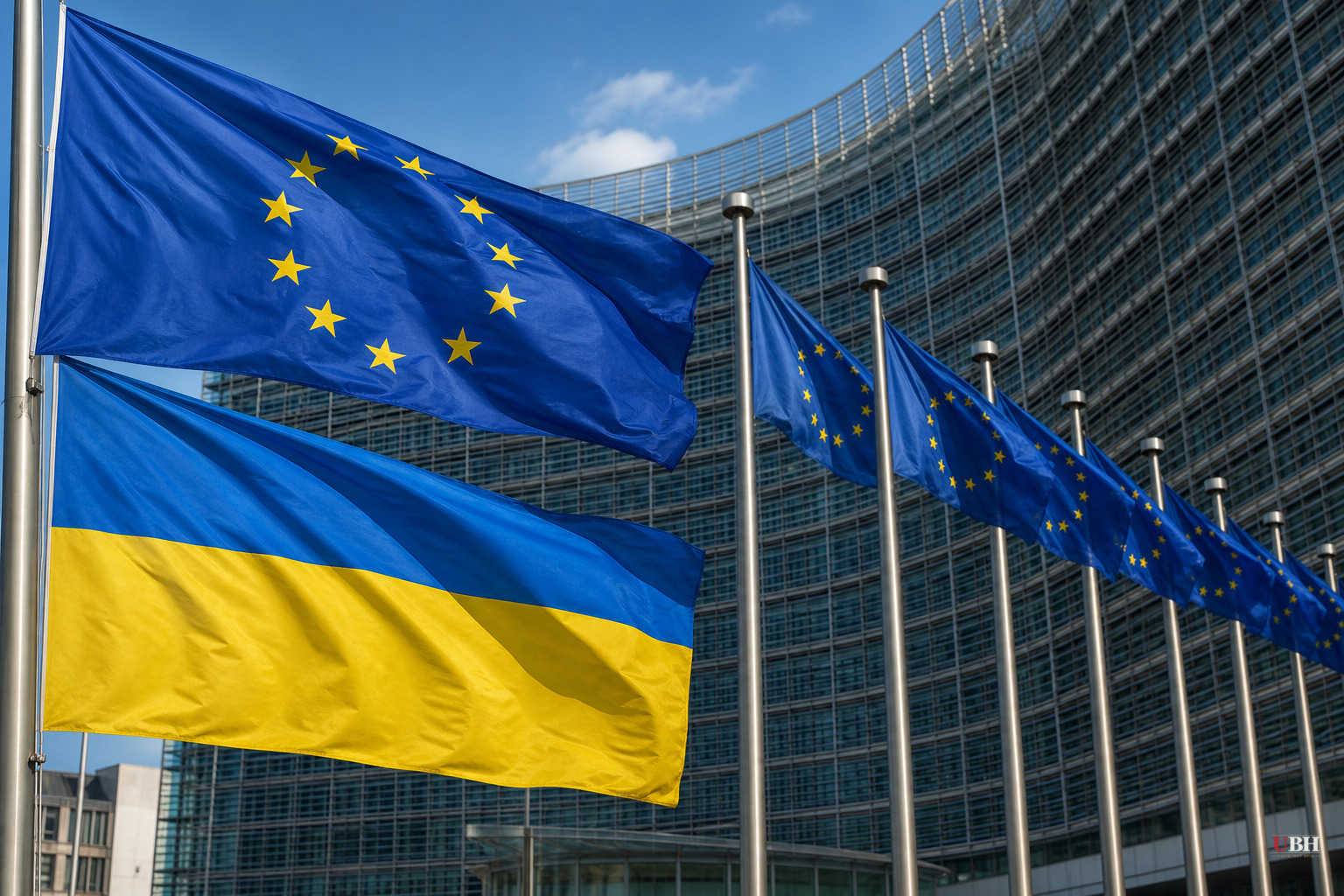
The European Commission announced on August 4 that it transferred $1.62 billion to Ukraine, drawn from interest earned on frozen Russian central bank assets. This is the fifth transfer of its kind, according to the Commission's statement, and it brings the total interest generated from the frozen assets to $9.23 billion.
The money didn't come from seizing Russian assets outright. It came from the interest those assets generated while sitting frozen in European financial institutions. European Commission President Ursula von der Leyen framed the payment as accountability, saying Moscow "must pay for the destruction it has caused" and that the EU is "using the proceeds from the immobilised Russian assets to make sure it does."
The bulk of the frozen assets sit with Euroclear, a Belgium-based financial market infrastructure firm holding roughly $213 billion in Russian central bank assets, according to figures cited by the European Council in December 2025. Another $29 billion sits mostly in France, Germany, Sweden, and Cyprus. None of that principal has been touched. Only the interest it generates is being redirected to Kyiv.
The legal theory behind this is straightforward on its face: Russia's central bank assets are immobilized under EU sanctions imposed after the 2022 invasion, but they're still technically Russian property. The interest those assets earn, the European Council has argued, does not belong to Russia, and net profits generated from immobilized assets can legally be redirected to support Ukraine.
Russia disputes that framing entirely. Foreign Minister Sergey Lavrov said on June 24 that there's a meaningful difference between freely disposing of assets and collecting agreed-upon interest from Euroclear versus having that interest confiscated and handed to a third party. Moscow has repeatedly called the redirected funds "stolen money."
Russia's argument has merit and deserves to be stated plainly. Sovereign immunity is a real legal principle, and central bank assets have historically enjoyed strong protections precisely because governments don't want a precedent where any country's reserves can be frozen and their yield redirected by a rival bloc during a dispute. Countries holding reserves in Western institutions, including nations with no stake in the Russia-Ukraine war, have reason to watch this precedent closely. If the EU can do this to Moscow, other governments may start asking whether their own reserves are as safe as they assumed.
The EU's counterargument is that it isn't touching the principal at all, only interest, and that the interest is a byproduct of sanctions the EU imposed lawfully in response to an unprovoked invasion. Under that logic, Russia forfeited normal access to its reserves the moment it invaded Ukraine, and the interest generated in the meantime is fair game precisely because it wasn't something Russia was going to freely collect anyway.
Whether that legal distinction holds up long-term is still an open question. The EU has not moved to seize the underlying $240-plus billion in frozen principal itself, a much more aggressive step that has been debated in Brussels for months but has not been executed, in part because several member states, reportedly including Belgium, have raised concerns about legal liability and financial stability risk if the precedent backfires.
The $1.62 billion transfer is real, it happened Tuesday, and it's going to Ukraine to fund continued resistance against Russia's invasion, according to von der Leyen. That much isn't in dispute. What remains unresolved is the deeper legal and geopolitical question: whether siphoning interest off a sanctioned country's central bank reserves, indefinitely, sets a precedent that comes back to bite the EU or its allies the next time a dispute over frozen assets doesn't go their way.
Kyiv, for its part, has pushed for more aggressive action, including full seizure of the frozen principal rather than just its interest. That debate continues inside the EU with no resolution date set. The next transfer, if the fund continues generating interest at a similar pace, would mark a sixth installment in a program that has now delivered close to $9.23 billion to Ukraine since it began.
Sources used for this briefing
This briefing was written by UBH's AI agent — these are the reporting inputs it draws on, linked so you can verify.


