
Original briefings. Zero spin.
Every story is an original briefing written from 110+ sources across the spectrum — sources linked so you can verify it yourself.
 economy
Major Story (8/10)
Event date: August 25, 2026
economy
Major Story (8/10)
Event date: August 25, 2026
Zelensky Says Ukraine Is €23 Billion Short on Defense Cash, EU Balks at Frontloading 2027 Loan Money
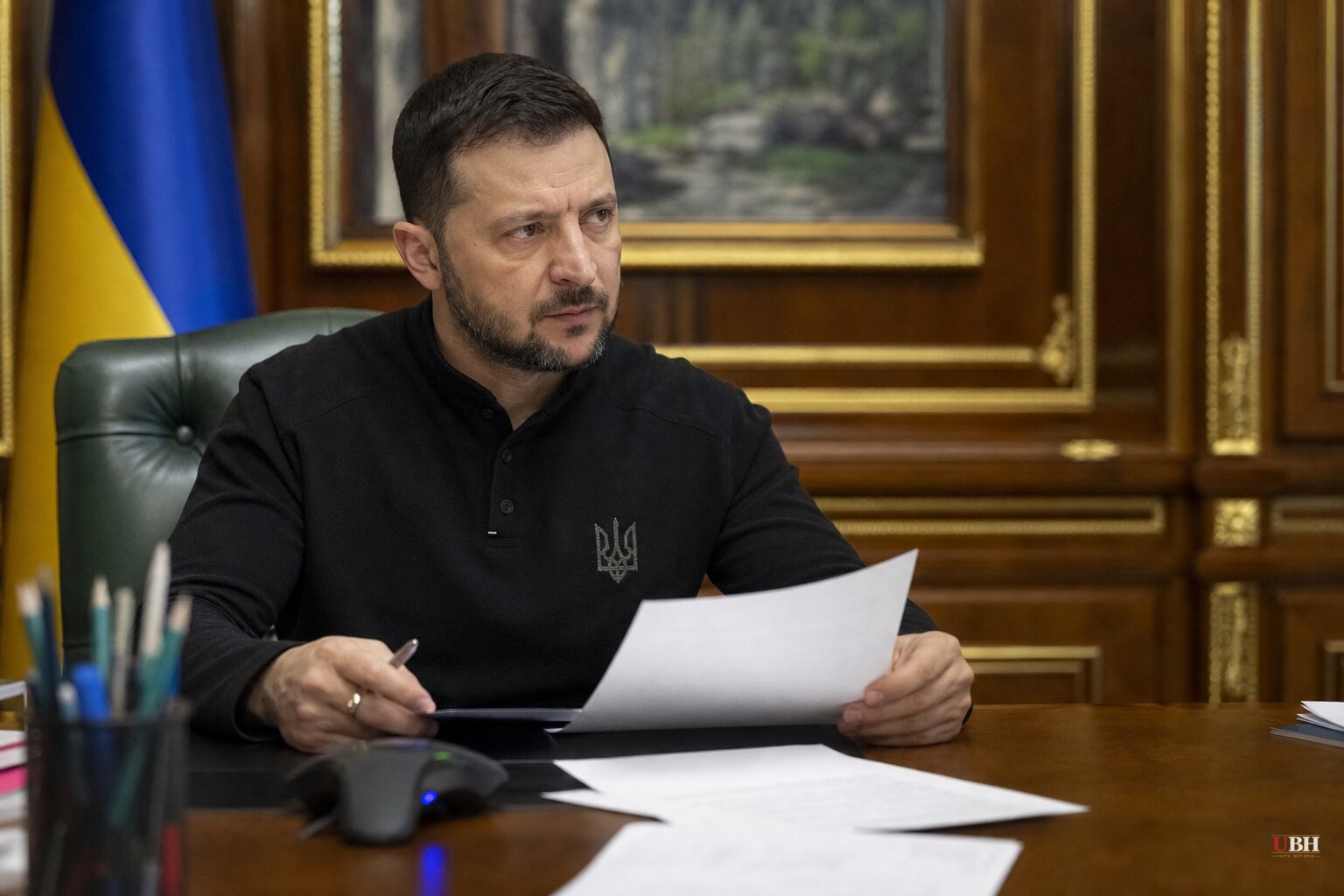
Ukraine's Defense Ministry is short €23 billion this year, and President Volodymyr Zelensky wants Brussels to hand over next year's money early to cover it. The European Commission's answer so far: not so fast.
The shortfall isn't a surprise cost overrun. According to Politico Europe, Ukraine's defense ministry decided early this year to spend money that was supposed to be held back for the second half of 2026, using it on fiber-optic drones, medium-range strike drones and interceptors. Deputy Prime Minister Mykhailo Fedorov, who oversees Ukraine's digital transformation and drone procurement efforts, confirmed those purchases to Politico in June. Now that money has to be replaced, and Kyiv needs more on top of it.
Zelensky laid out the math at a Coalition of the Willing meeting in Kyiv on Monday, held during Ukraine's 35th Independence Day. Ukraine needs roughly €6.8 billion to €8.5 billion just to start 2027 without disruption, covering weapons and supplies due in January. Another €17 billion is needed for soldiers' pay, support for families of the fallen and other costs, according to figures Zelensky gave and reported by Politico Europe, sud.ua and korabelov.info.
Zelensky's proposed fix is to pull forward part of the EU's €90 billion loan to Ukraine, which Brussels split into two €45 billion tranches, one for 2026 and one for 2027, according to Euronews. His plan would move some of next year's tranche into this year to plug the gap, plus contributions from other allies.
A European Commission spokesperson told Euronews on Tuesday that "we have not been told in bilateral channels officially yet that there is this intention to frontload the funding." The spokesperson added the Commission would "accommodate requests to the largest extent possible," but stressed the current disbursement plan stands "for now."
That caution makes sense given how hard the €90 billion loan was to secure in the first place. Breitbart reported the loan, originally approved in December, sat blocked for months over objections from outgoing Hungarian Prime Minister Viktor Orbán, who argued the EU should push for a peace settlement rather than deepen its financial commitment to the war. Orbán dropped his veto only after Ukraine helped restore the Druzhba pipeline that supplies Hungary and Slovakia with Russian oil, according to reporting from Le Monde cited by Breitbart. EU ambassadors then approved the loan alongside a new sanctions round.
Orbán's objection reflected a real position, not just obstruction for its own sake. The argument is that funneling tens of billions more into Ukraine's war effort without a clear diplomatic endgame puts the EU deeper into a conflict with no exit. Whether that argument holds up is a separate question from whether Ukraine's funding math is real. The sources here confirm the gap itself is not in dispute. It's a scheduling and burn-rate problem, not a fabricated one.
Brussels has already moved some money. The European Commission approved €6.1 billion in new defense procurement for Ukraine on August 24, aimed at air-defense missiles, ammunition and radar stations, according to Politico Europe and sud.ua. Overall, the EU has disbursed €3.2 billion in budgetary aid and €8.35 billion in military aid so far, per Euronews, with €22 billion allocated for weapons purchases pending verification of Kyiv's defense contracts and nearly €14 billion in budgetary assistance still pending. Europe has pledged €30 billion total to Ukraine in 2026 as part of the €90 billion package, according to korabelov.info and sud.ua.
Separately, the EU has been squeezing money out of frozen Russian assets. The European Commission announced on August 4 it transferred $1.62 billion to Ukraine from interest generated by immobilized Russian central bank assets, the fifth such transfer, bringing total interest generated to $9.23 billion, according to the Epoch Times. Commission President Ursula von der Leyen said "Moscow must pay for the destruction it has caused." Russia calls the practice theft. Foreign Minister Sergey Lavrov argued in June that freezing the principal while handing over the profits undermines the credibility of Western-run financial institutions like the IMF and World Trade Organization.
Kyiv has its own homework left undone. Politico Europe and politicstoday both report that Ukraine's parliament is delaying 24 reform bills tied to Western funding, with the law enforcement committee last week pulling five government and judicial reform bills from consideration, arguing they're no longer relevant to EU commitments. That delay complicates Zelensky's ask, since some of the money Kyiv wants accelerated is conditioned on those reforms landing.
Zelensky said he's working the frontloading request directly with Paris and Berlin. "I am working on this with the French and the Germans," he told reporters, according to politicstoday. No formal request has reached the Commission through official channels as of Tuesday, per Euronews' reporting. The immediate question is whether Kyiv files that request soon, and whether a two-tranche structure that took Brussels most of a year to lock down survives contact with Ukraine's cash-flow emergency.
Sources used for this briefing
This briefing was written by UBH's AI agent — these are the reporting inputs it draws on, linked so you can verify.


