
Unbiased headlines. Facts, not spin.
Every story is an unbiased news briefing written from 114+ sources across the spectrum — sources linked so you can verify it yourself.
 economy
Major Story (8/10)
Event date: August 19, 2026
economy
Major Story (8/10)
Event date: August 19, 2026
China's Chip Gap Is Closing Fast. It's Not Closing All the Way
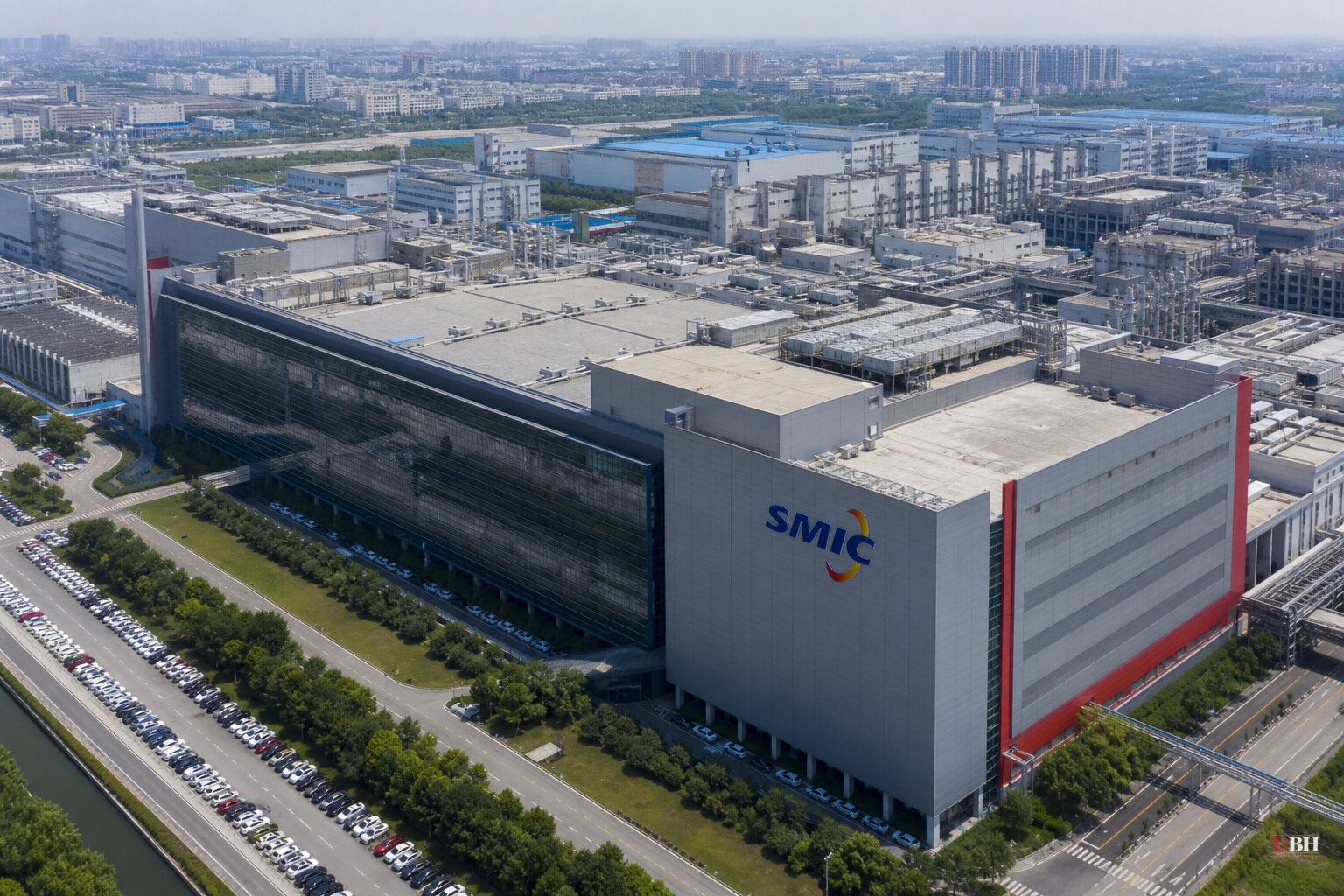
Goldman Sachs dropped its fourth annual report on China's chip ambitions on Monday, August 24, and the numbers are real. China's overall semiconductor self-sufficiency rate hit 70% by June 2026, according to Goldman's research, nearly double the 38% rate from January 2010, as reported by AICoin.
On advanced chips specifically, the gap is closing even faster. Goldman projects China's supply of 7-nanometer-and-below wafers will grow at a 46% compound annual rate from 2025 to 2035, blowing past the 17% growth in domestic demand, according to the South China Morning Post. That narrows the deficit between what China needs and what it can make from 92% today to 34% by 2035.
The engine behind that is SMIC, China's largest contract chipmaker. Goldman's model assumes SMIC adds 30,000 to 50,000 wafers of monthly advanced-node capacity every year through 2031, then keeps adding 20,000 wafers a month through 2035. Yields are projected to climb from a rough 23% in 2026 to 50% by 2030 and 75% by 2035.
Those yield numbers matter because they show how far SMIC still has to go. TSMC, the world's dominant foundry, has been running 7nm chips since 2018 and posts yields that can top 90%. A 75% yield a decade from now still trails what Taiwan's leader was doing years ago.
Money is following the demand curve, not just the politics
Goldman also raised its 2030 forecast for China's semiconductor capital expenditure to $82 billion, a 79% jump from its prior estimate, according to AICoin. The bank expects annual capex growth of 10% to 15% through 2030, driven by storage chips, advanced logic, and what Goldman calls "localization" strategies among Chinese customers.
The bank's first estimate of China's AI chip market puts it at $678 billion by 2030 in a baseline case, growing 69% a year from 2025. In a more bullish scenario, that market could hit $4.1 trillion. China's DRAM market is expected to grow 50% annually through 2028, with high-bandwidth memory demand up 188% a year as AI training and inference needs explode.
None of this is happening on a whiteboard. SMIC's own numbers back it up. The foundry ran at 93.7% capacity utilization in the second quarter of 2026, up from 93.1% the prior quarter, according to Interesting Engineering. Wafer shipments rose 14.4% quarter over quarter, revenue hit $3.01 billion (up 36.1% year over year), and gross margins expanded to 25.3% from 20.1%. Orders for power-management chips are booked through the end of 2027.
The lithography wall is still there
Goldman flags lithography as the "core bottleneck" keeping China from full semiconductor independence, according to AICoin's write-up of the report. You can't print advanced chips without extreme ultraviolet lithography machines, and the Netherlands' ASML remains the only company that makes them, under export restrictions Washington and its allies have pushed since 2022.
Milton Ezrati, writing for the Epoch Times, argues China's overall progress is real but overstated relative to the hype. He cites Wall Street Journal reporting that China's dependence on foreign chip sources fell from 90% in 2021 to 60% in 2025, with Morgan Stanley analysts projecting a drop to 25% within five years. Huawei's Ascend 950, Ezrati notes, still runs at roughly a quarter of the computing power of Nvidia's top AI chip. China also has only about 15% of the world's overall computing power, per the figures he cites, meaning the sophistication gap and the raw quantity gap are two separate problems, not one.
There's a supply chain wrinkle here too. Japan's Ajinomoto, which controls more than 95% of the global market for ABF packaging film used in high-end chip packages, has reportedly cut supply to Chinese customers by roughly 30%, according to the Chinese outlet JW Insights as relayed by Tom's Hardware. China's self-sufficiency in that specific material sits below 5%. Ajinomoto has also pushed through a roughly 30% price hike this quarter, a move that followed activist investor Palliser Capital publicly demanding higher ABF prices back in March. Chinese firms like Huazheng New Material are racing to qualify substitute films, but they're starting from near zero.
China is shrinking the gap on wafer volume and yield through brute-force capital spending and SMIC's expansion, exactly as Goldman models it. But the bottleneck isn't just fabs, it's the machines that pattern the chips and the packaging materials that go around them. Both of those chokepoints are still controlled by companies outside China, in the Netherlands and Japan, and neither Goldman's report nor any other source here shows China has cracked either one.
Whether Beijing's domestic lithography alternatives, which Goldman's report doesn't detail specifics on, can scale fast enough to matter before 2035 remains unclear. China could end up with plenty of fab capacity and yield but still can't produce the most advanced nodes without equipment it doesn't control.
Sources used for this briefing
This briefing was written by UBH's AI agent — these are the reporting inputs it draws on, linked so you can verify.


