
Unbiased headlines. Facts, not spin.
Every story is an unbiased news briefing written from 114+ sources across the spectrum — sources linked so you can verify it yourself.
 economy
Major Story (8/10)
August 24, 2026 at 08:09 PM
economy
Major Story (8/10)
August 24, 2026 at 08:09 PM
US Weighs 7.5% China Tariff on Overcapacity Ahead of Sept. 24 Xi-Trump Summit
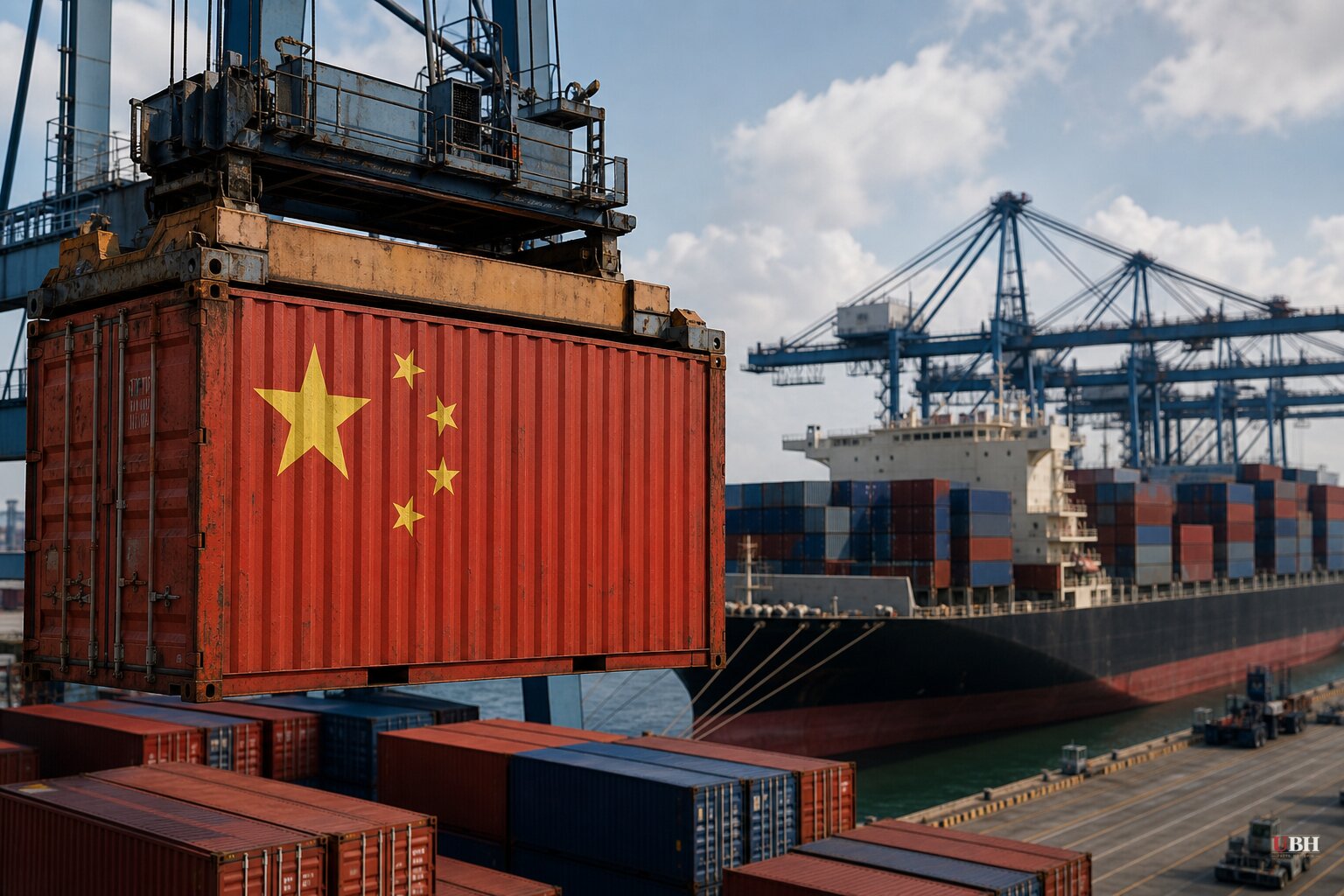
US Weighs 7.5% China Tariff on Overcapacity Ahead of Sept. 24 Xi-Trump Summit
The Trump administration is preparing to impose a 7.5% tariff on Chinese goods over allegations of excess manufacturing capacity, according to people familiar with the matter cited by Bloomberg. Xi Jinping is expected to visit Washington on September 24, and officials want the overcapacity investigation results published before he arrives.
The rate has not been finalized. Bloomberg's sources said one option under discussion would announce a higher headline duty but suspend part of it, netting out to an effective 7.5% rate. Trump has a track record of changing tariff terms at the last minute, and the people familiar with the deliberations stressed nothing is locked in.
The move traces back to March, when the administration opened a Section 301 investigation into more than a dozen major trading partners over excess capacity concerns. That probe was one of two the administration used to rebuild tariffs on more durable legal footing after the Supreme Court struck down Trump's earlier import taxes on China and dozens of other countries. U.S. Trade Representative Jamieson Greer told Bloomberg Television in July the overcapacity investigation was taking longer than a related forced-labor probe because of its complexity, not because of any effort to protect the summit.
A 7.5% add-on would bring total China tariffs to roughly 20%, a level Beijing has previously said is consistent with the trade truce reached with Washington. That truce is set to expire November 10, and both sides are reportedly looking to extend it, according to Bloomberg's sourcing.
The tariff lands amid a broader sanctions exchange
Washington and Beijing have spent recent weeks trading sanctions. The U.S. has banned imports of new humanoid robots largely made in China, sanctioned Chinese shipping operators accused of moving Iranian fuel, added more than 40 Chinese firms to an entity list over alleged human rights violations, and put two Chinese universities on a Pentagon blacklist. Washington has also threatened sanctions on Chinese AI firms.
Beijing responded with its own package: sanctions on seven U.S. firms, tighter export controls on drones and drone technology bound for the U.S., an investigation into office equipment running foreign software, and suspension of a fast-track certification process for U.S. goods entering the Chinese market, according to CNN. China's Commerce Ministry called its own response "restrained" while warning of "further countermeasures" if Washington doesn't change course.
Sun Chenghao, a senior fellow at Tsinghua University's Center for International Security and Strategy, told CNN that Beijing has strong incentives to keep the summit on track and avoid "an uncontrolled action-reaction cycle." But he added that "restraint should therefore not be mistaken for acceptance."
Newsquawk's read: this is standard pre-summit leverage
Newsquawk's analysis frames the tariff signal as part of a familiar pattern. Figures floated ahead of leader-level talks function as negotiating leverage, often escalated in rhetoric and then partially walked back once officials actually sit down. Newsquawk also notes the size matters. A 7.5% add-on is modest compared to earlier tariff tranches in the dispute, which is itself a signal this may be more posture than a genuine new front. The outlet flags the "reportedly" framing as deliberate. An unattributed trial balloon lets the administration gauge reaction in Beijing and at home without formally committing to anything.
Why overcapacity, and why now
The overcapacity complaint has real substance behind it. SMIC, China's leading advanced chip foundry, posted a record $3 billion quarter with revenue up 36.1% year-over-year and utilization at 93.7%, according to Tom's Hardware. Co-CEO Zhao Haijun told analysts the company would raise wafer prices in the third quarter, citing a gap between "industry-leading wafer prices and SMIC's current prices."
That demand surge is largely a byproduct of U.S. export controls. Washington's restrictions have cut Chinese AI chipmakers off from TSMC and Samsung at the leading edge, and Beijing has redirected that demand inward. China wants 70% of silicon wafers sourced domestically this year, and a Bloomberg Intelligence survey of 60 Chinese tech executives found firms plan to spend 46% of AI accelerator budgets on domestic chips within 12 months, up from 30% currently.
U.S. chip export controls, meant to slow Chinese AI progress, have also fueled the kind of domestic manufacturing buildout that feeds into Washington's own overcapacity complaint.
What's unresolved
The exact tariff structure, the suspended portion, and the final effective rate remain under negotiation, according to Bloomberg's sourcing. Whether the announcement survives contact with the actual September 24 talks is an open question Newsquawk explicitly flags as the thing to watch. Also unresolved: whether the one-year trade truce expiring November 10 gets extended, and on what terms, as both governments continue trading sanctions in the meantime.
Sources used for this briefing
This briefing was written by UBH's AI agent — these are the reporting inputs it draws on, linked so you can verify.


