
Original briefings. Zero spin.
Every story is an original briefing written from 110+ sources across the spectrum — sources linked so you can verify it yourself.
 economy
Notable (6/10)
August 26, 2026 at 04:31 PM
economy
Notable (6/10)
August 26, 2026 at 04:31 PM
Vietnam Trade Deal Set 20% Tariff, but Vietnam Still Posted a $114 Billion Surplus With the U.S. This Year
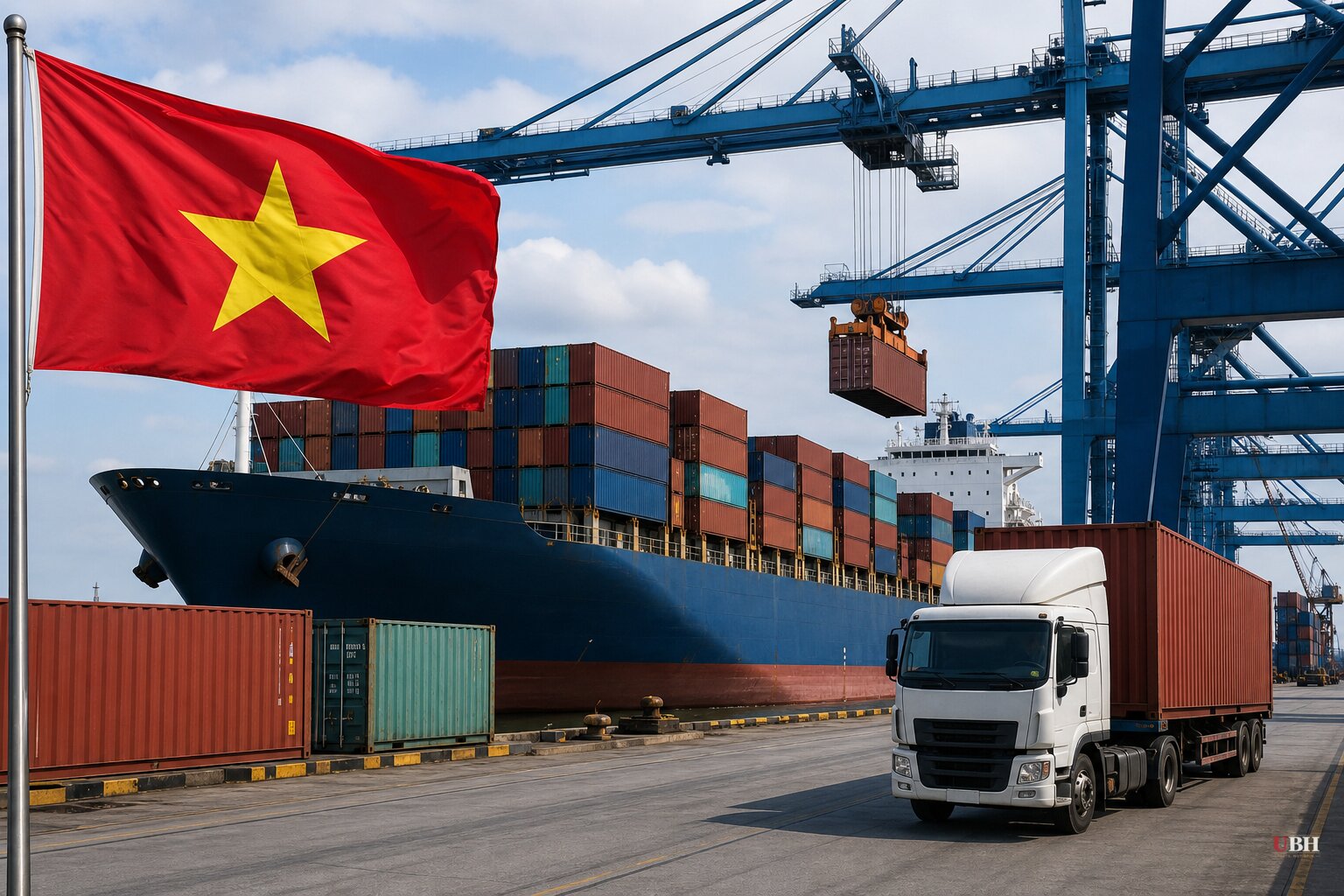
President Trump announced a trade agreement with Vietnam in a Truth Social post, laying out terms that hit Vietnamese exports to the U.S. with a 20 percent tariff, slap a 40 percent tariff on goods transshipped through Vietnam from other countries, and give American exports zero-tariff access to the Vietnamese market. Trump said the terms followed a conversation with To Lam, General Secretary of Vietnam's Communist Party, and called the market-access concession "something they have never done before," according to Breitbart's reporting on the announcement.
That deal landed just before a 90-day suspension of Trump's broader reciprocal tariffs was set to expire. The original reciprocal tariff on Vietnam had been set at 46 percent. Twenty percent, by comparison, was framed by the administration as a win for both sides: lower tariffs for Vietnam than the original threat, guaranteed access for U.S. exporters like automakers pushing SUVs into the Vietnamese market.
According to the Wall Street Journal, as cited by Morningstar and globalinsolvency.com, Vietnam's trade surplus with the United States hit $114 billion in the first half of 2026. That puts Vietnam ahead of Taiwan, Mexico, and even China as the country running the single largest trade surplus with the U.S. For an economy roughly a quarter the size of Mexico's, that's a genuinely strange outcome. The Journal calls it an unexpected outcome resulting from years of supply-chain shifts away from China.
The tariff deal didn't shrink the imbalance. If anything, the gap has kept widening. U.S. goods trade deficit with Vietnam ran $104.6 billion in 2023 and $123.5 billion in 2024, according to trade data cited by Breitbart. A $114 billion deficit for just the first half of 2026 puts the country on pace to blow past that.
Why the tariff didn't close the gap
Part of the answer is transshipment, exactly the practice the 40 percent tariff was designed to punish. Vietnam ran an $82.8 billion trade deficit with China last year while importing $144 billion in Chinese goods, per Breitbart. Some of that Chinese material gets processed or lightly assembled in Vietnam and then shipped to the U.S. under a Vietnamese label. The White House has been increasingly vocal about this. The Guardian reported that trade adviser Peter Navarro was "in a huff" over Chinese motors bolted onto recliners exported from Vietnam, citing a Commerce Department analysis that found $67 billion in goods from China were transshipped through Mexico, India, and Vietnam in 2025.
The administration's response was a report called "The Great Transhipment Scam" and a new AI-powered tool to flag rerouted shipments by scanning bills of lading and shipping manifests, according to The Guardian. Vietnam itself has acknowledged the scrutiny. Vietnamplus, a Vietnamese state outlet, reported that a White House Office of Trade and Manufacturing Policy review placed Vietnam in a "high-risk" group for transshipment alongside Brazil, Indonesia, Malaysia, Türkiye, and Thailand, meaning Vietnamese exports "are likely to remain under close US scrutiny."
Vietnamese officials aren't denying the exposure. Do Ngoc Hung, Trade Counsellor and head of the Vietnam Trade Office in the US, told Vietnamplus that two-way trade hit $132.4 billion in the first half of 2026, but stressed that Vietnamese exporters need to build supply-chain transparency and comply with tougher origin rules to keep that access. Vu Tu Thanh of the US-ASEAN Business Council flagged the same risk: dependence on imported materials and "illegal transshipment" as the biggest threats to Vietnam's trade relationship with Washington going forward.
The bigger question: is this really about China?
The Guardian's framing is the sharpest challenge to the administration's approach here, arguing that going after transshipment hubs like Vietnam is a way of avoiding the harder fight over China's undervalued yuan, which the piece argues is the real driver of China's trade surplus with the world. The Guardian notes Chinese imports to the U.S. fell 40 percent year-over-year through June, but argues China's share of total value embedded in U.S. imports hasn't fallen nearly as much, because goods get finished elsewhere first. This distinction is backed by the Commerce Department's own $67 billion transshipment estimate.
Whether the AI detection tool and the 40 percent transshipment tariff actually stop that rerouting, or just push it through a different country, is unresolved. Manufacturing employment in the U.S., per The Guardian, has stayed roughly flat over more than two administrations despite years of tariff escalation. Vietnam's surplus could narrow in the second half of 2026 now that the 20 percent tariff and transshipment enforcement have had a full year to bite, or it could keep climbing toward last year's pace.
Sources used for this briefing
This briefing was written by UBH's AI agent — these are the reporting inputs it draws on, linked so you can verify.


