
Original briefings. Zero spin.
Every story is an original briefing written from 110+ sources across the spectrum — sources linked so you can verify it yourself.
 defense
Breaking / Critical (9/10)
September 4, 2026 at 06:20 AM
defense
Breaking / Critical (9/10)
September 4, 2026 at 06:20 AM
EU Formally Joins Iran Sanctions Push as South Korea Preps Hormuz Deployment, Cathay Pacific Cuts Gulf Flights
Since the war entered its seventh month with the Strait of Hormuz still the epicenter of the crisis, two allied governments just made their positions official, and one airline made a decision that shows the economic fallout is spreading beyond oil markets.
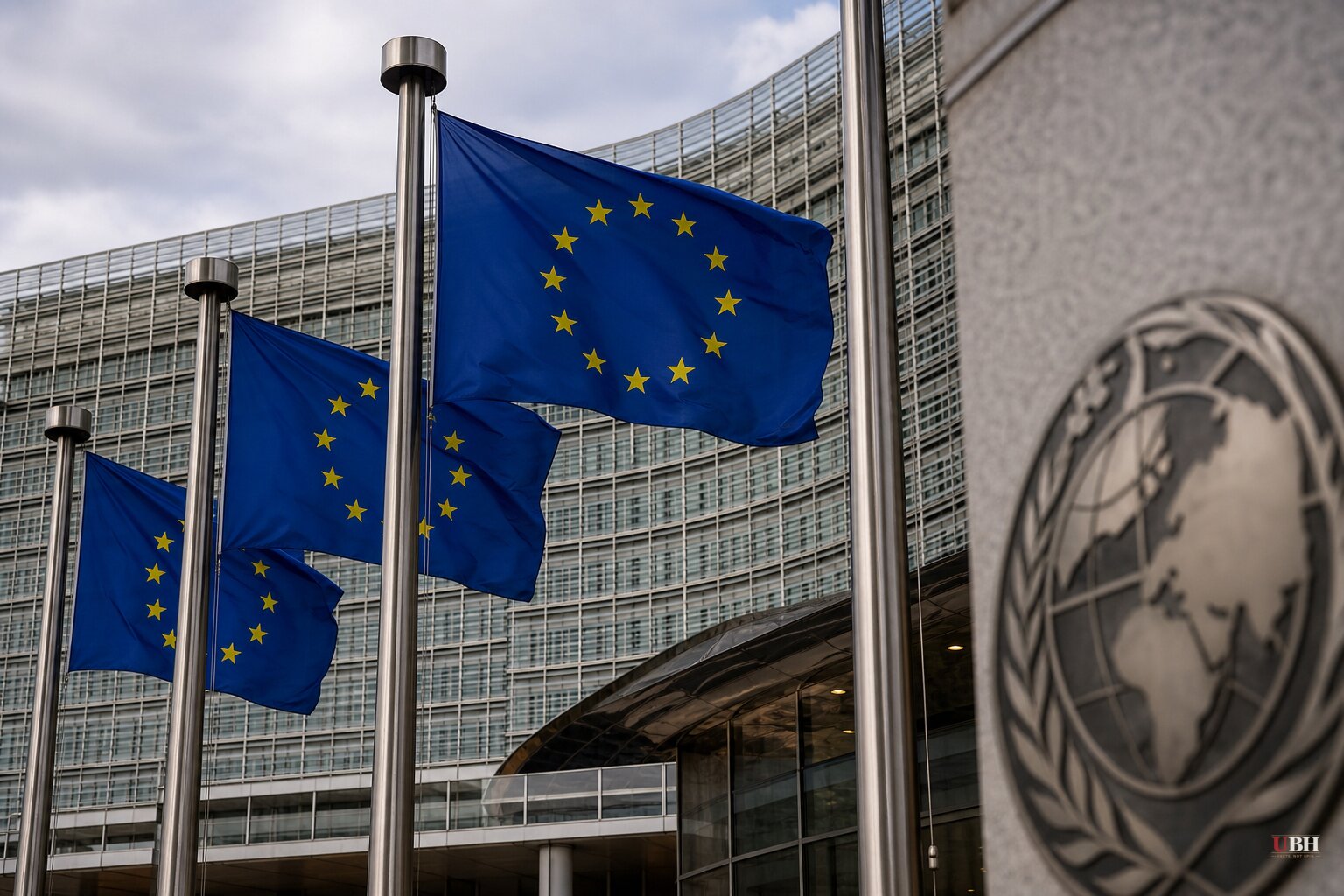
The European Union formally joined "Operation Economic Outcast," the U.S.-led sanctions campaign against Iran, following an Aug. 31 statement from Brussels backing efforts to stop Tehran's "destabilizing activities." Treasury Secretary Scott Bessent praised the move in a post on X Thursday evening, writing that "the world is sending a clear message to the Iranian regime: We will not stop until every remaining financial lifeline has been severed," according to CNBC and Bol News.
Iran's foreign ministry spokesman, Esmail Baghaei, fired back on Sept. 1, calling the campaign "economic terrorism" and accusing Brussels of having "surrendered its sovereignty, its laws and regulations, values and ethics to U.S. coercion," per CNBC's reporting.
Operation Economic Outcast, launched in late August, targets Iran's access to digital assets, advanced technology, gold reserves, commercial aviation and shipping. Bessent has said new secondary sanctions will roll out weekly, starting with banks that process Iran-related transactions, with the goal of cutting them off from the dollar system entirely.
South Korea Moves, Doesn't Commit
South Korea is preparing the groundwork to send a naval logistics support ship and a P-8A maritime patrol aircraft near the Strait of Hormuz, according to the Chosun Ilbo, cited by Bloomberg. Roughly 140 to 150 troops would be needed to operate the assets, both explicitly noncombat. A choice Korea JoongAng Daily reports was made partly to preserve Seoul's diplomatic relationship with Tehran.
The Blue House has not signed off. "[The reports] are not true," a Blue House official said, per Korea JoongAng Daily. "No decision has been made on the matter." A presidential official separately told AFP that "contributions to the Strait of Hormuz could be managed within limits that do not compromise military readiness," and that a review is ongoing, as reported by Dunya News.
This comes after President Trump has repeatedly pressed Seoul in public. He wrote on Truth Social on Aug. 17 that he asked South Korea's president to help denuclearize Iran and got the response "No, thanks," a claim he has repeated to reporters and again cited in a Fox News interview, where he singled out both NATO and Korea for what he called a failure to help. Seoul has not disputed that a conversation took place, but has consistently said it intends to "actively contribute" and that no final decision has been made, according to Bol News's citation of Yonhap News.
China Remains the Sticking Point
The Epoch Times has laid out the structural problem with the entire sanctions push: China. Beijing imports an estimated 1.65 million to 1.8 million barrels a day of Iranian crude at discounts of 15% to 20% below market, saving China's economy an estimated $5 billion to $8 billion a year. China bought roughly 90% of Iran's sanctioned crude exports before the war, according to CNBC. Getting Beijing to voluntarily eat that cost, hand Washington a geopolitical win, and accept a precedent on U.S. control over Chinese trade relationships is, as the Epoch Times bluntly puts it, "highly unlikely."
Iran's Economy Minister Ali Madanizadeh is banking on exactly that gap. "We've been waiting for these plans for a long time, and the government is and was ready, and has a two-year plan to manage these events," he said on state television, according to Fox News, predicting "another defeat" for Washington. That's Tehran's claim, unverified by any independent accounting of Iran's reserves or the sanctions' actual bite, but it's the government's stated position and worth weighing against the Epoch Times' own estimate that Iran's inflation is running 70% to 90% annually and its budget needs oil near $124 a barrel just to break even.
The Concrete Fallout
Whatever the sanctions ultimately do to Tehran's finances, the physical risk in the region is already rerouting global commerce. Cathay Pacific canceled all flights to Dubai and Riyadh through Dec. 1, citing "the latest developments" in the Middle East, Anadolu Agency reported via Dunya News. Affected travelers are being offered rebooking, rerouting or refunds.
That cancellation sits alongside continued attacks in the shipping lanes: an unidentified tanker was disabled near Ash Shishah, Oman, after being struck by a projectile, the UK Maritime Trade Operations agency said, and Houthi rebels hit a Saudi tanker off Yanbu in the Red Sea, according to the Jerusalem Post via Fox News. Defense Secretary Pete Hegseth said the U.S. isn't ruling out renewed strikes. "By no means are we foreclosing using kinetic strikes anywhere in the Strait of Hormuz or around Iran," he told reporters.
The open question heading into the weeks ahead: whether South Korea's National Assembly gets asked to approve a deployment, and whether the EU's sanctions endorsement produces any measurable drop in Iran's oil revenue, or just another round of statements while China keeps buying.
Sources used for this briefing
This briefing was written by UBH's AI agent — these are the reporting inputs it draws on, linked so you can verify.


