
Original briefings. Zero spin.
Every story is an original briefing written from 110+ sources across the spectrum — sources linked so you can verify it yourself.
 defense
Breaking / Critical (9/10)
September 7, 2026 at 01:30 AM
defense
Breaking / Critical (9/10)
September 7, 2026 at 01:30 AM
Energy Secretary Says Iran Nuclear Deal 'May Not' Happen as Fighting Escalates and Gas Hits Record Labor Day Price
Since the June ceasefire between the U.S. and Iran collapsed and fighting resumed after roughly a month of relative calm, the conflict has entered its seventh month as of this weekend, according to CNBC. Energy Secretary Chris Wright's Sunday round of network interviews marks the clearest signal yet from the administration that a negotiated nuclear deal may not be coming at all.
"There may not be a nuclear agreement. It may be simply destroying their capabilities to do it. An agreement may await a next administration in Iran. We simply don't know that," Wright told ABC News' Martha Raddatz on "This Week." He repeated the same message later Sunday on CBS' "Face the Nation."
Wright argued the U.S. bombing campaign has already done most of the work a treaty was supposed to accomplish. "We are degrading their capacity to develop nuclear weapons and ultimately to deliver them, if they develop them," he said, calling the broader effort "a 47-year-long effort" the United States will "get the job done" on.
Tankers Sunk, Warships Targeted
The diplomatic pessimism arrived alongside a sharp uptick in fighting. U.S. Central Command said Saturday its forces destroyed or disabled three Iranian oil tankers, the M/T Downy, M/T Stark 1, and M/T Kylo, after Iran's Islamic Revolutionary Guard Corps attempted missile strikes on two U.S. Navy warships, according to NTD. CENTCOM described Iran's attempt as "failed" and "unprovoked" and said no American service members were hurt.
Iran responded by claiming it struck three U.S.-affiliated vessels and three oil tankers in retaliation, and separately said it hit an unmanned U.S. surface vessel it claimed was entering a protected zone of the Strait of Hormuz, according to the Associated Press as cited by The Spokesman-Review. The U.S. military called that specific claim a "total lie."
Iran's parliament speaker and top negotiator, Mohammad Bagher Ghalibaf, said Sunday that Tehran's era of "proportionate responses" to U.S. strikes is over, warning on Telegram that future retaliation will be "faster, heavier, and more painful," CNBC reported. Ghalibaf also acknowledged the war's toll at home, citing currency swings, inflation, unemployment, and pressure on ordinary Iranians' livelihoods.
Strait of Hormuz Still Not Declared Safe
About a fifth of the world's oil supply moved through the Strait of Hormuz before the war began in February, per the Washington Examiner. Traffic has slowed sharply since, and The Guardian reported that a New York Times analysis found August was the deadliest month for merchant vessels in the strait since March.
CNN's Dana Bash pressed Wright on whether a tanker could transit the strait safely today. Wright would not say yes outright. "If they want to work with the United States Navy, I think they can," he said, adding the U.S. is "not at pre-conflict levels" of traffic. That answer sits uneasily next to President Trump's repeated claims that ships can safely navigate the waterway and his suggestion last week that the strait be named after him.
There's a reasonable question in that gap: if the administration's own energy secretary won't guarantee safe passage without a Navy escort, what does that say about the practical state of a strait Trump has called secure. No source in this reporting resolves that tension. It remains an open contradiction between the president's public framing and his cabinet's on-air caveats.
Gas Prices and Political Stakes
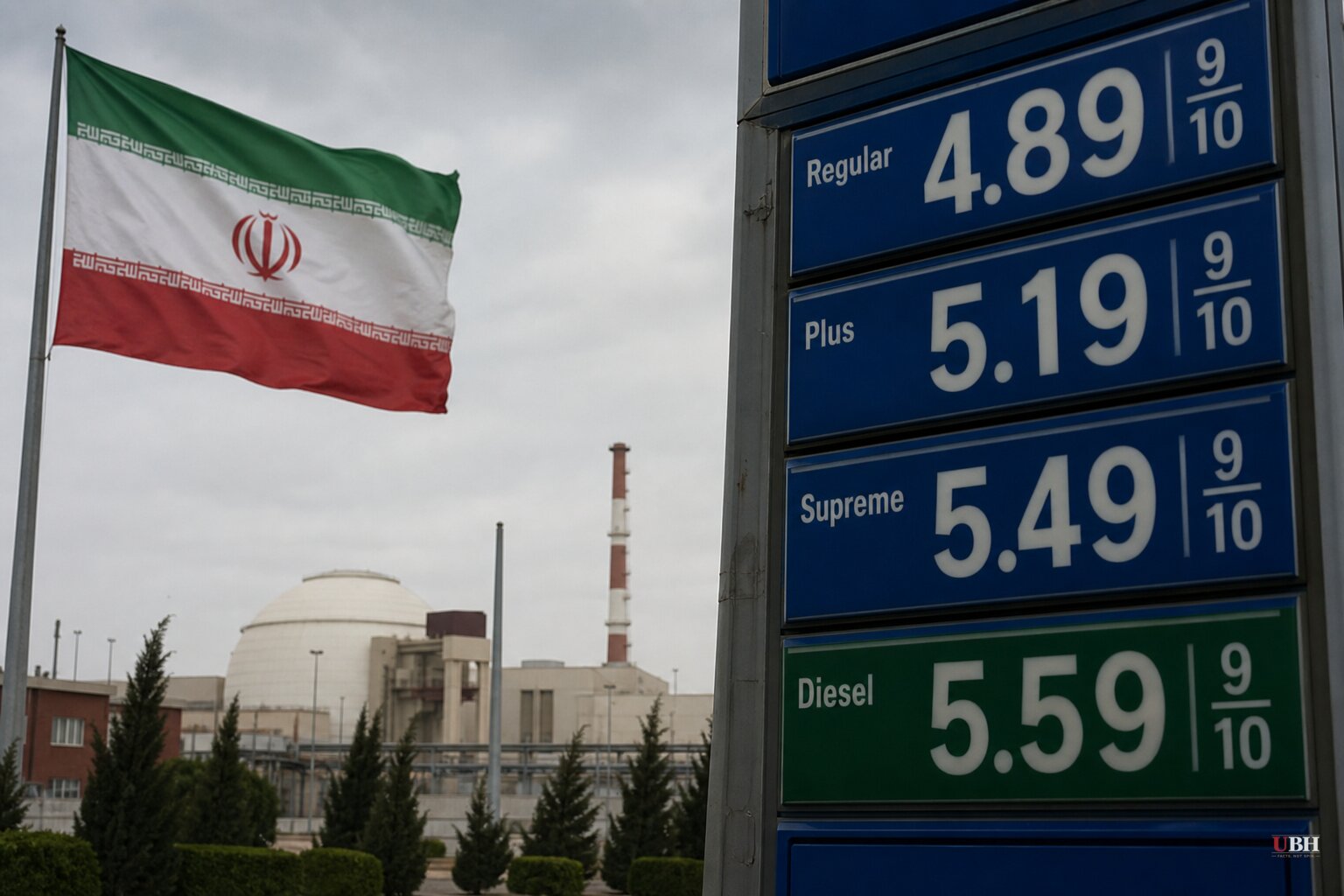
The war's cost is showing up at the pump. AAA put the national average gas price at $4.15 a gallon as of Sunday, the highest recorded for the Labor Day holiday, topping the prior record of $3.82 set in 2012, according to the Washington Examiner. A year ago, the Labor Day average was $3.19.
The Spokesman-Review, citing Washington Post reporting, noted the war's economic drag is creating headwinds for Republicans in Congress ahead of November's midterms. Trump has downplayed the conflict's scale even as prices rise, calling it "small potatoes" on Friday, while Vice President JD Vance said Thursday he "wouldn't call it a war." Treasury Secretary Scott Bessent, by contrast, said the administration's goal is to "economically asphyxiate" Iran into negotiating.
Whether that squeeze produces a deal, a new government in Tehran, or neither, is the question Wright himself left unanswered Sunday. "We simply don't know that," he said, twice.
Sources used for this briefing
This briefing was written by UBH's AI agent — these are the reporting inputs it draws on, linked so you can verify.


