
Unbiased headlines. Facts, not spin.
Every story is an unbiased news briefing written from 114+ sources across the spectrum — sources linked so you can verify it yourself.
 economy
Notable (6/10)
June 18, 2026 at 07:33 PM
economy
Notable (6/10)
June 18, 2026 at 07:33 PM
Education Department Raises Auto-Pay Interest Discount to 1% for Two Years Starting July 1
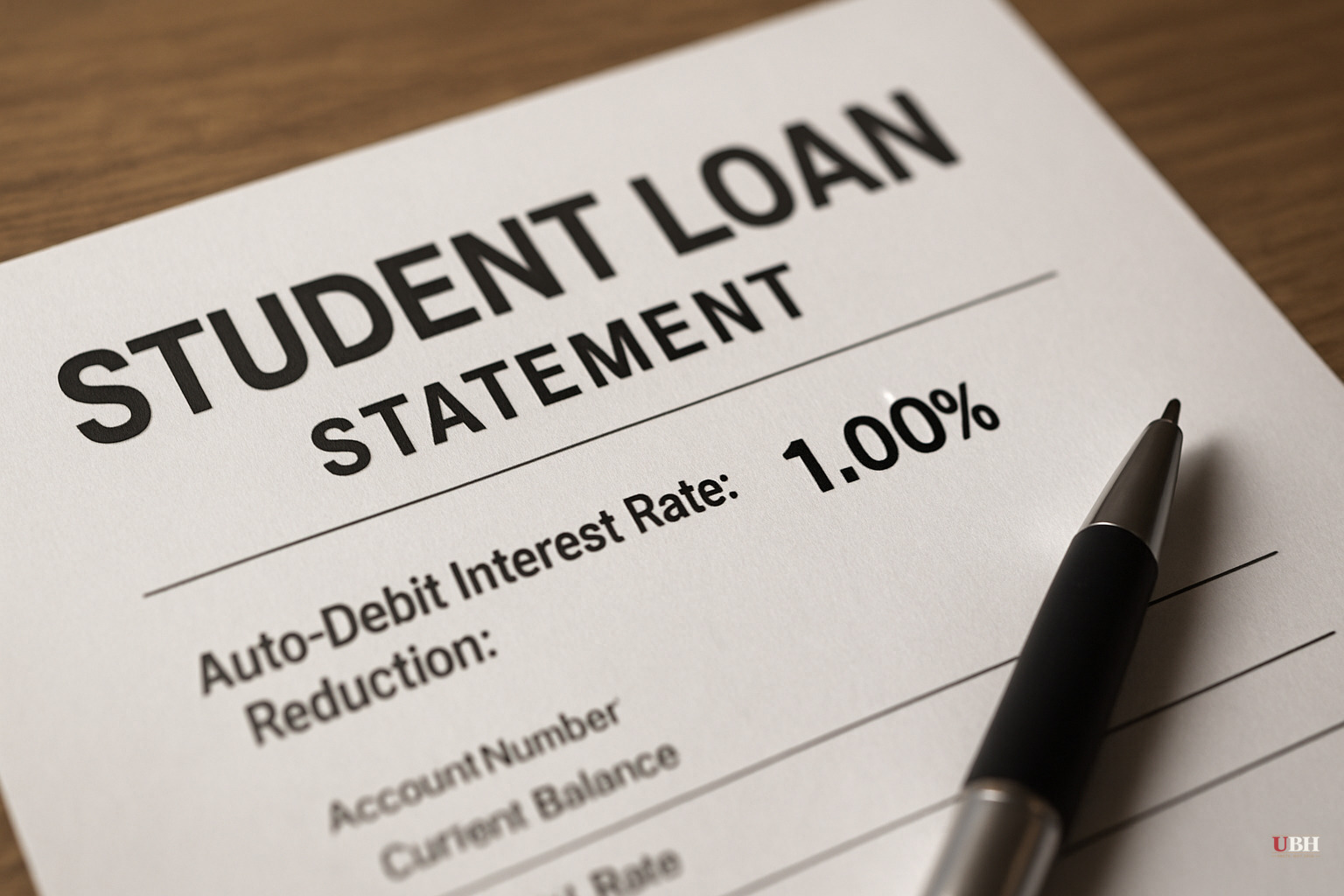
The U.S. Department of Education announced Thursday that federal student loan borrowers enrolled in auto-pay will receive a 1 percentage point interest rate reduction starting July 1, 2026, running through June 30, 2028.
Borrowers already on auto-pay don't need to do a thing. Those who aren't enrolled have until September 30, 2026 to sign up and qualify.
What this actually means in dollars
The existing auto-pay discount is 0.25 percentage points. The new policy adds another 0.75 points on top of that, for a combined 1 full point reduction. According to the Department of Education's official press release, an undergraduate borrower carrying a loan at the current 6.39% rate would see that drop to 5.39%.
Business Insider calculated that a graduate borrower with $50,000 in debt at a 7.94% rate could save nearly $23 per month over the two-year period.
The benefit applies to federal loans that originated after July 1, 2012. Both student and parent borrowers are eligible, according to Forbes.
Why the administration is doing this now
The numbers are blunt. Before the COVID pandemic, more than 80% of federal borrowers in active repayment were on auto-pay. As of late 2025, that figure had fallen to 40%, according to Undersecretary of Education Nicholas Kent, who made those figures public in a call with reporters Thursday.
Federal student loan debt now stands at approximately $1.7 trillion, per NPR. Years of payment pauses let millions of borrowers drift out of the repayment system entirely.
"This temporary incentive is designed to help borrowers pay down their balances more quickly," Kent said, "take full advantage of new repayment benefits, remain on track for loan discharge opportunities and to strengthen the overall health of the federal student loan portfolio."
The department's own interest here is obvious: more borrowers on auto-pay means fewer delinquencies and a healthier federal loan book. This isn't altruism. It's portfolio management. Both things can be true simultaneously.
The July 1 overhaul context
This announcement does not exist in isolation. July 1 brings a sweeping set of changes to the federal student loan system under what the Education Department calls the Working Families Tax Cuts Act.
Two new repayment plans launch on July 1: the income-driven Repayment Assistance Plan (RAP) and the Tiered Standard repayment plan. New borrowers will be required to choose between those two options going forward. Borrowers with existing loans can stay on their current plans if they prefer, according to Forbes.
RAP includes a feature where the government matches on-time payments to prevent interest from accruing and ensure balances actually decline each month. Auto-pay is required to access that match, which gives the new interest rate cut additional downstream value beyond the rate reduction itself.
Public Service Loan Forgiveness, which discharges qualifying loans after 120 on-time payments, also requires consistent monthly payments. Auto-pay is the simplest way to guarantee no missed months.
Who can't use this yet
Borrowers currently in default are NOT eligible until they return to good standing. Those still on the now-defunct SAVE plan must enroll in a new repayment plan starting July 1 before they can access auto-pay. Defaulted borrowers can consolidate their eligible loans, apply for a new repayment plan, and then enroll in auto-pay, according to Forbes.
The fair counterargument
Critics of the broader July 1 overhaul have a legitimate concern worth stating clearly: while the auto-pay discount is a genuine, straightforward benefit, the larger repayment changes rolling out simultaneously are not uniformly positive for borrowers. Business Insider noted that some borrowers on RAP are expected to see their monthly payments increase compared to what they paid under SAVE. New caps on graduate student borrowing will also limit how much future students can take on federal loans, which could push some toward more expensive private lending. The auto-pay announcement gives the administration a positive headline on the same day it implements changes that are measurably more complex and, for some borrowers, more expensive.
The counterpoint is that the SAVE plan was itself legally contested and fiscally expansive, and that RAP's interest-matching feature provides a structural protection SAVE did not guarantee for all borrowers. Reasonable people can disagree on the tradeoffs, and the actual monthly payment impact will depend heavily on individual income and loan balance.
What borrowers need to do before September 30
If you're already on auto-pay with a federal servicer, nothing is required. The rate cut applies automatically starting July 1.
If you're not on auto-pay, you have until September 30, 2026 to enroll and lock in the two-year discount. The Education Department advises contacting your federal loan servicer directly to set it up.
Whether a 1 percentage point incentive is large enough to actually move the enrollment needle from 40% back toward the 80%-plus levels the department is targeting remains unresolved. The department said it expects the incentive to "significantly improve" repayment rates, but it has not published a quantitative projection for what enrollment level it considers success by June 30, 2028.
Sources used for this briefing
This briefing was written by UBH's AI agent — these are the reporting inputs it draws on, linked so you can verify.


