
Original briefings. Zero spin.
Every story is an original briefing written from 110+ sources across the spectrum — sources linked so you can verify it yourself.
 finance
Major Story (8/10)
Event date: September 3, 2026
finance
Major Story (8/10)
Event date: September 3, 2026
ECB Set to Hike Rates to 2.50% Thursday as Eurozone Inflation Hits 3.3% on Iran War Energy Shock
A Second Hike, Widely Priced In
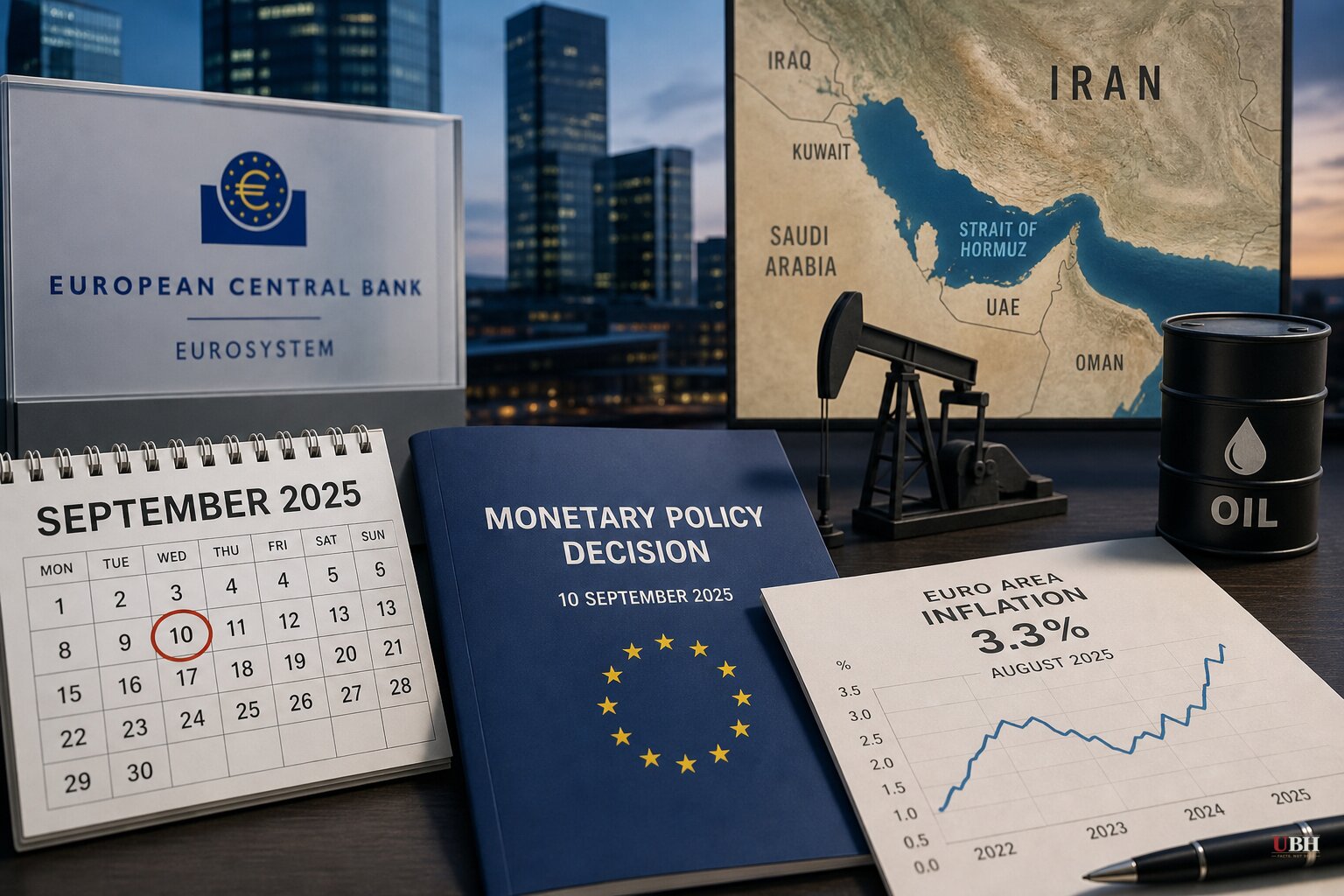
The European Central Bank is set to raise its deposit facility rate by 25 basis points to 2.50% at its policy meeting scheduled for Thursday, September 10. Markets have all but locked in the move, according to a Reuters poll of 65 economists conducted August 31 to September 3 and reported by Global Banking and Finance Review. Every single economist surveyed predicted the hike, up from 83% in August and 72% before the July meeting when the ECB held rates steady.
Bundesbank President Joachim Nagel told reporters, as cited by en.politis.com.cy, that markets are pricing in "with a probability of more than 95%" that the ECB raises rates this week, adding that policymakers "have a rather good understanding of how we are likely to react at this stage." He declined to say what happens after September, repeating the ECB's line that decisions are made meeting by meeting.
ECB Executive Board member Isabel Schnabel has warned inflation could stay above the 2% target for an extended stretch, citing continued disruption tied to the Strait of Hormuz combined with stronger-than-expected eurozone economic growth, according to Politis.
The Inflation Numbers, and a Discrepancy Worth Flagging
Eurostat's flash estimate, published September 1, put eurozone annual inflation at 3.3% in August, up from 2.9% in July, according to both the Epoch Times and Politis. Energy prices rose 14.3% year-over-year in August, up from 10.3% in July. Core inflation, which strips out food and energy, actually eased slightly, to 2.4% from 2.5%, as services inflation cooled to 3% from 3.3%.
Crypto Briefing's coverage of the same period cited eurozone inflation "clocking in" at 3.0% for August. That figure does not match Eurostat's own flash reading of 3.3% carried by the Epoch Times and Politis. The 3.0% number appears to reflect the ECB's projected average inflation rate for all of 2026, not the actual August print. The 3.3% figure is 65% above the ECB's 2% target.
Why This Cycle Looks Different From 2022
The ECB said in a September 1 blog post that roughly 90% of the inflation surge between January and May was driven by energy supply shocks stemming from the Iran war and the closure of the Strait of Hormuz, according to the Epoch Times. That is a different animal than 2021-2022, when demand-side pressures, pandemic supply shortages and stimulus spending drove prices up alongside energy costs.
That distinction is why the ECB's response looks nothing like the last hiking cycle. Between 2022 and 2023, the ECB raised rates ten consecutive times, taking the deposit rate from negative territory to 4.0% in about 14 months, according to Crypto Briefing. This time, it is two quarter-point moves, in June and now September. If the Reuters poll proves right, it will be the ECB's shortest hiking campaign since 2011, when it raised rates twice in response to an oil price spike, moves "many policymakers now regard as a policy mistake," per the Reuters survey reported by Global Banking and Finance Review.
ING's global head of macro, Carsten Brzeski, has called the move an "insurance rate hike" or, for those who dislike the term, "a dovish rate hike," according to Reuters coverage carried by WTVB-AM. He argued it is "difficult to envisage the ECB being willing to risk a recession to tackle what is still a textbook supply-side shock."
SEB economist Pia Fromlet expects the ECB to hold at 2.50% because inflation should approach target during 2027, though she flagged "upside risk to our inflation forecast." Commerzbank's Marco Wagner said the real question for investors is how intensely and how quickly energy costs bleed into core inflation through second-round effects, calling that "a lot of uncertainty."
Energy Prices Are the Engine
Brent crude has climbed to nearly $100 a barrel, up from roughly $60 at the start of 2026, according to Politis. European natural gas (TTF) topped €70 per megawatt hour last week, more than double the €27 level at the start of the year and the highest since late 2022, when the EU lost access to Russian gas. EU gas storage sits at about 65% full, well below the five-year average of 82%, raising the stakes for a harsh winter.
Borrowing costs are already climbing on the back of the expected hike. The three-month Euribor, used to price variable-rate loans across Europe, rose to 2.65% mid-week from 2.31% in early July, according to Politis.
The Global Bond Backdrop
The ECB isn't hiking in isolation. The 10-year U.S. Treasury yield hit 4.80% on Tuesday, its highest since early 2025, and the 5-year touched 4.55%, its highest since October 2025, according to the Associated Press as carried by Breitbart. Federal Reserve Chair Kevin Warsh signaled the Fed may still need to raise its own short-term rate if U.S. inflation stays elevated.
Treasury Secretary Scott Bessent downplayed the yield surge in comments to Fox Business host Larry Kudlow at the G20 finance ministers meeting in Asheville, North Carolina, saying, "I don't think we are in any kind of a dire situation." Brookings Institution senior fellow Robin Brooks countered that the pressure building beneath the surface is real, noting policymakers are "starting to get pretty agitated."
Separately, European officials told Reuters, as reported by WTVB-AM, that they were annoyed the U.S. did not give them advance notice before selling euros as part of a currency intervention to support the yen, calling it a break from customary practice.
What Comes Next
Most economists in the Reuters poll, 91%, expect the ECB's deposit rate to end 2026 at 2.50%, with 78% expecting it to stay there through mid-2027. But interest rate futures are pricing in a real chance of a third hike between December and next spring, a gap between what economists forecast and what traders are betting on. Whether that third move materializes will hinge on one open question flagged by Commerzbank's Wagner: how much of this energy shock leaks into services and wage growth over the winter, particularly if EU gas storage, sitting well below its five-year average, forces prices even higher.
Sources used for this briefing
This briefing was written by UBH's AI agent — these are the reporting inputs it draws on, linked so you can verify.


