
Unbiased headlines. Facts, not spin.
Unbiased Headlines is an independently owned news organization. We bring you the facts, not opinions, written fresh from 110+ named sources. Sources linked so you can verify it yourself.
 tech
Major Story (8/10)
Event date: November 26, 2026 ·
Dutch Government Vows to Fight U.S. MATCH Act Limiting ASML Sales and Servicing in China
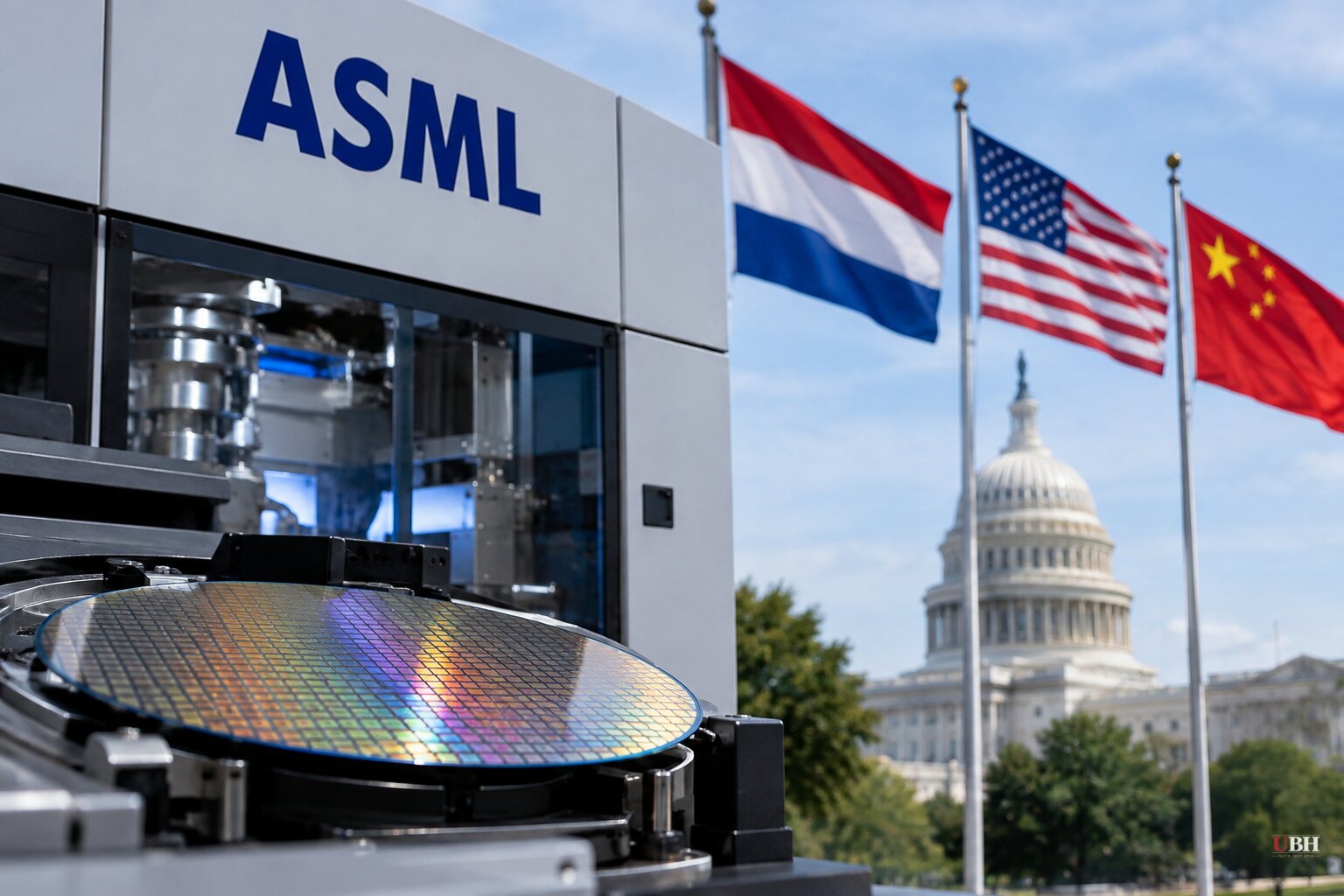
The Dutch government has made killing a U.S. chip bill its top diplomatic priority this week.
The bill is the Multilateral Alignment of Technology Controls on Hardware Act, or MATCH Act. Republican Sen. Pete Ricketts and Democratic Sen. Andy Kim introduced it in April. Congress is now negotiating whether to attach it to the FY2027 National Defense Authorization Act before the outgoing Congress finishes its work.
What the bill does
The MATCH Act aims to force allied governments, including the Netherlands and Japan, to adopt export controls on chipmaking equipment that match U.S. standards. Countries that refuse face the prospect of unilateral Washington restrictions on their equipment. That includes ASML's immersion deep ultraviolet (DUV) lithography tools.
As drafted, the deadline for allies to comply is 150 days, according to Crypto Briefing's account of the bill.
The bill could also reach machines already in China. A lithography tool needs regular maintenance and calibration by trained engineers to keep producing chips. Limits on servicing would hit equipment Chinese fabs have already installed, not just future orders.
The Netherlands has already gone along with earlier U.S.-led limits on ASML's more advanced equipment. This bill goes after the older machines that still do much of the work.
Dutch pushback
Foreign Minister Tom Berendsen took the fight to Beijing. Speaking to reporters on Wednesday, Nov. 25, after meeting Chinese Vice Premier Ding Xuexiang and Foreign Minister Wang Yi, he said: "The MATCH Act must not be passed. That is the most important thing." He added that export controls are a matter for the Netherlands to decide.
Foreign Trade Minister Sjoerd Sjoerdsma told Parliament the Cabinet would "do everything" possible to get the proposal withdrawn. He said the restrictions go "far, far too far," and that the Netherlands already has "one of the strictest export controls in the world."
Sjoerdsma also questioned Washington's consistency. He said the U.S. cites national security to limit ASML while letting Nvidia export highly advanced AI chips to China.
The Dutch government lobbied against the bill in Washington in June, arguing that export policy is a matter of national sovereignty.
Dutch lawmakers across the spectrum are pressing the same line. In a Nov. 24 trade debate, Nicole Maes of the conservative VVD called the bill "disastrous for ASML, and therefore also for the Dutch economy." Michiel Hoogeveen of JA21 called it "unacceptable" and urged a diplomatic push before a December vote. He also conceded the limits of Dutch leverage: "We are, of course, very dependent on America, not only economically but also for our security."
Laurens Dassen of the progressive Volt party urged European measures to shield ASML. He said he believed the United States "hates the fact that we have ASML in Europe."
ASML's own warning
ASML calls the bill a "bad idea" that will push China to develop competing technology faster. CEO Christophe Fouquet made the case at a Nov. 16 event in Silicon Valley and again on Semafor's Future Proof.
His argument: even if ASML stops servicing tools in China, local companies would step in. ASML would lose visibility into and control over its machines. Beijing would get a stronger push toward self-reliance.
"You need [export controls] to protect very advanced technology," Fouquet said, "but you also have to use export control in such a way that you don't completely frustrate a country and invite that country to basically double down or triple down on development."
Fouquet also described what he called a "generation gap." The equipment ASML ships to China today is more than a decade behind its most advanced tools. Selling it, he argued, keeps Chinese chipmakers dependent on Western hardware. ASML has held close to 100% market share in China for almost 30 years, he said.
ASML expects China to account for about 20% of this year's sales, according to the company. The Netherlands-based firm is Europe's most valuable listed company, at roughly $520 billion by Times of India's figure.
Separately, Crypto Briefing reported that ASML's revenue from servicing its installed systems worldwide reached €3.3 billion in the third quarter of 2026, ahead of guidance. That figure covers the global installed base, not China alone.
The U.S. side and the calendar
The bill's stated purpose is to curb China's advanced chip production by closing gaps between U.S. and allied rules. Its backers have not been quoted in the material gathered for this story. The goal is plain from the text: stop Beijing from running the tools it already stockpiled.
Timing is tight. NL Times, citing ANP, reports Congress could vote in mid-December, and that passage is considered almost certain because the bill rides on the defense budget. The Dutch government is anticipating approval, according to Sjoerdsma. He said the proposal could have ramifications across the European Union and that The Hague is working with European officials.
Crypto Briefing also reported that the U.S.-China truce reached in Busan expires Jan. 10. New restrictions could land as the ceasefire ends.
China, for its part, used Berendsen's visit to urge the Netherlands to create a "fair and predictable environment" for business. Berendsen also raised the Nexperia dispute. The Dutch government intervened in that company last year. Its European and Chinese divisions remain in court with no settlement in sight. He said resolving it is "up to the companies."
What The Hague does if the bill passes with the 150-day clock attached remains unclear. Dutch officials have said export policy is theirs to set. They have not said whether they would match the U.S. rules, or take the unilateral restrictions instead.
Sources used for this briefing
7 links from 7 independent newsrooms (syndicated copies of the same report count once)
These are the sources it draws on, linked so you can verify.
More coverage: China


