
Unbiased headlines. Facts, not spin.
Unbiased Headlines is an independently owned news organization. We bring you the facts, not opinions, written fresh from 110+ named sources. Sources linked so you can verify it yourself.
 tech
Major Story (8/10)
1Password Breach Detail: Attacker Reached Build System and Copied Account IDs and Email Tokens, Company Says No Takeovers Found
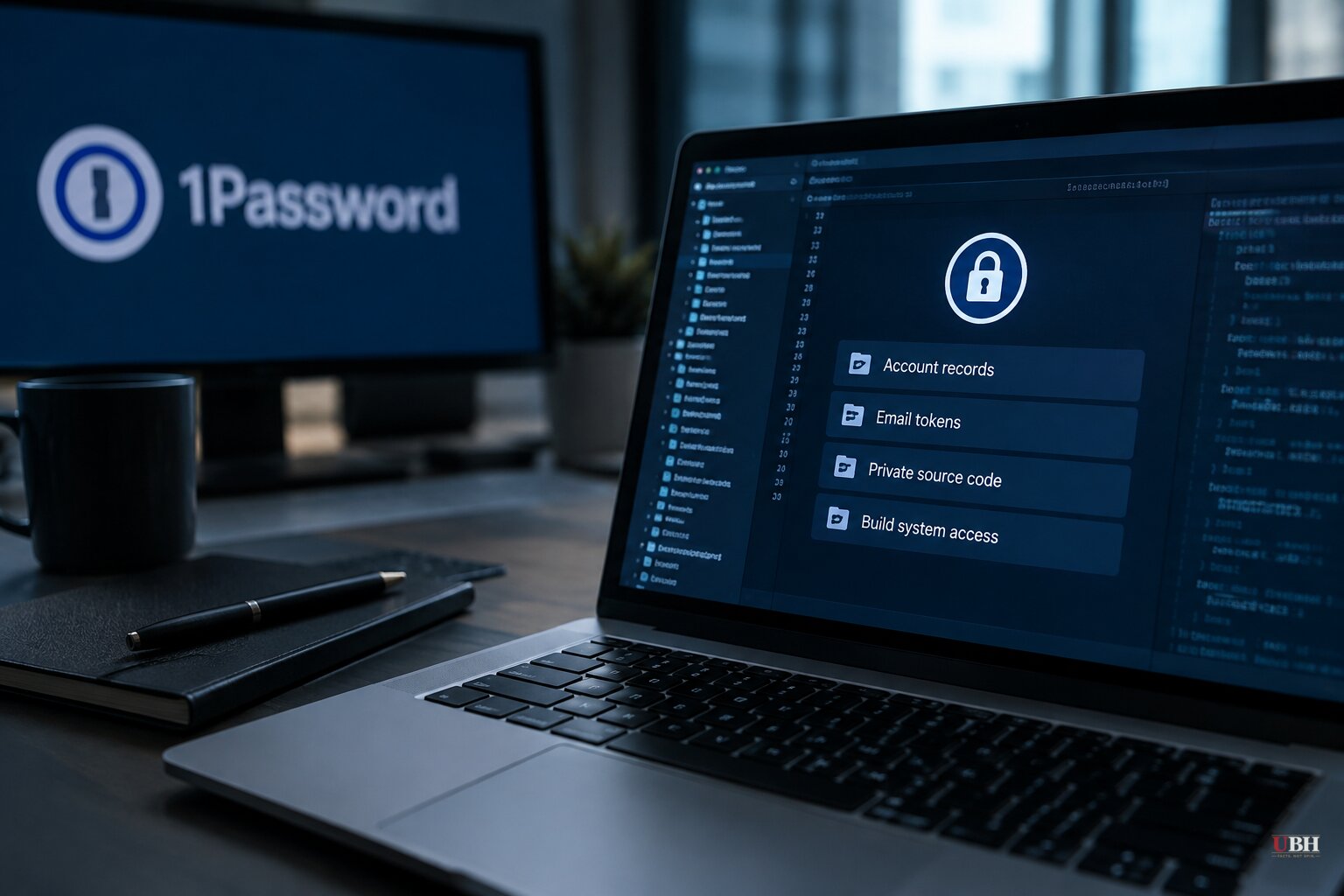
Since 1Password disclosed on Wednesday, Nov. 25, that an attacker hijacked an employee's corporate GitHub account, the company's incident post has filled in what the intruder actually walked away with. The list is longer than names and email addresses.
1Password, the Toronto-based password manager, says it began investigating on Nov. 19, 2026. The attacker used the GitHub account to reach source code and push malicious code to backend services. That code then downloaded administrative records on a subset of customers.
What was taken
Each record contained the name and email address a customer uses with 1Password, along with account and user identifiers. The records also held the date the account was created and the time of its last sign-in.
The attacker also obtained public keys tied to the accounts and Secure Remote Password (SRP) protocol parameters. 1Password says the public keys are public by design and that the SRP parameters cannot be used to get into an account. Internal metadata, including numeric version and file identifiers tied to its architecture, was copied too. The company classes that as non-secret.
A smaller group of users is affected by something more sensitive. Tokens embedded in some invitation, provisioning and account recovery emails were copied. 1Password says a token is useless on its own: the person using it must also complete single sign-on or enter a six-digit code sent to the account's registered email address.
The company says it contacted the small number of users with affected provisioning or recovery processes directly. It also says it has "validated no internal evidence of user account takeovers or compromise using any exposed account provisioning tokens."
The build system
The attacker also copied source code from private repositories and got into the company's CI/CD system, the pipeline that builds and ships its software. That environment held infrastructure secrets, which 1Password says it has rotated.
"Our source code is not customer data, and contains no user secrets," the company said. It added that there is "no impact to 1Password's services, availability, or product security."
The Register, in its own assessment, called the CI/CD access "arguably more troubling" than the customer records. 1Password has not detailed how far the attacker's reach into its software build and distribution infrastructure went. The company did not respond to The Register's questions.
What 1Password says it did
The company disabled the compromised GitHub account, revoked the stolen token and removed access the attacker had set up. It restored clean versions of the affected backend services and rotated or revoked internal credentials that may have leaked.
It hardened controls around GitHub, CI/CD and employee endpoints, and added new detections. It has engaged outside security experts to verify its containment and cleanup.
As a precaution, it lengthened the codes in invitation and recovery emails from six digits to ten alphanumeric characters. That change makes brute-forcing them far harder.
The vault claim
1Password's central assurance is that "at no time were customer vault contents accessed by, or available to, the attacker." It says account recovery keys, the keys that protect vaults, and its apps and browser extensions were not touched. It says it does not store users' account passwords or Secret Keys.
Its explanation: vault secrets are encrypted with keys only the customer holds, so neither the company nor an attacker inside its servers can read them.
The company says customers do not need to change anything in their accounts. It does tell them to watch for phishing, particularly unexpected invitations or recovery requests, which is the obvious use for a list of real customer names and emails.
Still unanswered
1Password has not said how many customers are in the affected subset, or whether individual, business or family accounts were hit. It has not explained how the employee's GitHub access was obtained, or when the intruder was detected and shut out. Nor has it explained how control of one GitHub account allowed malicious code to be deployed to backend services.
The company says its incident post will be updated if anything changes. The customer count and the answer to how the GitHub account was compromised are the two details that will show how far the breach reached.
Sources used for this briefing
6 links from 6 independent newsrooms (syndicated copies of the same report count once)
These are the sources it draws on, linked so you can verify.


