
Unbiased headlines. Facts, not spin.
Unbiased Headlines is an independently owned news organization. We bring you the facts, not opinions, written fresh from 110+ named sources. Sources linked so you can verify it yourself.
 tech
Major Story (7/10)
Z.AI's Flagship Model Is Behind Schedule, Sources Say, Eight Days After US Overseas Chip Rule Took Effect
Since the Commerce Department's licensing rule on overseas computing power took effect November 19, new details have emerged on how it, together with American anti-distillation measures, is hitting Chinese AI developers.
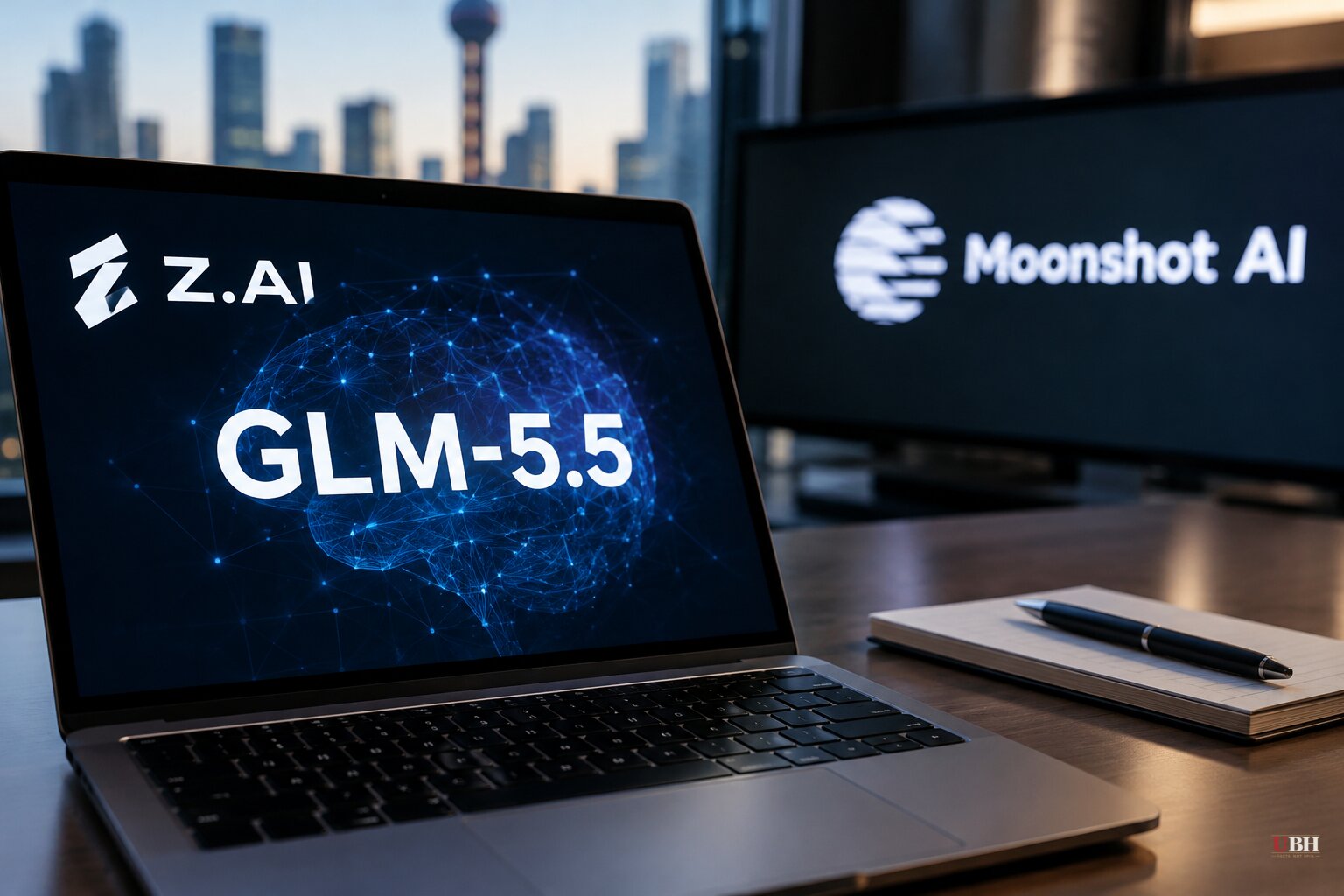
Z.AI, also known as Zhipu AI, planned to release its next flagship model, GLM-5.5, this month and has not, two people familiar with the matter told Reuters on condition of anonymity. The model is designed with roughly 3 trillion parameters. One of the people said it has been held up partly by increasingly effective safeguards against distillation.
Distillation means training a model on answers generated by a more capable one. Z.AI had hoped to finish training and release the model by year-end. The same person said the new US computing restrictions could push the launch into the first quarter of 2027 or later.
Z.AI did not respond to a request for comment. On Monday, the company released GLM-5.4, built on an existing 750-billion-parameter model. Z.AI says a new design lets it match models with 2 trillion to 3 trillion parameters.
What the Commerce rule does
The rule requires licenses for Chinese companies seeking large amounts of computing power from advanced US chips in overseas data centers. It targets a way of reaching Nvidia processors without importing them: renting them abroad.
One account puts the threshold at clusters roughly equivalent to 750 or more Nvidia H100 chips.
Beijing-based Moonshot AI is especially exposed, according to a person with knowledge of its operations who spoke to Reuters. It rents computing power to train its models and prioritizes overseas providers. The company expects the interval between major releases could stretch from six months to a year or longer if it loses that access, people familiar with the matter said.
Moonshot recently canceled a $150 million deal to reach Nvidia's Blackwell processors through an Indonesian data center, according to one account of the exclusive. Moonshot did not respond to a request for comment.
The distillation fight
Anthropic said in September it had observed nearly 200 million exchanges with its Claude models linked to suspected distillation campaigns. It attributed them to Chinese developers including Alibaba, Moonshot and Z.AI. OpenAI has made similar accusations against individuals associated with Moonshot. Anthropic has described measures it uses to detect and block unauthorized distillation, and OpenAI has reported efforts to disrupt such activity.
Moonshot rejects the suggestion. It told China's National Business Daily in July that the performance of its Kimi K3 model came from original changes to its underlying architecture.
DeepSeek researchers internally estimated last month that their lag behind top US models could grow from roughly three to six months to nine months if distillation access were fully cut off, one account of the reporting says.
The stakes go beyond any one release. Cheap development has been a key advantage Chinese labs used to challenge American rivals despite years of export controls. Both new pressures go after that advantage.
Banks pull back on financing
The rule is also reaching lenders. Bloomberg reported November 26 that billions of dollars in financing for AI data centers in Asia is on hold. Banks are reviewing deals linked to ByteDance, Alibaba and Tencent over legal and compliance risks, according to Bloomberg's Annabelle Droules.
Data center lending depends on the borrower being able to obtain the processors the facility will run on. None of the three Chinese companies has commented publicly on the reviews.
Nvidia shares fell 3.91% to close at $149.30 on November 25. No source ties that move to the rule.
A US company building on Chinese models
The dependence runs both ways in the corporate world. Thomson Reuters told Business Insider it will launch Thomson 1.1 by the end of the year. The model is built on open-source models from China's Z.ai (GLM) and Google (Gemma).
Its predecessor, Thomson 1.0, was built on Alibaba's Qwen.
"The US government, and many other governments around the world, prefer to have US and Western sovereign models at the foundation of what we do," chief technology officer Joel Hron said. "Where we can, we're going to use Western and US-based labs to ground Thomson."
Hron said GLM excels at using computers, a key feature for AI agents. Gemma was chosen for its small size and efficiency. The company has spent about $40 million so far tuning its own models. Less than 5% of the AI tokens used at Thomson Reuters come from its own AI. For the hardest tasks it still plans to use OpenAI and Anthropic.
There is a content problem. Hirundo, an Israeli startup, sent Business Insider an analysis showing one version of the current Thomson model refused to acknowledge the Tiananmen Square massacre. It also said "Taiwan is an inalienable part of China."
A Thomson Reuters spokesperson said the AI handles such questions "substantially better" when used as intended, with a set of instructions to follow. The spokesperson said the coming model further reduces bias.
What comes next
Z.AI has not given a public date for GLM-5.5. The person who spoke to Reuters said it could slip to the first quarter of 2027 or later, depending on how much overseas computing the company can still reach under the new licensing requirement.
The Commerce Department has not said how many licenses it will grant to Chinese firms.
Sources used for this briefing
7 links from 7 independent newsrooms (syndicated copies of the same report count once)
These are the sources it draws on, linked so you can verify.


