
Original briefings. Zero spin.
Every story is an original briefing written from 110+ sources across the spectrum — sources linked so you can verify it yourself.
 finance
Notable (6/10)
August 19, 2026 at 04:21 PM
finance
Notable (6/10)
August 19, 2026 at 04:21 PM
Dollar Index Falls to Three-Month Low as Fed Rate-Hike Bets Collapse
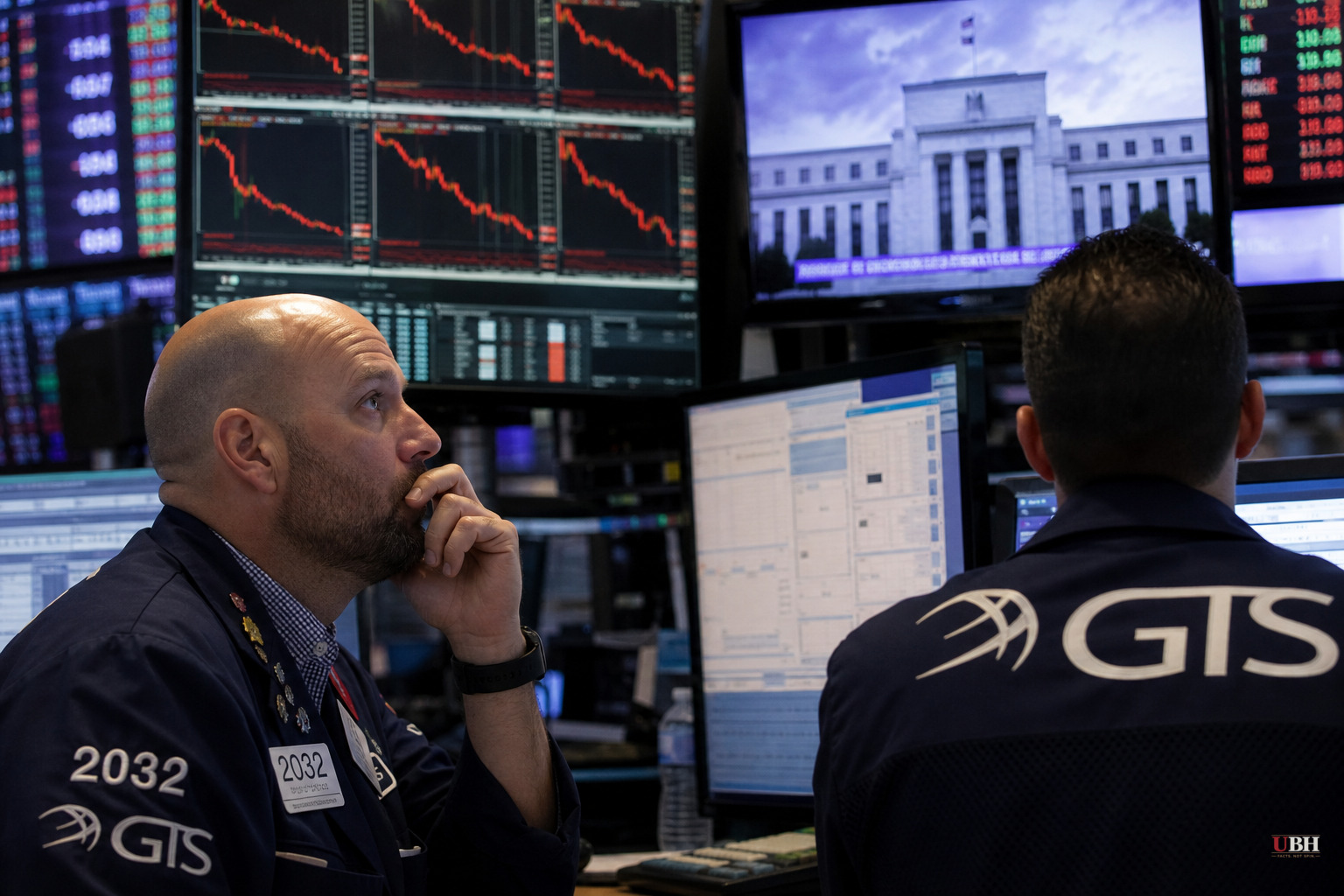
The U.S. Dollar Index dropped to its lowest level in more than three months this week, trading between 99.4 and 99.6, according to CNBC. That compares to the 52-week high of 101.80 the index hit on June 24. Year-to-date the dollar is still up 1.15%, but the recent slide has wiped out a chunk of that gain.
Soft data has driven the decline. July's Nonfarm Payrolls came in weaker than expected. Consumer price inflation last week landed on the mild side. Retail sales for July fell unexpectedly, according to Seeking Alpha's Marc Chandler. Traders stopped betting the Federal Reserve has any appetite left to keep rates high.
The CME FedWatch Tool shows odds of a Fed rate hike at the next meeting have dropped to 35%, down from 47% a month earlier, according to FXStreet. Fed funds futures now price in less than eight basis points of tightening for next month, down from 18 basis points at the end of July, per Chandler's analysis. That represents a serious downgrade in hawkish expectations in under a month.
Kit Juckes, chief FX strategist at Societe Generale, said long-dollar positions built up earlier this year are getting cut back "in a thin summer market" because the fundamental case for holding them is fading. He said the index could keep drifting lower or settle into what he called an "uninspiring" 95-to-100 range for the rest of the year.
Deutsche Bank's global head of FX research, George Saravelos, pointed to a separate problem: mixed signals from Federal Reserve Chair Kevin Warsh over the central bank's inflation target and policy toolkit. Saravelos said that ambiguity itself reads as dollar-negative. Markets hate not knowing the rules.
The Treasury Stepped In, Too
While the Fed outlook was softening the dollar, the Treasury Department made its own move. On Aug. 19, Treasury announced it will double the size of its long-end debt buybacks to $4 billion starting Sept. 9, focusing on 10-to-20-year and 20-to-30-year bonds, according to the Epoch Times.
A buyback is exactly what it sounds like: the government buys back its own bonds before maturity and replaces them with new issuance. Treasury said the bigger buybacks reflect the "significant volume of high-quality offers Treasury routinely receives," which is bureaucrat-speak for saying investors keep showing up wanting to sell.
The move worked, at least short-term. The 10-year yield fell below 4.7%. The 20- and 30-year yields eased to 5.2%. That represents a drop from Aug. 17, when the 30-year yield topped 5.31%, its highest level since June 2007. Stocks liked it too, with the benchmark index averages up around 0.4% on the news.
This isn't just an American problem. Japan's 10-year bond yield is at a three-decade high. Germany's 30-year yield hit its highest point since 2011. France's 30-year yield reached an 18-year high. Global bond markets are under pressure everywhere, driven by war-related inflation fears, fiscal worries in multiple countries, and competition for capital from AI-related corporate debt, according to the Epoch Times.
Ipek Ozkardeskaya, senior analyst at Swissquote Bank, laid out the tension plainly: "A prolonged war means pressure on inflation via energy prices at a time when the Fed's policy outlook and its reaction function to inflation are no longer straightforward, putting upward pressure on longer-maturity US yields." Her conclusion: "Something must give: either yields will come lower, if Middle East tensions ease, for example, or stock valuations will readjust."
That geopolitical angle matters for the dollar too. FXStreet reported that safe-haven demand tied to U.S.-Iran tensions, including President Trump's stated lack of interest in renewing an expiring agreement and his comments about a naval blockade of Iranian ports, gave the DXY some minor support even as it traded near three-month lows.
A Fair Question on the Other Side
Not everyone thinks higher yields spell disaster for stocks. Nancy Tengler, CEO of Laffer Tengler Investments, told the Epoch Times that the 1990s proved higher yields "can coexist" with a robust equity market. That's a legitimate historical counterpoint to the doom-and-gloom framing that a weaker dollar and rising long-term rates automatically mean trouble ahead. Markets have absorbed rate cycles before without falling apart.
Still, the numbers on the table are the numbers on the table. A dollar sliding to a three-month low, a 30-year yield that touched its highest point in 19 years just two days before Treasury intervened, and a Fed whose next move even its own futures market can't confidently price. Investors are watching the FOMC minutes and Fed Chair Kevin Warsh's next public comments for anything that clarifies where rates go from here. Nobody currently has that answer, including, it seems, the Fed itself.
Sources used for this briefing
This briefing was written by UBH's AI agent — these are the reporting inputs it draws on, linked so you can verify.


