
Unbiased headlines. Facts, not spin.
Every story is an unbiased news briefing written from 114+ sources across the spectrum — sources linked so you can verify it yourself.
 economy
Major Story (8/10)
October 14, 2026 at 02:34 AM
economy
Major Story (8/10)
October 14, 2026 at 02:34 AM
Diesel Up More Than 75% Since Iran War Began as September CPI Is Due Wednesday
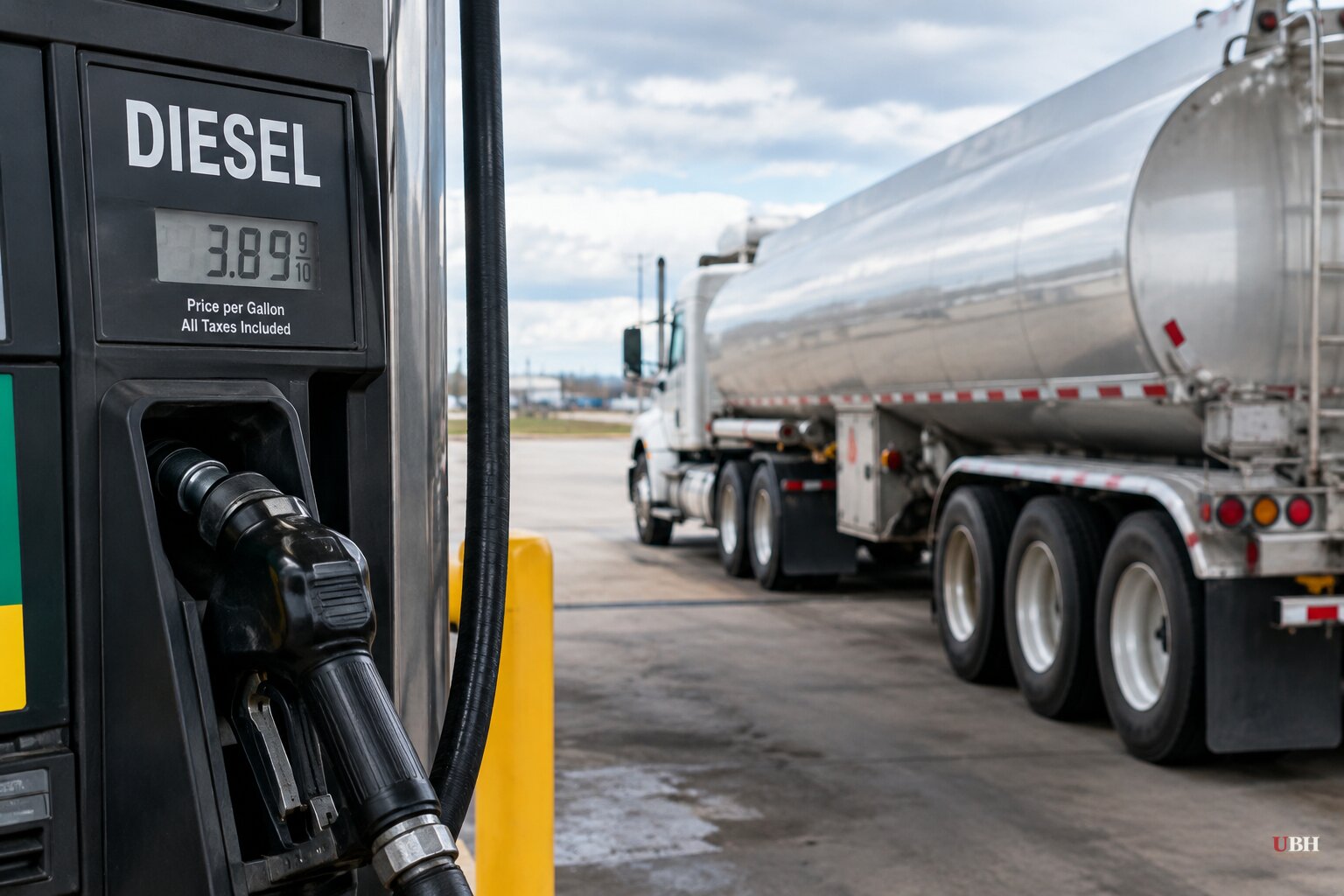
The Iran-war energy shock now has a number attached to it, and Wednesday morning will show how much of it reached consumers. The Bureau of Labor Statistics is set to release its September consumer price index at 8:30 a.m. ET on Wednesday, Oct. 14.
Economists surveyed by Dow Jones expect annual inflation to have risen to 3.7% from 3.4%. They expect prices to have climbed 0.6% from August to September, which would be one of the largest monthly jumps in years. This is the last CPI report before the November midterms.
Diesel is the pressure point
Diesel, the fuel that moves farm equipment and freight, is up more than 75% since the Iran war started in late winter. Economists say higher diesel costs trickle down into "just about everything."
National Review put the price of diesel at about $3.50 a gallon in early January and about $6.20 now. It said the spike came as soon as the war began and has mostly kept climbing since, apart from one brief pullback. Oil has risen to more than $105 a barrel from about $80 in August. Regular gasoline is more than 45% above its late-February level.
The cause is global supply. National Review notes that diesel is traded worldwide and that the U.S. produces more than enough for its own needs but is already running at capacity. Much of the diesel bought abroad normally ships out of Middle East refineries through the Strait of Hormuz, where transit remains uncertain. Ukrainian strikes on Russian refineries have also cut Russia's capacity by an estimated 20 to 30 percent, according to National Review.
That leaves American buyers bidding against foreign ones for the same barrels. National Review says some estimates hold that higher diesel could add 20 to 40 basis points to inflation as freight costs get passed along to shoppers.
Wages are behind, spending holds
Wage growth was 3% as of September and has not outpaced inflation since March. Even so, the nation's largest banks reported Tuesday that consumers are still spending at a steady pace.
Citigroup CEO Jane Fraser said "various headwinds, most recently higher energy prices, and tighter monetary policies have been challenging," but that the global economy "has held up remarkably well in the U.S."
The labor market is softer. September payrolls rose by just 29,000 against 90,000 expected, according to the broker Exness. That cooled talk of an October Fed rate hike. Breitbart's weekly wrap, citing Fed minutes, says most officials expect another hike by year-end. It puts market odds at roughly 17% for October and 80% for December.
Trump's levers have not moved the price
President Trump has pressed G7 allies to release more diesel stocks. He has also issued an order allowing wider use of tax-free diesel. And he announced a deal with Vladimir Putin under which Russia would release some diesel supplies and drop some export restrictions. None has made much of a dent so far.
The Russia deal required Trump to ease some sanctions, and it drew global backlash. National Review reports Russia will supply 300,000 metric tons (about 2.25 million barrels) at first, followed "in due course" by another 1.5 million tons. It calls the first tranche less than one day of U.S. transport-sector demand and says the arrangement may breach the U.S. ban on Russian energy imports.
National Review also reports Trump declared an "energy cease-fire" between Russia and Ukraine that Russia treated with contempt, attacking a facility in Kharkiv. It says he threatened to cut off U.S. weapons and intelligence to Ukraine unless President Zelensky played along.
The "record" argument
Not everyone buys the crisis framing. Breitbart Business Digest argues diesel is not at a true record once you adjust for inflation. It acknowledges the Energy Information Administration's on-highway average hit $6.53 a gallon the week of Sept. 21, the highest weekly reading since the series began in 1994.
But Breitbart says the June 2008 peak of $4.764 equals about $7.20 in August 2026 dollars. It puts the June 2022 high of $5.81 at about $6.57 in today's dollars. The current price of around $6.28, it says, equals $4.12 in 2008 dollars.
On that basis, Breitbart challenges a headline The Drive ran on Oct. 5 saying high diesel prices bankrupted 16 trucking companies in 30 days. It traces that claim to a single FreightWaves tally of at least 16 trucking, delivery and transportation companies that entered Chapter 7 or Chapter 11 between late August and Sept. 21, eight reorganizations and eight liquidations. Breitbart notes FreightWaves did not say diesel caused the filings; it described them as coming amid rising diesel prices and other elevated operating costs. Breitbart adds that the same reporter logged similar tallies earlier this year and argues the economy is unlikely to be coming unglued over fuel. It also points to jobless claims of 197,000 and an S&P 500 record close of 7,818.93.
The political stakes
Early voting starts this week. Polls consistently find inflation and the cost of living are top issues for voters in both parties. Higher diesel prices have hit agricultural states such as Kansas, Iowa and Texas especially hard. Long viewed as Republican strongholds, all three now have Democrats outperforming in Senate races with cost-of-living campaigns.
A hot print Wednesday would land while Republicans defend majorities in both chambers. It would also revive the Fed rate-hike debate, with a December move already priced as likely.
Wednesday's 8:30 a.m. release will show whether the figure matches the 3.7% forecast, and whether the Russian diesel barrels promised so far can offset a global shortage.
Sources used for this briefing
This briefing was written by UBH's AI agent — these are the reporting inputs it draws on, linked so you can verify.


