
Unbiased headlines. Facts, not spin.
Unbiased Headlines is an independently owned news organization. We bring you the facts, not opinions, written fresh from 110+ named sources. Sources linked so you can verify it yourself.
 economy
Major Story (8/10)
economy
Major Story (8/10)
China's September Exports Jump 36.3% to $447.18 Billion, Beating Forecasts as Monthly Surplus Hits $133.5 Billion
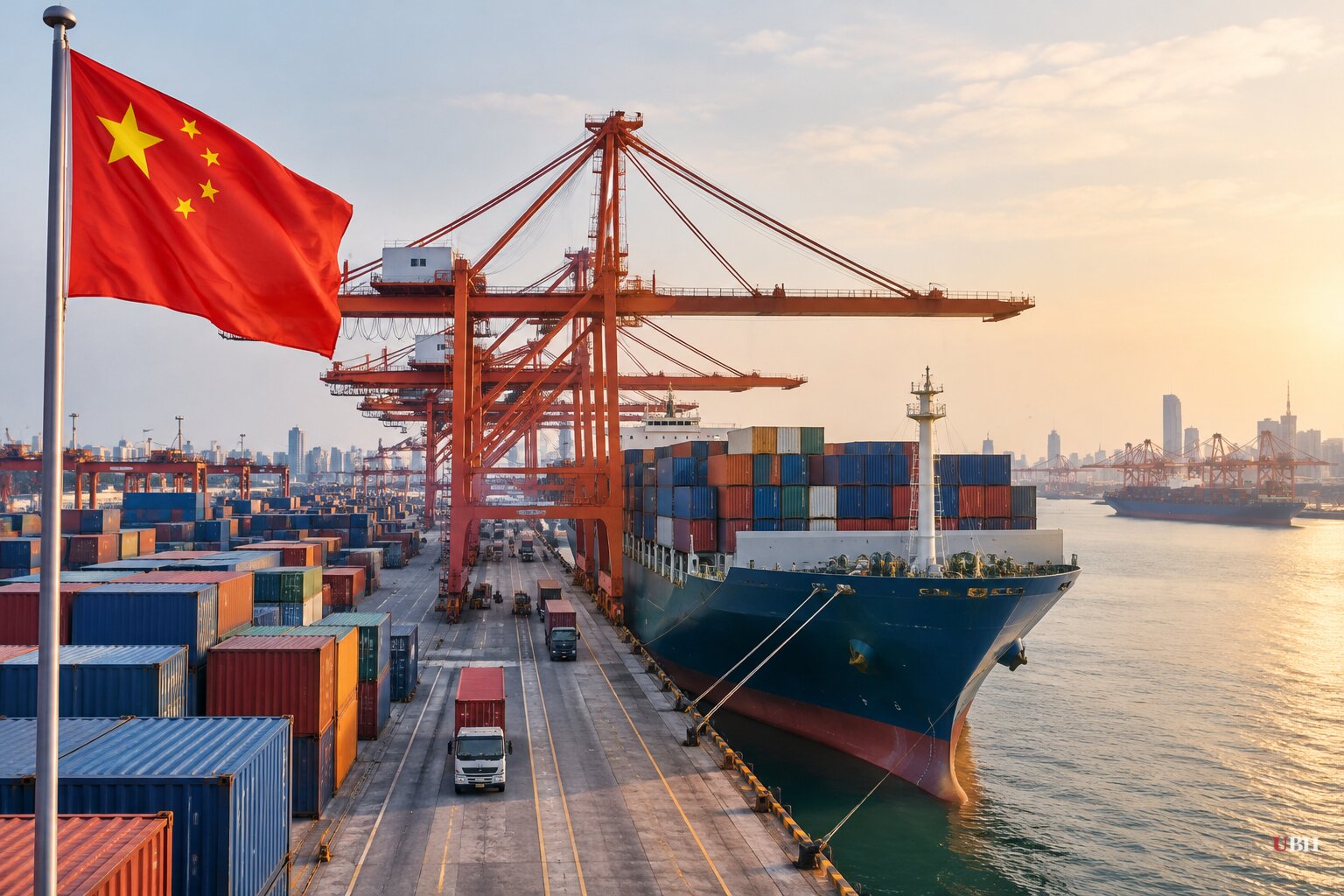
China's exports grew 36.3% in September from a year earlier, reaching $447.18 billion, according to customs data released Wednesday in Beijing (late Tuesday evening, Oct. 13, Eastern time). That was the fastest pace since February and far above the 25.5% growth a Reuters poll of economists had forecast.
Imports rose 31% to about $313.65 billion, up from 28.2% in August and also well above the 24.5% forecast. Exports outran imports, so the monthly trade surplus came in at $133.53 billion. Economists had expected $118.1 billion, and the August figure was $119.09 billion.
Hao Zhou, chief economist at Guotai Junan International Holdings, called the surplus a record monthly high. In a note he said it underscores the strength of China's external sector "despite lingering concerns over domestic demand."
What is driving the surge
China's Customs Vice Minister Wang Jun pointed to electronic components and computer hardware as the main pillars of the trade boom. Global demand for chips, integrated circuits and other parts for AI data centers is the engine. Semiconductor exports have often posted year-over-year gains of more than 100%.
September was not a one-off. Export growth was 25% in August and 27% in June.
The South China Morning Post reported that a pre-holiday shipping rush ahead of the "golden week" break added to the September number. Total trade for January through September rose 23.8% from a year earlier in dollar terms.
Shipments by destination varied widely. Shipments to South Korea rose 39.1%, to Taiwan 37.3% and to ASEAN nations 28.7%. Exports to the European Union grew 16.4%. Exports to the United States rose 9.8%, the slowest of the major markets listed.
Measured in yuan, the picture is less dramatic. Exports rose 29.6% in September against 18.6% in August. China's customs administration said total goods trade topped 5 trillion yuan in a single month for the first time, at 5.16 trillion yuan, up 27.5%. For the first three quarters, trade rose 18.8% in yuan terms to 39.94 trillion yuan. The gap between the dollar and yuan figures is a currency effect.
A surplus heading for $1 trillion
The cumulative surplus for the first nine months reached $938.51 billion. The surplus needs only about $61.5 billion more in the fourth quarter to cross $1 trillion for the year. September alone supplied more than twice that.
The export boom is covering for weak spending at home. Domestic consumption is slowing and the property sector remains in trouble, as Zhou's note about domestic demand reflects.
Cars show the other side of the ledger
The auto sector shows how thin the domestic base has become. The China Association of Automobile Manufacturers said vehicle exports rose 61.4% in September to 1.05 million units, nearly 36% of total sales, up from roughly 20% a year earlier. Domestic sales fell 26%, and overall sales fell 8.4%. Export growth offset only about 60% of the domestic decline.
The National Bureau of Statistics put capacity use in auto manufacturing, including parts, at 70.8% in the second quarter, below the 73.5% rate for manufacturing overall. Auto industry profits fell 16% in the first eight months of 2026 while revenue rose 2.9%.
Chery Group delivered 207,814 vehicles overseas in September, about 71% of its 292,308 total. That was up 51% from a year earlier. The China Automobile Dealers Association said some automakers now export more than half of what they build, and the number nearing 70% is growing.
European Union investigators found in their 2024 probe of Chinese battery electric vehicles that the industry benefited from government subsidies and had far more production capacity than its home market could absorb. Last week, after high-level talks in Beijing, the EU announced that China had agreed to halve its exports of hybrid-powered cars to the bloc. EU trade commissioner statements described the deal as an initial agreement aimed at easing tensions over trade imbalances.
Washington and the January deadline
The U.S. and China announced last month that each would roll back tariffs on $30 billion worth of goods and extend a broader trade truce by two months, to January. Stabilizing tensions with Washington has helped exports, according to CNBC's account of the data.
China's exports to the U.S. are still growing, at 9.8%, even with tariffs in place. What the January deadline brings is not yet known. Neither Washington nor Beijing has said whether the truce will be extended again or whether the rollback will expand beyond the $30 billion on each side.
A fourth-quarter surplus near the September pace would put 2026 well above $1 trillion, and that figure will land in the middle of the next round of talks.
Sources used for this briefing
7 links from 7 independent newsrooms (syndicated copies of the same report count once)
These are the sources it draws on, linked so you can verify.


