
Unbiased headlines. Facts, not spin.
Unbiased Headlines is an independently owned news organization. We bring you the facts, not opinions, written fresh from 110+ named sources. Sources linked so you can verify it yourself.
 energy
Notable (6/10)
Event date: November 11, 2026 ·
Diesel Slips to $5.998 a Gallon, Ending Two Months Above $6
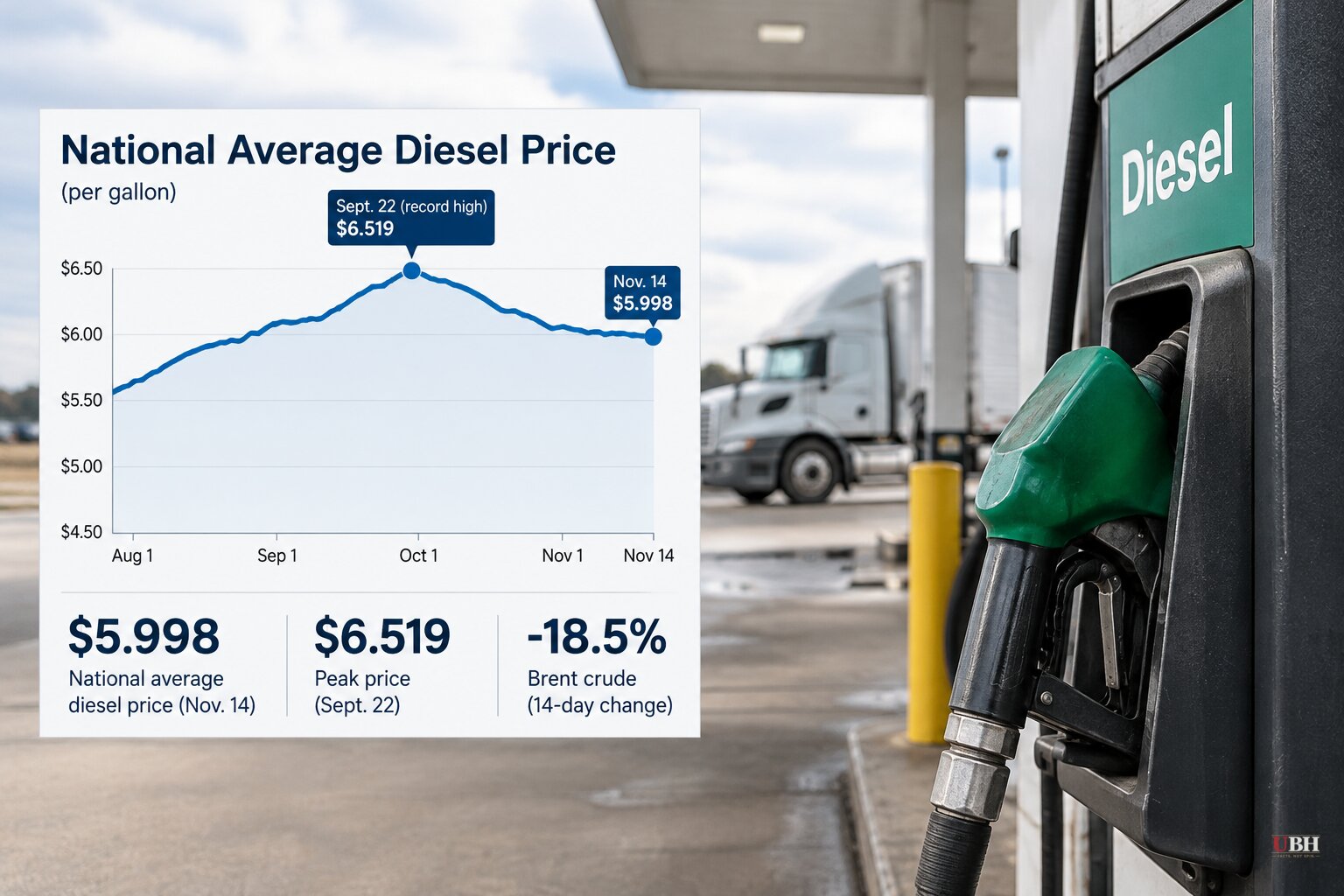
Since diesel topped $6 a gallon on Sept. 10 and hit a record $6.519 on Sept. 22, the national average has stayed above that line for two months. On Saturday, Nov. 14, it slipped under. GasBuddy put the average at $5.998.
Gasoline has also dropped. The AAA national average fell to $3.9788 on Tuesday, Nov. 10, below $4 for the first time since Aug. 10, according to GasBuddy data. A month earlier it stood at $4.37. California is still the most expensive state for gasoline at $5.71 a gallon, and North Carolina is the cheapest at $3.24.
What pulled prices down
Crude did most of the work. Brent futures are down 18.5% over the past two weeks. Oil spent every day of October above $100 and reached a four-year high of $114 on Oct. 30, the last trading day of the month, CNN reported. Brent settled at $94.62 on Nov. 4, down 8.7% in one session, and briefly traded below $90 this week.
Seasonal factors are helping too. Patrick De Haan, GasBuddy's head of petroleum analysis, said demand typically softens in autumn as people drive less and hurricane season winds down, which lowers the risk of Gulf Coast refinery disruptions. Refinery maintenance is also largely finished by November, he said, letting production recover.
De Haan said on Nov. 4 that retail gasoline could fall to $3.65 and diesel to $5.50 in the weeks ahead, based on the wholesale drop that day. Diesel is still about 50 cents above that mark.
The war and the ballot box
Diesel surged because the U.S.-Israeli war on Iran disrupted oil supplies, while Ukraine's attacks on Russian refineries cut production. California diesel briefly topped $10 a gallon.
The Trump administration tried to blunt the pain. It temporarily lifted federal taxes on red-dyed diesel, eased sanctions on Russian fuel and launched an $8 billion program to help farmers offset autumn-harvest fuel costs. Those steps gave only limited relief, according to Reuters, as supply fears from the war kept dominating the market.
Democrats flipped both the House and Senate on Nov. 3. Vice President JD Vance blamed the war for Republican losses. President Trump told reporters Vance's assessment was largely true because the war drove up gasoline prices. Reuters described high fuel costs as a major factor in the sweep.
Oil's drop came right after the vote, but CNN's analysis argues politics is only part of it. Trump had hinted at renewed strikes once the midterms ended, then argued just before the midterms that renewed attacks were no longer necessary. CNN says the market has also returned to fundamentals: despite what it calls the biggest oil supply shock in history, the world is now producing more crude than it consumes.
The numbers behind that claim are specific. Middle East oil transits fell to 9.8 million barrels a day at the war's outset in March and averaged 20.7 million last week, per JPMorgan's Natasha Kaneva, against 24.7 million before the war. Kpler put last week's flows at roughly 70% of the pre-war average. Crude flows from outside the Middle East are up 1.5 million barrels a day from a year ago, CNN reported.
Why $6 is not a settled number
The war is not over. Warren Patterson and Ewa Manthey of ING said in a Nov. 5 note that the Democratic win raises hopes for a quicker end to the conflict and that lawmakers are likely to scrutinize it more closely. They also said the new Congress does not take office until January, "leaving room for escalation." Absent escalation, they expect the market to keep giving back its risk premium, though they called the selloff overdone.
June Goh, senior oil analyst at Sparta Commodities, said more volatility is likely because the path to a diplomatic end remains uncertain and strategic reserves are very thin. Giovanni Staunovo of UBS called the Nov. 5 rebound in Brent, to about $96.88, a reflection of the unresolved Middle East situation.
Shipping data is mixed. Vessel traffic through the strait rose in October to its highest monthly level since July, S&P Global said, but crude tanker movements fell and security incidents continued.
House Minority Leader Hakeem Jeffries wrote colleagues on Nov. 4 that House Democrats must act in their first 100 days in the majority to stop the war. Brent, at roughly $95 in early November, remained well above the roughly $72 close on Feb. 27, the day before the war began.
Diesel is a key driver of transportation and freight costs, and the average has now fallen from its $6.519 September record to $5.998. Whether it reaches De Haan's $5.50 mark depends on how the oil market and the war develop in the weeks ahead, with the new Congress not seated until January.
Sources used for this briefing
6 links from 6 independent newsrooms (syndicated copies of the same report count once)
These are the sources it draws on, linked so you can verify.


