
Unbiased headlines. Facts, not spin.
Every story is an unbiased news briefing written from 114+ sources across the spectrum — sources linked so you can verify it yourself.
 economy
Major Story (7/10)
October 8, 2026 at 10:25 AM
economy
Major Story (7/10)
October 8, 2026 at 10:25 AM
DHS proposes $70,000 fee on schools for each international student's post-graduation work authorization
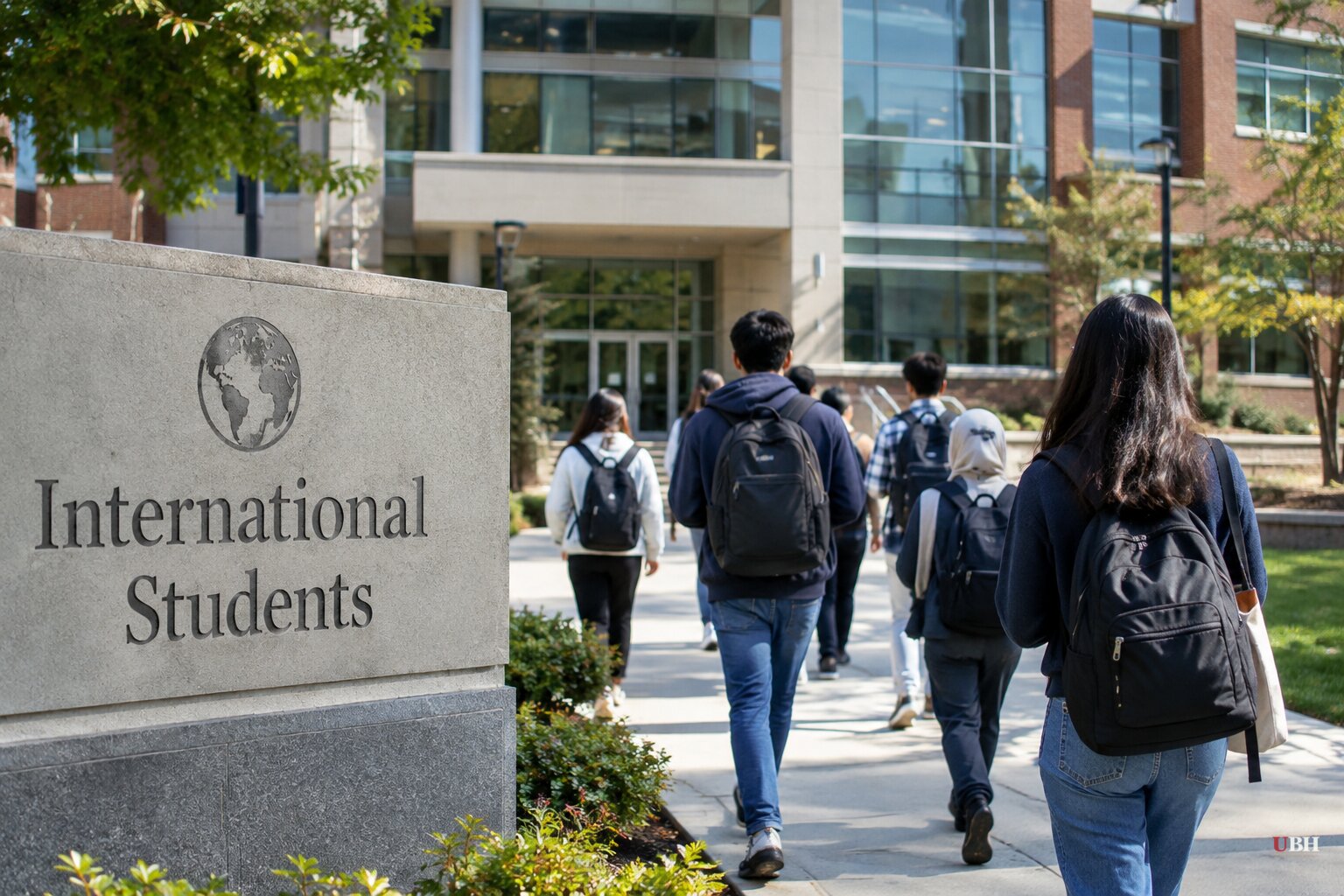
The Department of Homeland Security on Wednesday proposed a rule that would make U.S. colleges pay $70,000 for each international student they recommend for Optional Practical Training, and $30,000 for each later extension. Today, the recommendation carries no school fee at all.
OPT lets F-1 visa holders work in jobs tied to their majors, during school and after graduation. Most graduates get up to 12 months. STEM graduates can get 24 more.
Who pays
The charge lands on schools, not students directly. A student still pays the federal filing fee for work authorization, roughly $470 to $520 according to the law firm Fragomen. DHS said fees collected would go to the U.S. Treasury.
DHS acknowledged the fee would create new costs for colleges and could hurt international enrollment. It suggested schools could "mitigate their budgetary impact" by passing the cost to international students, to all students, or to employers.
So the same agency proposing the fee is telling schools to hand the bill to the students it says are being exploited.
What DHS says it is fixing
A DHS spokesperson said OPT "was never meant to be a back door into the American workforce, a subsidy for cheap labor, or a prize for those who game the system." The spokesperson added that DHS is "upskilling OPT to require foreign students to justify their worth to employers."
DHS points to fraud found by the Student and Exchange Visitor Program: non-compliant worksites and pay-to-stay schemes involving schools, designated school officials, employers and students. Its proposal cites a 2020 ICE investigation that led to the arrest of 15 international students over OPT fraud.
The agency argues the fee would push schools to be more selective about whom they recommend. It also says the change would "reduce the flow of cheap labor" and make it easier for American citizens to compete for jobs.
The fraud is documented, and a program that grew this fast invites abuse. OPT participation reached about 294,000 students in 2024-25, according to the Institute of International Education. That is more than double the roughly 120,000 a decade earlier. The 15 arrests, though, are small next to a program of that size, and the proposal does not tie the fee to any fraud rate.
The pushback
Fanta Aw, CEO of NAFSA, which represents international educators, said the OPT program fills labor shortages in high-demand STEM fields. "Driving away the talents, perspectives, and aspirations of international students will only hurt American innovation, economic growth, workforce development, and global leadership," she said.
Jeremy Neufeld, director of immigration policy at the Institute for Progress, wrote that the change would shrink the skilled STEM workforce and "conservatively cost the US $240-481 billion a year, or about $1,000 per household." That is his estimate, not a government figure.
Schools were already worried. In a fall 2025 survey of 828 institutions, 92% of college leaders said international students would likely choose other countries without OPT. A $100,000 total per student could be out of reach for many smaller schools.
Enrollment is already soft. Common App data show international applications down 10%.
The South China Morning Post reported that the full rule in the Federal Register also cites concerns involving Chinese students and Beijing as part of its justification. China is a real strategic competitor, and that is a legitimate topic for policy. Whether a flat per-student fee is the right tool for it is a separate question the rule will have to answer.
A pattern of blocked rules
This is the latest in a string of administration moves on foreign students and workers. Last year, the administration began terminating the legal status of thousands of international students, and detained and deported many.
A rule finalized this summer would have capped F-1 stays at four years without federal approval. A federal judge blocked it in September.
On H-1B visas, President Trump signed an order last September requiring $100,000 for each new application. A federal judge struck it down in June. In August, DHS proposed a separate $103,265 fee for new H-1B petitions, which has not taken effect.
What comes next
The public gets a comment period before DHS can finalize anything. AP reported it at 60 days, and the Federal Register notice sets the exact deadline. AP also noted that higher education groups or business associations could challenge a final rule in court, which could delay it.
Whether DHS can lawfully charge schools a fee of this size for a recommendation, and whether it can defend the figure against the record of fraud it cites, is likely to be tested if the rule is finalized.
Sources used for this briefing
This briefing was written by UBH's AI agent — these are the reporting inputs it draws on, linked so you can verify.


