
Unbiased headlines. Facts, not spin.
Unbiased Headlines is an independently owned news organization. We bring you the facts, not opinions, written fresh from 110+ named sources. Sources linked so you can verify it yourself.
 health
Notable (6/10)
health
Notable (6/10)
Danish Study Finds Prenatal Tylenol Use Tied to Smaller Ovaries and Uteruses in Baby Girls
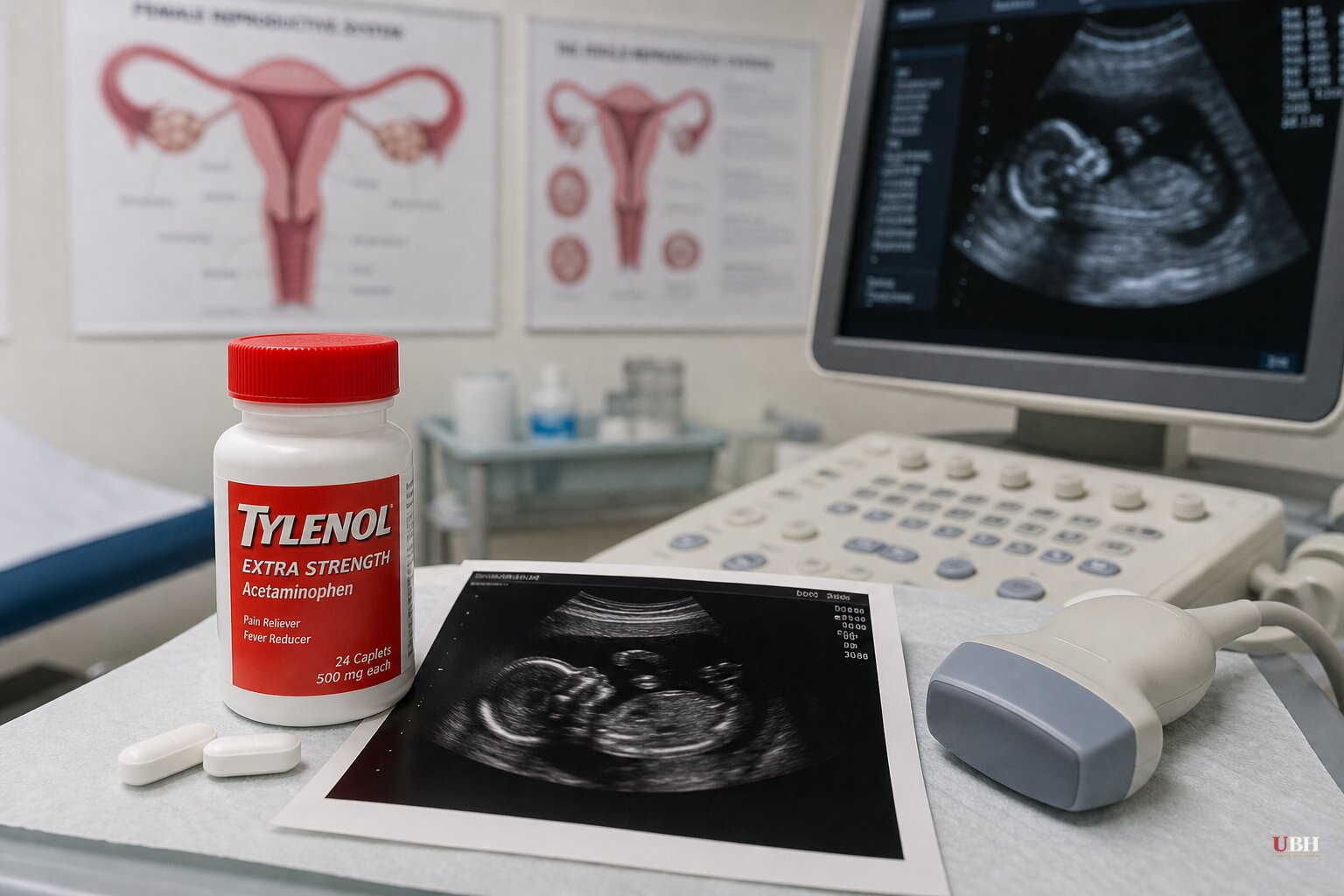
What the study actually found
Researchers at Rigshospitalet in Copenhagen tracked 685 pregnant women starting in their first trimester and later examined 302 of their baby girls at three months old, according to Reuters. The study, led by postdoctoral researcher Margit Bistrup Fischer, published Wednesday in the journal Human Reproduction Open.
Of the infants studied, 92 were exposed to Tylenol in utero before 17 weeks of pregnancy, 67 were exposed after 17 weeks, and 143 had mothers who took none at all, per Reuters. Exposure wasn't self-reported guesswork. Researchers tested the mothers' urine at regular intervals throughout pregnancy to confirm actual use.
The doses involved were modest. None of the mothers exceeded the recommended daily maximum of 4,000 milligrams, and most took the drug for headaches or musculoskeletal pain, not chronic conditions, according to Reuters.
The results: infants exposed in utero averaged 40% smaller ovarian volume, 13% smaller uterine volume, and 23% fewer ovarian follicles, the structures that hold immature eggs, compared to unexposed infants. Girls exposed before 17 weeks also had lower Anti-Müllerian hormone, a marker doctors use to estimate egg quantity and quality, Reuters reported.
A second, larger group of 1,210 girls followed from infancy through adolescence showed the same pattern holding up over time. Fetal exposure was linked to smaller uteruses at puberty and smaller ovaries in the teen years, according to Reuters.
Why researchers aren't sounding alarms
Fischer was blunt that this is not a causation study. "Women who during pregnancy have used Tylenol... should not be alarmed by the findings," she said, per Reuters. She told CNN the research "does not establish cause and effect" and shouldn't change how pregnant women are treated right now.
A woman's entire lifetime egg supply is set before she's born, since girls are born with every egg they'll ever have, the researchers explained. So if something during pregnancy nudges that supply downward, the effect would show up exactly the way this study measured it: smaller ovaries and fewer follicles at three months old. But smaller organs and hormone markers in infancy are not the same as proven infertility decades later. Fischer told CNN that determining any real-world impact on adult fertility or menopause timing "will require" long-term follow-up that hasn't happened yet.
Dr. Hugh Taylor of Yale School of Medicine, who wasn't involved in the study, called the findings "impressive" but also cautioned, according to Ground News, that the research doesn't establish that acetaminophen exposure causes the reproductive changes. Animal studies had hinted at this before, per Reuters, but no human data had shown it until now.
The medical establishment isn't changing its advice
The American College of Obstetricians and Gynecologists responded directly, saying the findings "do not indicate that current clinical recommendations should change," per CNN. ACOG's statement reaffirmed that acetaminophen "remains one of the only safe medications that can be used during pregnancy when indicated."
Untreated fever in pregnancy carries its own documented risks, including birth defects and miscarriage, according to CNN, and aspirin and ibuprofen pose separate dangers to mother and fetus. ACOG isn't a neutral bystander here. It's the professional body that writes the guidelines being defended, so its judgment that nothing needs to change deserves scrutiny alongside its authority. But the alternative options genuinely are worse, and no source here disputes that.
Don't confuse this with the autism fight
This study measures ovarian and uterine anatomy in infants. It says nothing about autism. That distinction got blurred in the public conversation after President Trump told pregnant women last year to "tough it out" rather than take Tylenol, tying the drug to autism risk without evidence, according to CNN. The FDA also moved to change the drug's label warning of a possible neurological risk, despite what CNN describes as decades of evidence against a causal autism link and what multiple outlets, including The Independent, call an unsettled and widely disputed claim among mainstream medical groups.
Trump's autism claim remains unproven and is rejected by ACOG and most researchers cited across these reports. The new Danish reproductive-organ data is a legitimate, peer-reviewed signal that deserves more research, not dismissal, and not panic.
What's next
Fischer's team says the real test is longitudinal: following these girls into their teens and twenties to see whether smaller ovaries in infancy actually translate into fertility problems or earlier menopause. That data doesn't exist yet. Until it does, every doctor quoted in this reporting, including Taylor and ACOG, says the current guidance stands: acetaminophen in moderation remains the safest option pregnant women have for pain and fever, and no one is being told to stop.
Sources used for this briefing
7 links from 5 independent newsrooms (syndicated copies of the same report count once)
These are the sources it draws on, linked so you can verify.


