
Unbiased headlines. Facts, not spin.
Unbiased Headlines is an independently owned news organization. We bring you the facts, not opinions, written fresh from 110+ named sources. Sources linked so you can verify it yourself.
 health
Notable (5/10)
Event date: October 22, 2026 ·
Colorado and Philadelphia Children's Hospitals Vaccinate Sedated Patients, Programs Say Parents Consent
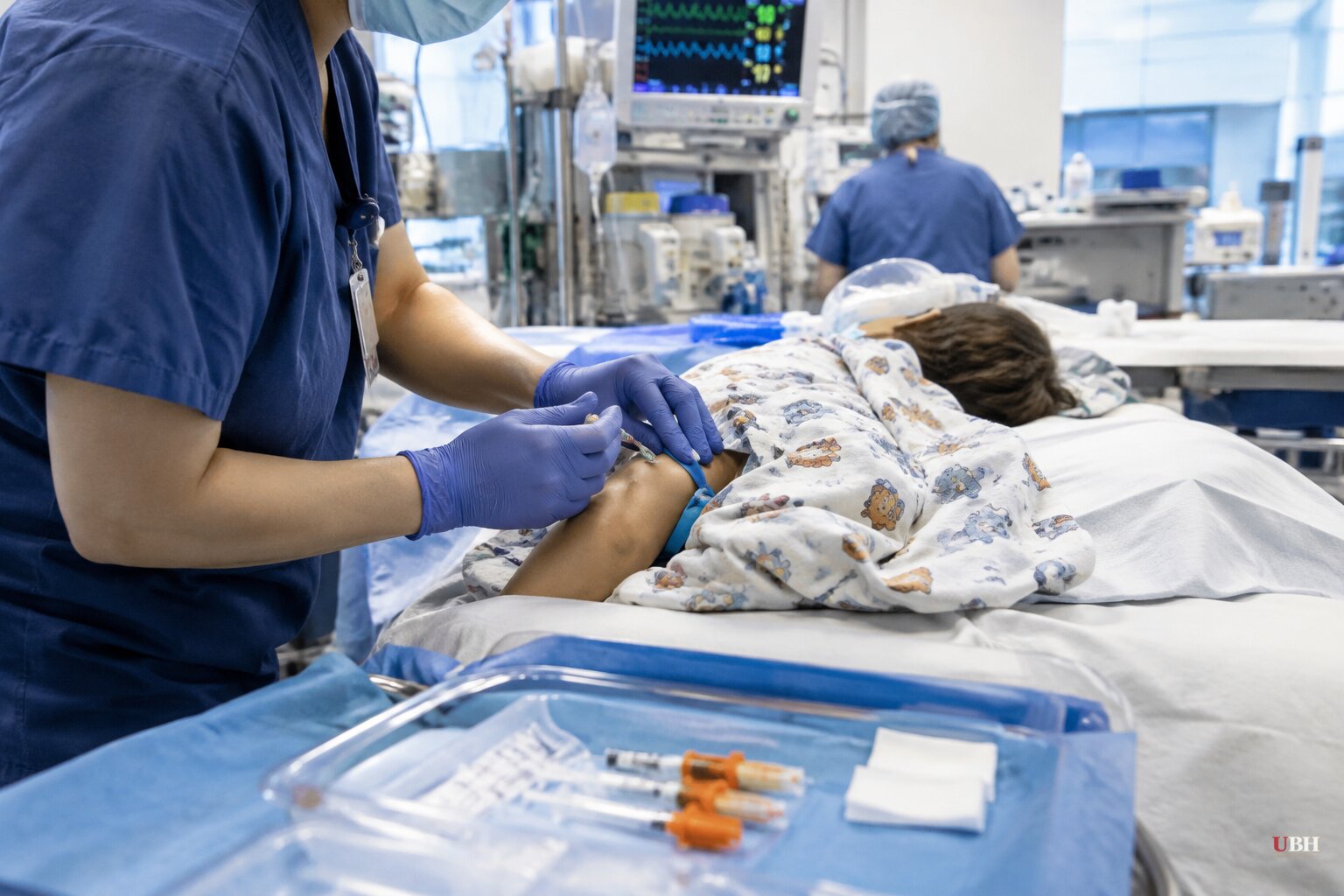
A March 2026 article in AAP News says Children's Hospital Colorado has vaccinated "more than 18,000" pediatric patients under "deep sedation or general anesthesia" while they were in the hospital for surgery or other procedures. That is according to a summary by writer Jon Fleetwood, who published it this week at Modernity and ZeroHedge.
The AAP piece was written by two anesthesiologists, Drs. Caroline A. Pasquariello and Kim M. Strupp. In it, they say additional vaccinations are administered under anesthesia or sedation, "particularly for children with neurocognitive conditions who are unable to tolerate vaccination without sedation."
That is the stated medical rationale. Some kids cannot hold still for a needle. If they are already asleep for something else, one fewer stressful encounter is the argument.
The Philadelphia program
Fleetwood also reported that Children's Hospital of Philadelphia gave flu shots to 2,054 children under anesthesia. Nicolas Hulscher, an epidemiologist at the McCullough Foundation, wrote on Oct. 22 that CHOP's own presentation documents roughly 4,000 flu vaccinations through a program called "Close Your Eyes, We'll Immunize!" The two counts differ, and neither writer explains why.
Hulscher says some shots were given after anesthesia induction. He also says UNC Children's Hospital in North Carolina has a documented program, and that the Colorado figure covers the period since 2020.
The CHOP presentation, as Hulscher quotes it, states: "Not only did no families pay out of pocket for the flu shot, we generated >$60,000 in revenue!" Hulscher says the documents also describe proposals to expand the effort to other hospital settings, other childhood vaccines and more institutions.
What the critics argue
Fleetwood says the practice "raises serious questions about informed consent and the safety of children being vaccinated while under anesthesia." He asks who independently verified safety and what happens when a vaccine reaction is mistaken for a surgical complication.
He cites a 2007 review in Pediatric Anesthesia by Siebert, Posfay-Barbe, Habre and Siegrist. Fleetwood says it found that anesthesia and surgery have immunomodulatory effects and that vaccine-triggered inflammation and fever "may interfere with the postoperative course." He says the authors recommended delaying vaccination by 2 days for inactivated vaccines and 14 to 21 days for live vaccines.
Hulscher goes further. He calls the CHOP program "diabolical" and says giving injections to unconscious children "while bragging about profits is MONSTROUS." Those are his characterizations, not findings from any regulator or court.
What the programs say about consent
Hulscher concedes the point that matters most to the consent question. In his words, "the programs describe obtaining parental permission before administering vaccines." His objection is that permission does not settle the matter for him.
That is a real dividing line. One side sees a convenience for children who are hard to vaccinate, done with a parent's sign-off. The other sees a vaccine given at the moment a child cannot react, in a setting where side effects could be harder to read.
No investigation, complaint or adverse-event finding tied to either program has been cited by those raising the alarm. The hospitals' own statements on the claims were not part of the material from Fleetwood or Hulscher.
The fever-masking worry has a clinical basis in the literature Fleetwood cites, but the 2007 review is nearly two decades old. Fleetwood himself says there is "limited direct data" on immune responses when anesthesia and vaccination are combined. That gap cuts in more than one direction, and no one has yet filled it publicly.
The political backdrop
The story is landing in a charged moment. HHS Secretary Robert F. Kennedy Jr. recently unveiled a vaccine injury research center at the National Institutes of Health. He said "vaccine injury is an invisible disease, and it is purposely invisible," and has called the federal Vaccine Adverse Event Reporting System "very bad." The CDC says on its website there is a "very remote chance" of vaccines causing serious reactions, injuries or death.
Dr. Peter Hotez of Texas Children's Hospital Center for Vaccine Development told CNN the existing system already works, citing detection of myocarditis in young men after mRNA vaccines, at about 1 in 20,000, and blood clots tied to the Johnson & Johnson vaccine, at about 1 in 500,000.
President Trump signed an executive order on Aug. 10 saying children should get fewer vaccines. His administration has been blocked in court from changing the childhood schedule.
None of that speaks to what happens in a pre-op room. It does explain why a hospital flu-shot program is now being shared across the MAHA-aligned corner of the internet.
What remains open
The AAP article's full text, the CHOP slide deck and any consent forms are the documents that would settle most of this. So far, the public has been given summaries and quotations of them.
The unresolved questions are concrete. What do the consent forms tell parents about timing and anesthesia? Why do the CHOP counts differ, 2,054 in one account and about 4,000 in another? And will either hospital release any tracking of post-procedure reactions in children vaccinated this way?
Sources used for this briefing
6 links from 5 independent newsrooms (syndicated copies of the same report count once)
These are the sources it draws on, linked so you can verify.


