
Unbiased headlines. Facts, not spin.
Unbiased Headlines is an independently owned news organization. We bring you the facts, not opinions, written fresh from 110+ named sources. Sources linked so you can verify it yourself.
 economy
Notable (6/10)
Event date: October 29, 2026 ·
Credit Card Rates Top 20% on Average as Both Parties Pitch Caps Days Before Midterms
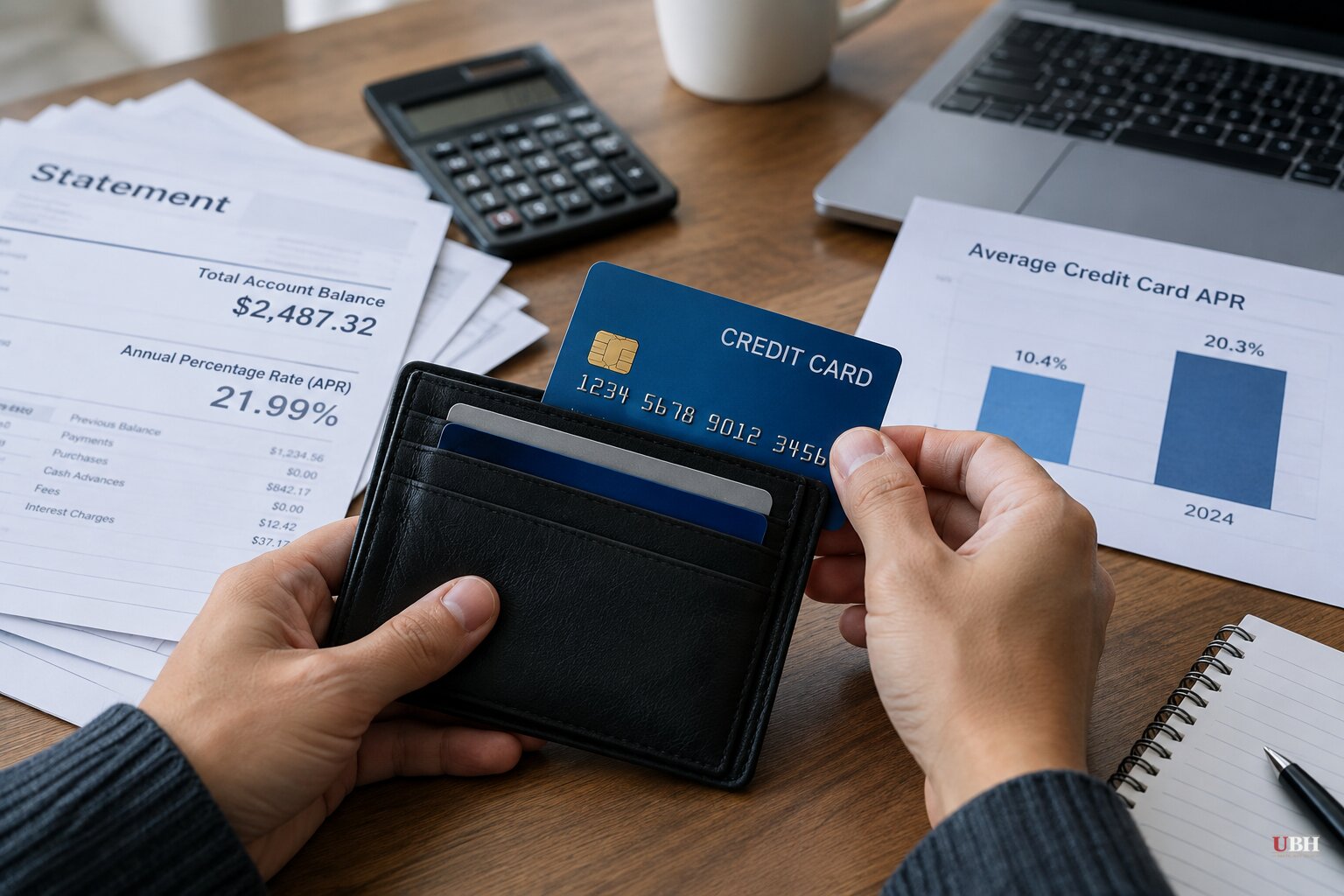
Credit card debt has become a campaign issue in the final days before the midterms. The average card interest rate has climbed past 20%, close to double its level a decade ago.
Delinquencies are heading toward their highest point since 2011. Candidates from both parties are using that number to pitch voters who are tired of inflation.
The squeeze on household budgets
A Century Foundation review found more than 40% of adults carry a card balance from month to month. A Pew Research Center survey found roughly one-third of Americans think about their debt almost every day.
Dakota Bradley, a 36-year-old voice actor in Pensacola, Florida, said he ran up more than $12,000 in card balances over the last eight months. "It comes down to a choice of putting food on the table or covering the credit card payment," Bradley said. "With these interest rates, it's unsustainable."
Bradley said he backed Democrats down-ballot for the first time and now trusts them more than Republicans on affordability.
Republican strategist Mark Weaver described the mood this way: "Rising credit card debt is one tentacle of this octopus of affordability that so many voters feel wrapped around them."
Caps on the campaign trail
Candidates in both parties are floating limits of 10% or even 8% on card rates. Democrats including Texas Senate candidate James Talarico and Florida's Angie Nixon support limits on what card issuers can charge, with Nixon urging an 8% ceiling. Alexandria Ocasio-Cortez and Bernie Sanders have endorsed a 10% cap. On the right, President Trump rolled out a 10% limit during the closing phase of the 2024 presidential race and brought it back at the beginning of 2026. Republican Rep. Anna Paulina Luna is backing bipartisan legislation to cap card rates at 10%.
A Harvard CAPS/Harris Poll of 1,725 registered voters, conducted May 29 to May 31, 2026, found 72% support for a one-year 10% cap, with similar approval among Democrats and Republicans. The White House has stepped back from a cap.
Big banks say a hard ceiling would force them to sharply curtail access to credit for the borrowers who rely on it most. JPMorgan Chase CEO Jamie Dimon labeled the proposal an "economic disaster." That is the industry's own forecast, and it stands against the campaign promises.
The affordability pitch is not limited to cards. Former President Barack Obama told a Georgia crowd this week: "If you thought everything cost too much before, guess what. Everything is more expensive now."
NPR's Stephen Fowler said Democrats argue Trump and Republicans made choices that raised costs and broke promises. Fowler added that Obama's message acknowledges prices were also high under Biden. Fowler said polling shows affordability is a top concern, that Trump and Republicans are unpopular, and that voters tend to see Democrats as better on the issue.
The Fed holds, and Trump wants cuts
The Federal Reserve voted 10-2 on Wednesday to hold its target range at 3.75%-4.0%. That was six days before the midterm elections. The Daily Wire reported that Cleveland Fed President Beth Hammack and Governor Lisa Cook dissented in favor of a hike, and that the Fed had raised rates in September for the first time in three years.
President Trump wants lower rates. He said earlier this month the board "would like to see the country do badly" because it has not cut. He did not criticize new Fed Chair Kevin Warsh, saying, "I think Kevin is great, but Kevin is one vote out of a board with numerous people that were put on by Obama and Biden and a couple by me."
Treasury Secretary Scott Bessent, who discusses policy with Warsh over breakfast every week, blames the Iran war's energy shock for high headline inflation. "The core inflation actually dropped last month and is approaching the Fed's target," Bessent said. He predicted energy markets will be "well-supplied" once the conflict ends.
The card bill that is not a rate cap
The federal card legislation with the most momentum would not touch interest rates. The Credit Card Competition Act, S.3623 in the Senate and H.R.7035 in the House, would require issuers with more than $100 billion in assets to enable a second, unaffiliated network on their credit cards. Merchants would then choose which network processes each sale.
The bill does not cap swipe fees. It would amend the Electronic Fund Transfer Act and direct the Fed to write the rules. Debit cards already work this way under the Fed's Regulation II, which implements the Durbin Amendment.
Both bills remain in committee as of late October. The Wall Street Journal reported Oct. 8 that Trump and Vice President JD Vance back the measure. It also reported that merchant lobbyists have discussed with White House officials attaching it to another bill after the November elections. A summary of that report by Payment Review says the payments industry considers passage unlikely.
Passage would not make a card cheaper to carry. The bill targets what merchants pay to process payments, not what cardholders pay in interest.
What comes next
Control of Congress hinges on a handful of tight races. Whichever party wins, the card bills remain in committee. Any attempt to move the Credit Card Competition Act would come after the elections, as the lobbyists are reportedly eyeing.
Sources used for this briefing
6 links from 5 independent newsrooms (syndicated copies of the same report count once)
These are the sources it draws on, linked so you can verify.


