
Unbiased headlines. Facts, not spin.
Unbiased Headlines is an independently owned news organization. We bring you the facts, not opinions, written fresh from 110+ named sources. Sources linked so you can verify it yourself.
 health
Low Interest (2/10)
health
Low Interest (2/10)
Cornell Bans Butchering Wild Game in Dorm Kitchens After Students Carved Up a Bear
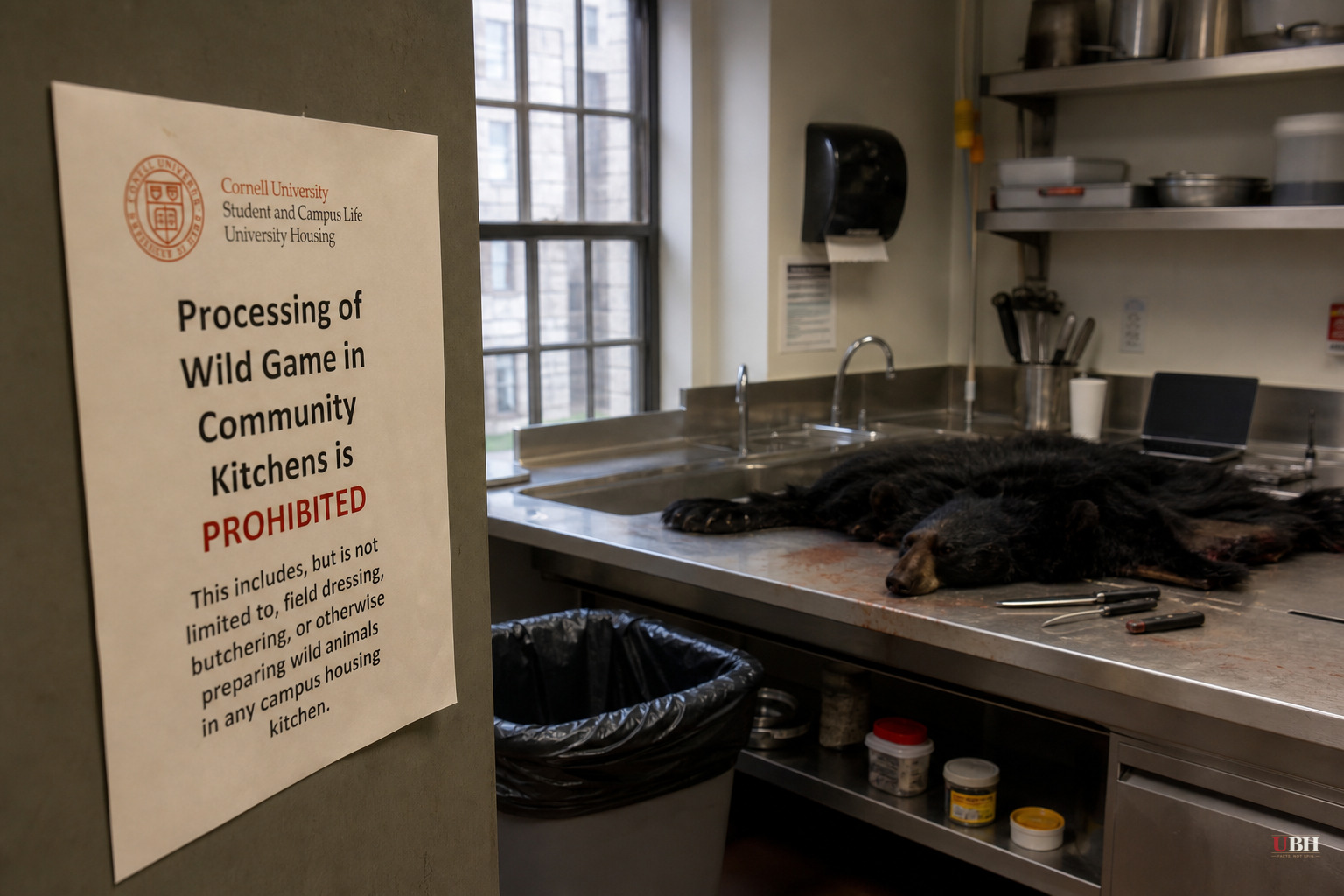
Cornell University has added a rule to its housing policy banning students from butchering wild game in dormitory kitchens. The change follows an incident in 2025 in which two students carried a black bear carcass into a kitchen at Ganędagǫ Hall and processed it themselves.
"Processing wild/game animals in community kitchens is strictly prohibited," the new policy states, according to Fox News and the New York Post, both of which reviewed the updated rule.
Cornell confirmed to a student newspaper that the addition was a direct response to the bear incident, not a general policy update unrelated to the episode.
What Actually Happened
One of the two students involved, Aaron Chin, identified himself months later on the MeatEater podcast. He said he and a hunting partner, also a Cornell student, had killed the bear roughly two hours from campus and originally planned to process it at a friend's house.
Chin said that plan fell apart when the friend had an emergency and the house became unavailable. That left the two students looking for another place to prepare the meat, and they settled on the dorm kitchen.
Chin told MeatEater he and his partner checked campus rules before bringing the bear inside. "We were really diligent in reading all of the rules [and] regulations," Chin said. "We made sure we did everything by the book because we knew we were going to be under scrutiny."
At the time, there was no specific rule against processing wild game in a residential kitchen. Chin's account, which both Fox News and the New York Post reported without dispute, suggests the students weren't trying to skirt a known ban. They were operating in a gap nobody had bothered to close.
The Fallout
Video and photos of the bear carcass in the kitchen spread online and triggered backlash on campus and on social media. The incident was significant enough that New York's Department of Environmental Conservation sent an inspector to examine the kitchen.
According to a report from NBC cited by Fox News, the state inspector found no code violations. Whatever people found objectionable about two guys skinning a bear next to the communal stove, it wasn't illegal under existing state food-safety or wildlife-processing rules.
The students killed the bear legally, they say they checked Cornell's rules before acting, and a state regulator who actually inspected the site found nothing to cite. If the university had no rule against it and the state found no violation, the backlash was about optics and squeamishness, not a broken law.
Cornell's response wasn't to punish Chin or his hunting partner after the fact. It was to close the loophole going forward. The new policy explicitly bars processing wild or game animals in community kitchens, full stop, regardless of whether it's legal to hunt the animal or safe to prepare the meat.
A Reasonable Fix, Late
Neither Fox News nor the New York Post reported any disciplinary action taken against Chin or his hunting partner. Both outlets ran nearly identical accounts of the story, drawing on the same student newspaper report and the same MeatEater podcast appearance, with no material differences in the facts presented.
Both outlets do not report any comment from Cornell's own housing or dining administration explaining why no such rule existed before 2025, or how common wild-game processing in dorm kitchens actually was prior to this incident. Fox News said it contacted Cornell and Chin for further comment but did not report receiving a response by publication.
A university dealt with student behavior that was legal, unregulated, and viscerally unpopular by writing a new rule rather than punishing the people who exposed the gap. Cornell's move brings its kitchen policy in line with what most people would assume was already the rule. It just took a bear carcass in a dorm sink to get there.
Whether other universities have similar gaps in their housing codes for wild game processing remains an open question, since neither report indicated that Cornell is unusual on this point or that peer institutions have reviewed their own policies in response.
Sources used for this briefing
2 links from 2 independent newsrooms (syndicated copies of the same report count once)
These are the sources it draws on, linked so you can verify.


