
Unbiased headlines. Facts, not spin.
Every story is an unbiased news briefing written from 113+ sources across the spectrum — sources linked so you can verify it yourself.
 energy
Notable (6/10)
Event date: September 22, 2026
energy
Notable (6/10)
Event date: September 22, 2026
COP31's '35 by 35' Electrification Pledge Sets a Number, Not a Renewable Energy Requirement
The International Energy Agency released a Special Report on Global Electrification on September 22, 2026, finding that electricity could cost-effectively meet 33% of the world's final energy consumption by 2035, up from 23% today. That's the baseline the IEA used in most of the coverage, though greentechlead's report on the same data put the current figure at "slightly more than 20 percent" rather than 23%, a discrepancy worth flagging since both outlets are describing the same IEA release.
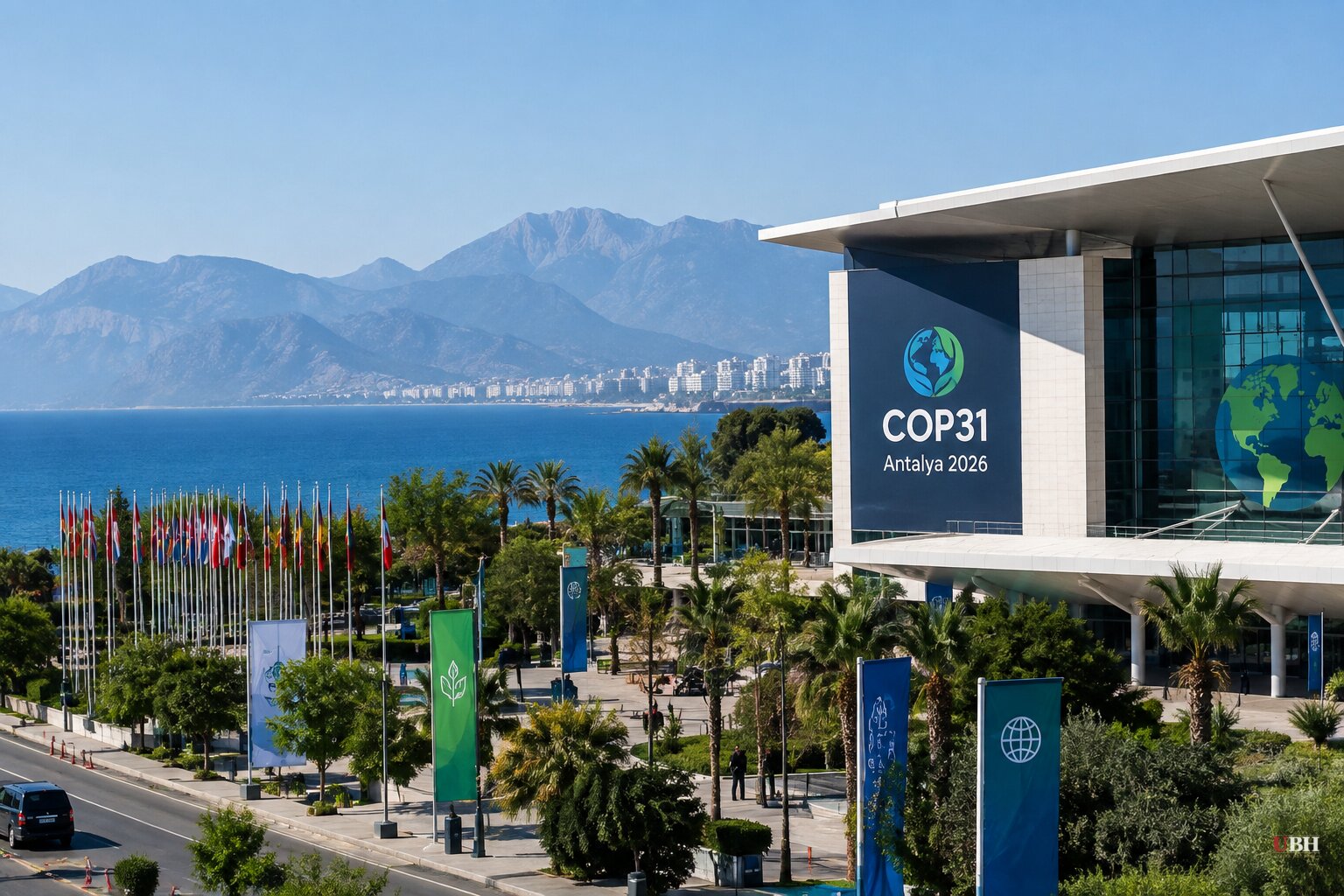
The report was commissioned by Türkiye and Australia, who hold the COP31 presidency, ahead of the UN climate summit scheduled for Antalya, Türkiye, from November 9 to 20, 2026. It was unveiled at an IEA-COP31 dialogue in New York during the UN General Assembly, according to Winss Solutions.
Turkish Environment Minister and COP31 President Murat Kurum used that presentation to push a proposed target called "35 by 35": getting electricity to 35% of global final energy consumption by 2035, according to ua.news. It's the headline item among six goals Kurum outlined, alongside municipal waste management and green industry development. Kurum told business leaders not to lose focus on rising emissions given the world's current preoccupation with artificial intelligence and the war in Iran, ua.news reported.
The energy crisis behind the push
The timing isn't an accident. Since February, the U.S. and Israeli conflict with Iran has kept the Strait of Hormuz closed for a prolonged stretch, according to OilPrice.com, sending oil and gas markets into turmoil and pushing countries to build domestic electricity capacity instead of relying on imported fuel.
IEA Executive Director Fatih Birol said the Hormuz disruption will accelerate electrification as countries look to produce more of their own energy and cut dependence on foreign suppliers, according to ua.news. Rooftop solar installations have surged across the Philippines, Indonesia, Cambodia and Malaysia as a direct response to the market chaos, per OilPrice.com.
Notably, the IEA's 33% baseline projection was built using pre-war electricity prices. Winss Solutions reported that current elevated prices driven by the Hormuz crisis would likely make even more electrification cost-effective than the report's headline number suggests.
The money backing this shift is real. IEA's World Energy Investment 2026 report projects total global energy investment will hit $3.4 trillion in 2026, with roughly $2.2 trillion going to renewables, nuclear, grids, storage and efficiency versus about $1.2 trillion into oil, gas and coal, according to greentechlead. IRENA data cited in that same report shows the world added a record 692 gigawatts of renewable capacity in 2025, with solar and wind making up 85.6% of all new power capacity that year.
The gap critics are pointing to
The official 35-by-35 pledge text, as it currently stands, does not require that the added electrification come from renewable sources, according to an analysis from Karmactive. This point has received less attention in the war-and-opportunity framing pushed by OilPrice.com and Yahoo News, which both carried nearly identical versions of the same story.
Karmactive's analysis argues that without a renewable mandate attached to the numerical target, countries facing rising electricity demand could simply build more gas or coal capacity and still technically hit 35% electrification. A target measuring electrification alone, detached from what generates that electricity, doesn't guarantee emissions actually fall.
The investment data already shows where capital is flowing. With renewables making up 85.6% of new global power capacity added in 2025 per IRENA, and $2.2 trillion aimed at clean energy and grids in 2026 versus $1.2 trillion for fossil fuels per the IEA, the market trend leans toward clean generation regardless of whether the pledge text mandates it. Whether that trend holds if fossil fuel prices ease after the Hormuz crisis resolves is an open question the sources don't answer.
There's also a credibility problem sitting inside COP31's own presidency. Türkiye, the country pushing the world to hit 35% electrification, is itself tracking toward only 25% electrification by 2035, according to ua.news. The host asking everyone else to hit a target it isn't on pace to meet domestically undercuts the pledge's moral authority before negotiators even sit down in Antalya.
The final COP31 agreement, due when the summit runs November 9-20, will determine whether negotiators add a renewable-energy requirement to the 35-by-35 target or leave it as a bare electrification number, per Karmactive's analysis. Until that text is finalized, the pledge remains a stated ambition, not a binding clean-energy pathway.
Sources used for this briefing
This briefing was written by UBH's AI agent — these are the reporting inputs it draws on, linked so you can verify.


