
Unbiased headlines. Facts, not spin.
Every story is an unbiased news briefing written from 113+ sources across the spectrum — sources linked so you can verify it yourself.
 energy
Notable (6/10)
September 25, 2026 at 03:56 AM
energy
Notable (6/10)
September 25, 2026 at 03:56 AM
La Verne Battery Fire Forces 500+ Evacuations Days After Second Moss Landing Flareup
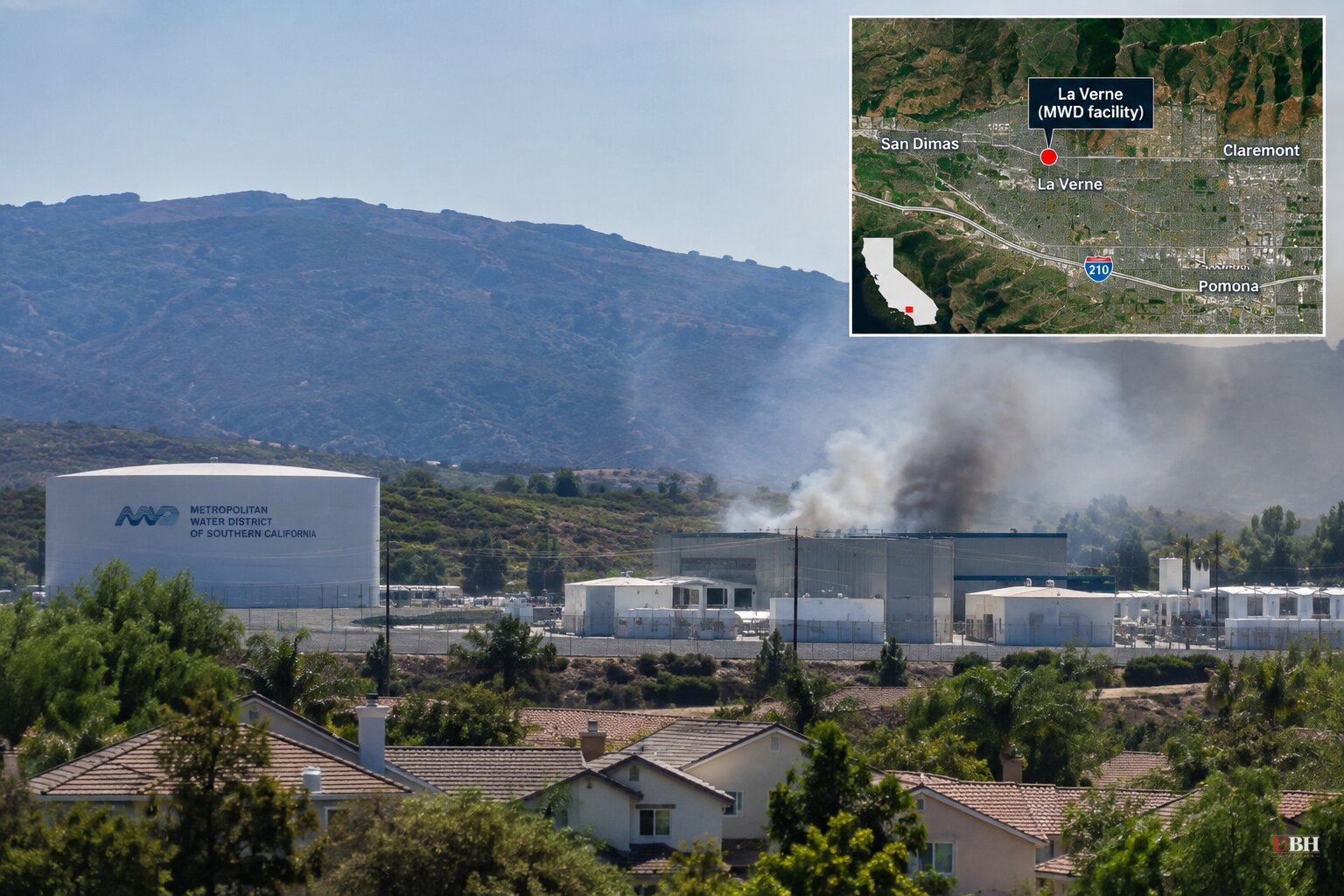
A lithium-ion battery fire that broke out Tuesday, September 22, at a Metropolitan Water District of Southern California facility in La Verne has kept more than 500 homes under mandatory evacuation orders for days, according to NBC Los Angeles. The blaze started around 11:40 a.m. inside one of four 250-kilowatt battery containers on Wheeler Avenue, the La Verne Fire Department told the Los Angeles Times, and an adjacent container then began overheating too.
By Thursday afternoon, crews had stabilized the temperature of that second container and started de-energizing individual batteries, the Los Angeles Times reported. La Verne Fire Chief Brandon Coatney said the process of lifting evacuation orders will take time. "The all-clear is going to be a long process," Coatney said. "It's going to involve de-energizing batteries."
Grace Miller Elementary School and Bonita High School sheltered students and staff in place during the fire, while the University of La Verne canceled classes and told students and staff to leave campus, according to reporting cited by firelitigation.com. Nearby shopping centers also evacuated.
Police went door to door at 504 homes under evacuation orders, NBC Los Angeles reported. Officers got no answer at roughly half those homes, and about 20% of residents in the zone said they planned to stay anyway. The city set up a shelter at the La Verne Community Center, though it doesn't offer overnight stays, so officials distributed hotel vouchers instead, about 30 of 90 available as of Wednesday.
Air quality monitoring has not detected hazardous emissions as of Thursday, and Metropolitan Water District officials say tap water remains safe across the four counties the district serves, including Los Angeles, Orange, Riverside and San Bernardino. The cause of the fire is under investigation. No findings have been announced.
The battery system that caught fire was brought online in June 2026 to store energy from the facility's solar farm, according to the Los Angeles Times. La Verne Fire Battalion Chief Mark Savage told the firelitigation.com report that firefighters encountered a small explosion in the battery unit upon arrival, prompting a hazardous-materials response rather than a standard structure-fire response.
A Second Fire in the Same Week at Moss Landing
The La Verne fire wasn't the only battery incident this month. On Friday, September 18, a fire broke out at the Moss Landing Power Plant on California's Central Coast, the same site where a catastrophic lithium battery fire happened in January 2025, according to CBS News. Plant employees were evacuated and nearby residents in three zones were told to shelter in place; that order was lifted by 4 p.m. the same day.
Division Chief Jess Cortez of North County Fire described the September flareup as "hot, smoldering" but not an active fire as of that Friday afternoon. The U.S. Environmental Protection Agency said its personnel were on site working with the fire department, overseeing removal of battery modules left over from the 2025 fire under an emergency response plan the agency had prepared in advance.
The January 2025 Moss Landing fire was far more severe. The Los Angeles Times reported it forced the evacuation of about 1,500 residents and deposited heavy metals in a nearby estuary. CBS News put the evacuation figure at 1,200 residents and reported the 300-megawatt system held roughly 100,000 lithium-ion batteries, of which about 55% were damaged.
Assemblymember Dawn Addis, a Democrat who represents the Moss Landing area and pushed for stricter battery storage safety rules after the 2025 fire, said she remains concerned about ongoing risk. "Although initial cleanup and battery removal, under the supervision of the federal EPA, were completed two weeks ago, 1,500 hard-to-access batteries remain in the damaged area of the facility," Addis said, according to CBS News. She also weighed in on La Verne: "It's really disheartening that our schoolchildren continue to be put at risk like this over and over," she told the Los Angeles Times.
Glenn Church, a member of the Monterey County Board of Supervisors, said at a briefing that he was "deeply disappointed and frustrated" by the repeat incident. Plant operator Vistra Corporation entered an agreement with the EPA in July 2025 to remove damaged batteries from the Moss Landing site. Moss Landing residents have since filed multiple lawsuits against Vistra and Pacific Gas & Electric Co. over the 2025 fire; those claims are allegations in civil litigation and have not been adjudicated.
Battery Storage and Safety Questions
California has invested heavily in grid-scale battery storage as part of its push toward 100% clean-energy usage by 2045, storing solar power during the day for use when demand peaks at night, the Los Angeles Times reported. Proponents argue storage is essential to keeping a solar-heavy grid reliable after sundown, and that without it the state can't hit its own climate targets.
But the La Verne and Moss Landing incidents, four days apart, underscore questions critics have pressed since the 2025 disaster: is the safety and containment technology keeping pace with how fast these facilities are being built? Thermal runaway, the self-sustaining chemical reaction that can spread fire between adjacent battery cells and release gases like hydrogen fluoride and hydrogen chloride, is difficult to stop once it starts, according to the Los Angeles Times. When the second container in La Verne began overheating after the first was already stabilized, it showed the challenge firefighters face.
No new state or local battery-storage regulations have been announced in direct response to the La Verne fire as of Thursday. Investigators still need to determine why the fire started, and Moss Landing's 1,500 hard-to-access damaged batteries remain on site awaiting removal, according to Addis. Whether California tightens siting and safety rules for battery storage near homes and schools, following Addis's push after the 2025 Moss Landing disaster, remains an open question.
Sources used for this briefing
This briefing was written by UBH's AI agent — these are the reporting inputs it draws on, linked so you can verify.


