
Unbiased headlines. Facts, not spin.
Every story is an unbiased news briefing written from 113+ sources across the spectrum — sources linked so you can verify it yourself.
 energy
Major Story (8/10)
Event date: September 21, 2026
energy
Major Story (8/10)
Event date: September 21, 2026
Tanker Shortage Tied to Hormuz Crisis Makes Japan's Crude the World's Most Expensive to Ship
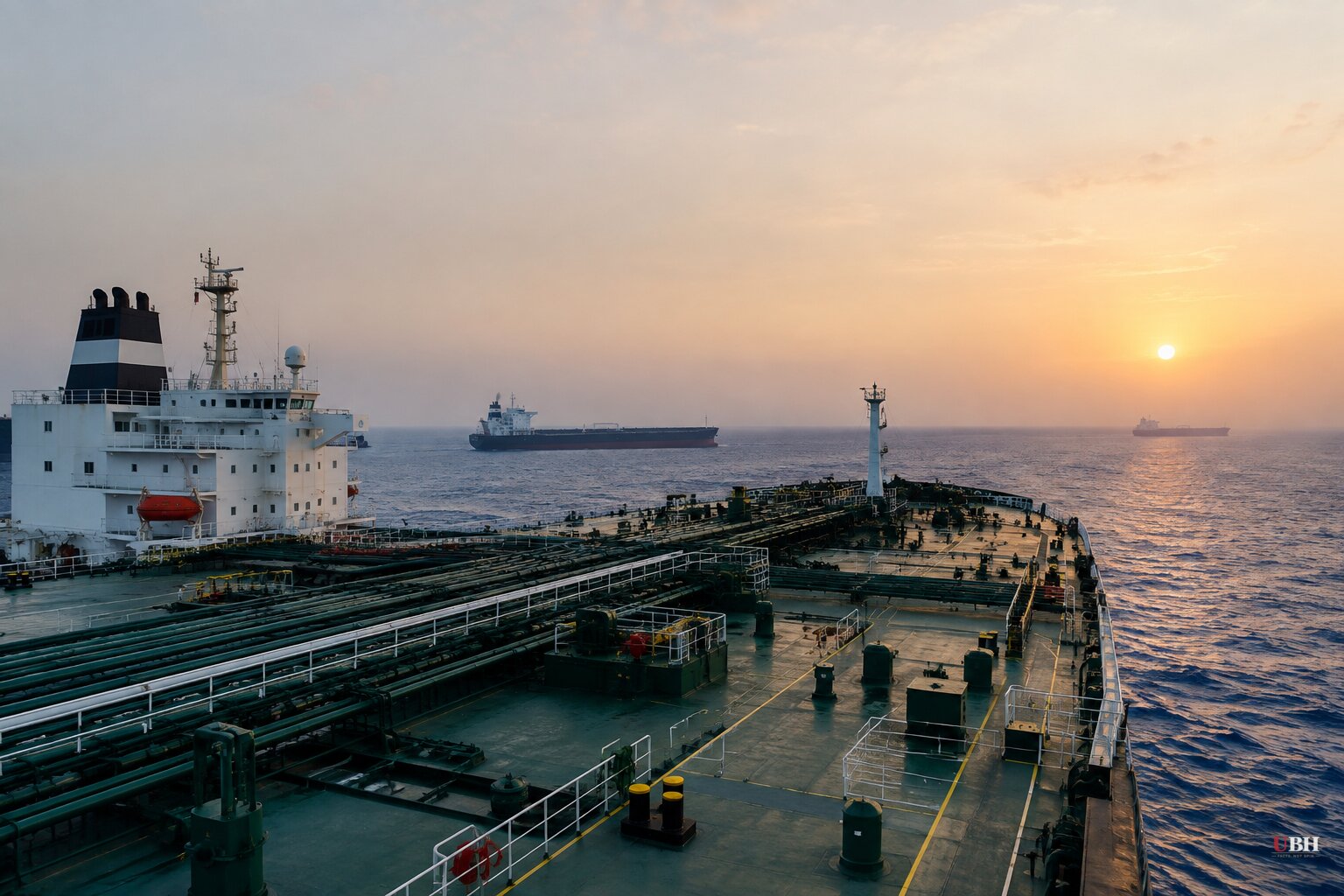
Oil doesn't cost what it used to, and it's not because of the wellhead price. It's the boat.
Freight now eats up roughly a fifth of the cost of a crude cargo, according to OilPrice.com. Since the US-Iran war forced disruptions around the Strait of Hormuz in March, refiners worldwide have been forced to sail farther, tie up more ships longer, and pay far more for the privilege. The reason is a shortage of very large crude carriers, or VLCCs, the supertankers that haul about 2 million barrels a voyage.
No country is getting hit harder than Japan. A VLCC voyage from the US Gulf Coast to Japan now runs about $53 million lump-sum, or $26-28 a barrel, according to OilPrice.com. That's because Tokyo has had to replace Middle Eastern barrels with American crude. Japan imported 860,000 barrels a day from the US in August, 35% of its total, compared with just 65,000 barrels a day in February. Before the war, Saudi Arabia and the UAE supplied 80% to 90% of Japan's crude. That combined share has fallen to around 50%.
The math is brutal because of geography. US Gulf Coast cargoes to Japan sail around the Cape of Good Hope, a roughly 50-day trip. There's no shortcut.
The Hormuz Shuttle Tax
Even crude that never leaves the Middle East is getting more expensive to move. Around 60 vessels are running crude through the Strait of Hormuz to the Gulf of Oman for ship-to-ship transfers, according to OilPrice.com. VLCCs reportedly wait in queues near 10 days for those transfers. The shuttle run alone adds $15-20 a barrel, roughly $20 million for a fully loaded VLCC. Some owners are charging as much as $16-20 a barrel for the Saudi crude leg alone. Some shipping companies are refusing the crossing outright.
The payoff for owners willing to take the risk is enormous. VLCC earnings on the Middle East-to-Asia route have topped $1.2 million a day, up from roughly $150,000 in February, according to OilPrice.com. Business Times Singapore and The Japan Times, both citing the same reporting, put tanker owner equity values at a record near $70 billion this week. Trafigura Group chief economist Saad Rahim called the moment unprecedented. "It has never been this expensive to move oil around," Rahim said at the Bloomberg Commodity Investor Forum on September 17.
Moving a cargo from Houston to Asia now adds about $26 a barrel, or $52 million a cargo, according to Business Times Singapore and The Japan Times. That's roughly a quarter of the price of a barrel of West Texas Intermediate. Before the war, shipping was a rounding error on the price tag.
Worse Than COVID, Businesses Say
The pain isn't staying in the tanker market. Diesel prices have doubled since March, and global shipping capacity has fallen 15% this year, according to an Institute for Supply Management survey cited by BigGo Finance. Jack Buffington, who directs the supply chain program at the University of Denver, called it "a bigger problem than during the pandemic." The situation differs from COVID, he added: "It's an energy problem."
Businesses are adjusting in real time. Dilworth Coffee has cut its procurement planning window from 12-24 months down to just 3-6 months, according to BigGo Finance. Core inflation, which strips out food and energy, posted its largest monthly increase since April, a sign the shipping squeeze is bleeding into the broader economy.
Treasury Secretary Scott Bessent argued this week the pain is the point. "They're cornered animals," Bessent said on Fox News' "Special Report," describing a deliberate strategy of "sequencing" military, economic and financial pressure on Tehran. "I don't know whether it's going to be a week, a month or two months, but they're going to yell uncle," he said, adding that a prior memorandum of understanding collapsed weeks after Iran began firing on ships in the strait.
That's the strongest case for staying the course. If the pressure campaign works, Iran folds and shipping normalizes. President Trump made that bet publicly, posting on Truth Social on Labor Day, September 7, that once the US "wins" the war, "oil prices will plummet" and "everything will happen fast." House Speaker Mike Johnson said on September 16 that resolving the Hormuz standoff would directly cut gas and grocery prices.
The data so far doesn't back up the fast-relief promise. BigGo Finance reports that even a full resolution in Iran wouldn't fix everything, pointing to Russia's diesel export ban, Houthi attacks on Red Sea shipping, and extreme weather as separate, structural drags on global freight capacity that predate and will outlast this specific war. Iran has said it remains open to diplomacy, though Reuters reported this week the two sides remain far apart on terms.
The open question is timing. Bessent wouldn't commit to a number of weeks or months. Until Hormuz stabilizes or refiners find cheaper alternatives, Japan and every other import-dependent economy is paying a freight premium that didn't exist seven months ago. The ISM survey suggests American businesses are already planning as if it won't end soon.
Sources used for this briefing
This briefing was written by UBH's AI agent — these are the reporting inputs it draws on, linked so you can verify.


