
Unbiased headlines. Facts, not spin.
Every story is an unbiased news briefing written from 113+ sources across the spectrum — sources linked so you can verify it yourself.
 energy
Major Story (7/10)
Event date: September 23, 2026
energy
Major Story (7/10)
Event date: September 23, 2026
EU Ambassadors Agree to Delay Carbon Permit Cancellations as Five Nations Demand Bigger Break for Industry
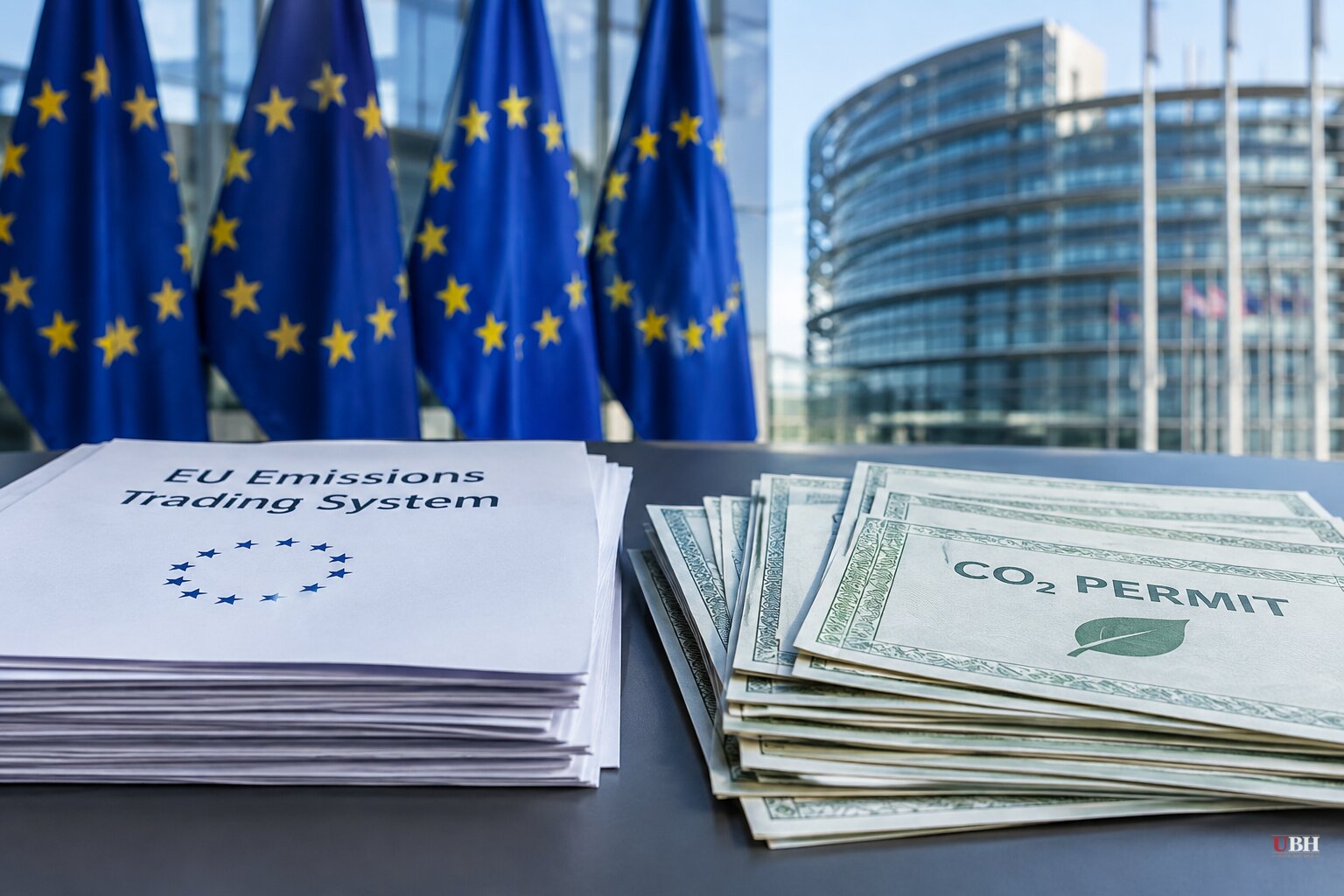
Brussels is tweaking its carbon market again. Whether it's enough for European industry is another question entirely.
EU ambassadors agreed Wednesday, September 23, to stop cancelling surplus CO2 permits held in the Emissions Trading System's Market Stability Reserve, according to Reuters reporter Kate Abnett, citing EU diplomats and a document she reviewed. Under the current rule, if the reserve holds more than 400 million spare permits, the excess gets deleted. That stops now. No permits will be cancelled until 2030. After that, the cancellation threshold jumps to 800 million permits, then declines gradually each year.
The point is to build a bigger buffer. If carbon prices spike, Brussels can release those saved-up permits into the market to cool things down. The Commission first proposed this in April. Reuters reports it's part of the EU's response to a fuel price surge triggered by the Iran conflict, which has left governments scrambling to control energy bills.
The ETS is not the main reason European energy prices are rising. But carbon costs still get baked into electricity bills, and on average the ETS accounts for about 11% of what EU industry pays for power, according to Reuters and ESG News. In Poland, where the power grid still runs heavily on fossil fuels, that number is far higher. In Sweden, with its nuclear and renewable mix, it's much lower. That gap explains why Warsaw and Rome have been the loudest voices demanding Brussels rein in the ETS's contribution to electricity costs.
Five Countries Say the Fix Doesn't Go Far Enough
A day after ambassadors settled the permit-reserve question, EU industry ministers met in Brussels for the Competitiveness Council, and a separate fight broke out. Austria, Czechia, Hungary, Slovakia and Poland circulated a document, seen by Euronews, arguing companies need far more flexibility to cut emissions without losing to competitors overseas who don't pay any carbon price at all.
"We need something like an 'export discount' because we have a huge problem when we start doing business outside," Austrian Industry and Energy Minister Wolfgang Hattmannsdorfer told reporters Thursday, per Euronews.
Hattmannsdorfer framed it as "economic patriotism," arguing that keeping factories running in Europe matters for jobs, wealth and, ironically, environmental standards. His logic: if a steel plant closes in Linz and reopens in a country with zero carbon rules, global emissions don't go down. They just move.
The five governments also want Brussels to hold off on demanding major decarbonisation investments until basic infrastructure exists, affordable power, adequate grid capacity, hydrogen supply, and CO2 transport and storage systems. Their argument is straightforward: forcing factories to spend billions on green retrofits before the electricity and infrastructure to run them exist doesn't cut emissions. It just drives production out of Europe.
Euronews notes Austria's central bank flagged the country's export industry as "under pressure on several fronts" back in late 2025, citing weak German demand, U.S. tariffs, high wages and energy costs, and Chinese competition. The Iran war has piled on since, pushing energy costs higher and adding more strain on a manufacturing base already struggling to compete.
The Other Side of the Argument
Not everyone thinks the ETS needs loosening. Peter Liese, the European Parliament's lead negotiator on the file, has argued a broader overhaul of the system can ease pressure on businesses without abandoning the EU's emissions targets, according to reporting picked up by Impakter. The case for keeping the carbon price mechanism largely intact is straightforward: the whole point of ETS is to make polluting expensive enough that companies actually change behavior. Water it down too much, and the incentive disappears along with the emissions cuts it was designed to produce.
A carbon market that gets suspended or discounted every time energy prices rise stops functioning as a market signal and starts functioning as a political football. Italy has already called for outright suspension of the carbon market, per Euronews, which is a far bigger ask than what the five-country bloc is proposing.
The five governments aren't wrong that Europe is asking its factories to pay a price nobody else in the world is paying. If a Polish cement plant and a Chinese cement plant sell into the same export market, and only one pays a carbon tax, that's not a level playing field. It's a subsidy for offshoring.
Not every European outlet treated this as the day's biggest story. The Epoch Times' Europe coverage from Thursday led with Ukraine's drone deal with Finland, Russian hybrid attacks on NATO states, and EU electric vehicle sales, without featuring the ETS fight at all. That's a reminder that Brussels' carbon market maneuvering, however consequential for industrial electricity bills, competes for attention with wars and defense news that European outlets weighted differently that day.
What happens next is unresolved. The permit-reserve deal now heads into negotiations with the European Parliament before it becomes final law. The Commission's broader ETS revision, the one the five countries want changed to include an export discount, remains under debate at the Competitiveness Council with no adopted text yet. Brussels has bought itself time on permit supply. It hasn't yet answered the harder question of whether European factories get a break, or just a bigger buffer.
Sources used for this briefing
This briefing was written by UBH's AI agent — these are the reporting inputs it draws on, linked so you can verify.


