
Unbiased headlines. Facts, not spin.
Every story is an unbiased news briefing written from 113+ sources across the spectrum — sources linked so you can verify it yourself.
 energy
Notable (6/10)
Event date: September 22, 2026
energy
Notable (6/10)
Event date: September 22, 2026
DOE Commits $99 Million to 21 Next-Gen Geothermal Drilling and Test Projects
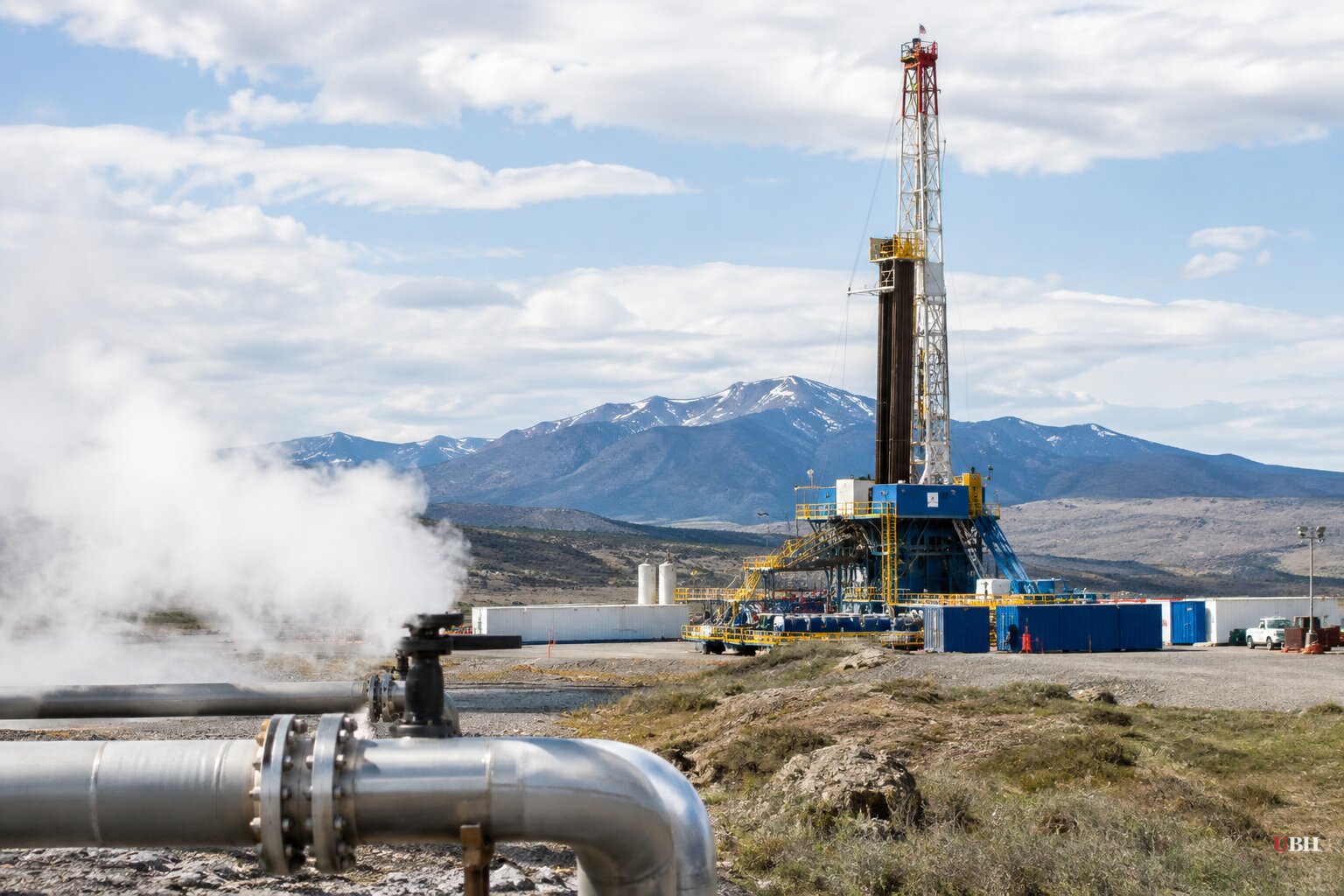
Since Fervo Energy's Cape Station became the first utility-scale next-gen geothermal plant to feed the grid, the Department of Energy has moved to fund the next wave of projects trying to follow it. On September 21, DOE announced more than $99 million for 21 projects meant to prove out enhanced geothermal systems (EGS) and locate new underground heat resources worth drilling.
The money splits two ways. Five projects get funding for field-scale EGS tests, drilling into hot rock and pumping water through it to validate the technology at real depths and temperatures. The other 16 projects are exploration drilling, meant to characterize sites that could become future geothermal plants, whether conventional or next-gen.
"These projects will empower American innovators to unlock the tremendous geothermal resources beneath our feet," said DOE Under Secretary of Energy Kyle Haustveit. "Under President Trump's leadership, we're advancing next-generation geothermal technologies that can lower costs, strengthen American energy dominance, and turn more of our vast domestic geothermal resources into reliable and affordable power."
Who's Getting the Money
According to Government Market News, the University of Utah landed two awards: one to design and drill a high-performance EGS well pair adjacent to an existing hydrothermal field, and a second for exploration drilling into a large thermal anomaly to map how heat moves through carbonate rock.
A Fort Worth-based energy company will drill staged thermal-gradient wells in eastern Oregon, followed by a deeper exploration well with advanced diagnostics. A Salt Lake City-based AI-driven geothermal firm will drill and stimulate an injection well in Hidalgo County, New Mexico, aiming to pump pressure support into an already-producing hydrothermal reservoir. An Arlington, Virginia-based energy consulting firm will drill two reservoir-depth wells at Pisgah Crater in California to test whether the site can support commercial-scale power.
All data collected, temperature logs, drilling results, and reservoir modeling will go into DOE's public Geothermal Data Repository, meaning private developers and researchers outside these 21 projects get to use the findings too.
The Fine Print DOE Buried
Tedmag.com's writeup on the funding included a line other outlets left out: "Selection for award negotiations is not a commitment by DOE to issue an award or provide funding." DOE and the applicants still have to negotiate terms, and the agency can cancel that process and pull the selection at any point before money moves. Taxpayers should know the check isn't cut yet, even with a $99 million headline number.
Why the Federal Bet Is Small So Far
Geothermal remains a rounding error in the U.S. power mix. Carboncredits, citing U.S. Energy Information Administration data, reported that geothermal generated about 16 billion kilowatt-hours in 2025, roughly 0.4% of total U.S. utility-scale electricity generation. California alone accounted for 68.6% of that output, with Nevada supplying another 24.7% and the remainder split among Utah, Hawaii, Oregon, Idaho, and New Mexico.
The upside case rests on a 2025 U.S. Geological Survey assessment cited by carboncredits, which estimated the Great Basin alone could hold roughly 135 gigawatts of EGS generation potential in the upper six kilometers of crust, assuming the technology matures enough to make that rock commercially usable. Current U.S. installed geothermal capacity sits around 2.7 GW. EIA's own long-range outlook is far more modest: it projects geothermal will reach only about 7 to 9 GW of capacity and roughly 1% of total generation by 2050.
That gap, between a 135-GW theoretical resource and a 7-to-9-GW forecast, is exactly why DOE is funding drilling and field tests instead of writing checks for finished power plants. Thinkgeoenergy noted the funding fits a broader pattern of federal land access, faster permitting, and private investor interest converging on U.S. geothermal at a pace the industry hasn't seen before.
Whether that pace translates into gigawatts on the grid depends on whether these 21 projects actually get funded once negotiations wrap up, and whether the resulting data convinces private developers the economics work outside a handful of proven hotspots like Nevada and Fervo's Utah site. DOE has not set a public timeline for when award negotiations will conclude.
Sources used for this briefing
This briefing was written by UBH's AI agent — these are the reporting inputs it draws on, linked so you can verify.


