
Unbiased headlines. Facts, not spin.
Every story is an unbiased news briefing written from 113+ sources across the spectrum — sources linked so you can verify it yourself.
 energy
Major Story (8/10)
September 25, 2026 at 05:21 AM
energy
Major Story (8/10)
September 25, 2026 at 05:21 AM
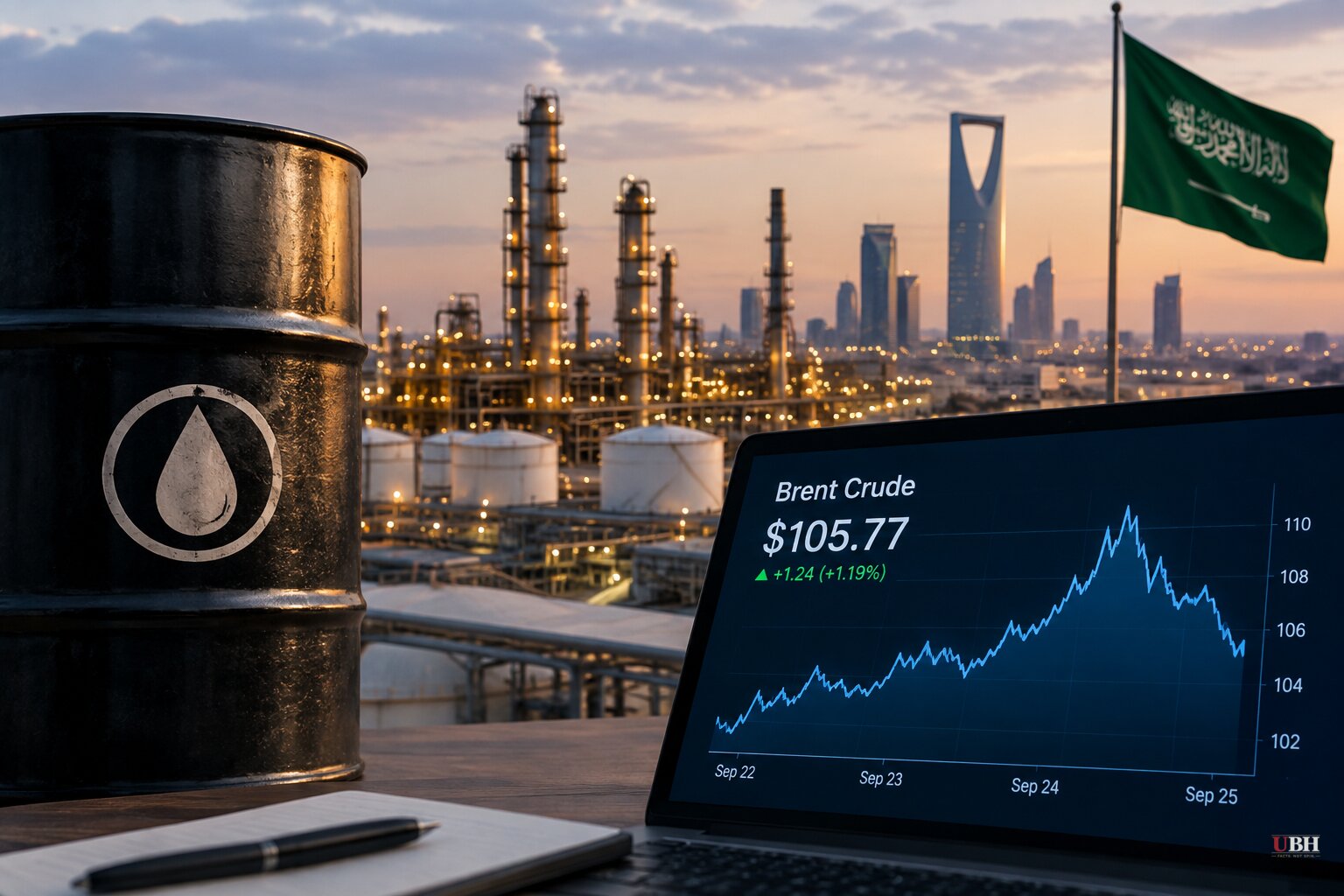
Houthis Claim Riyadh and Yanbu Strikes, Brent Crude Tops $108 Before Easing to $105.77
Since Saudi Arabia restarted its East-West pipeline on September 22 and Riyadh issued a second Mecca danger alert two days later, Yemen's Houthis have kept firing at the kingdom rather than backing down. On Thursday, September 24, the group claimed its most direct hit yet: a missile and drone strike on a "sensitive target" in the Saudi capital, Riyadh, and an attack on Aramco facilities in the Red Sea city of Yanbu, according to a statement carried by the Houthi-run Yemen News Agency and reported by Al Jazeera.
Saudi-led coalition forces confirmed only that air defenses intercepted six ballistic missiles aimed at Taif in western Saudi Arabia and the Yanbu area, according to The Guardian. Saudi authorities have not confirmed whether either the Riyadh or Yanbu strikes caused damage or casualties, and Aramco did not respond to inquiries outside regular business hours, Al Jazeera reported.
Houthi military spokesman Yahya Saree described the operation as large-scale, telling reporters the group launched "dozens of ballistic missiles and drones" against Saudi military positions in Jazan, according to Dow Jones Newswires reporting carried by Morningstar. Saudi Civil Defense separately issued an emergency warning in Mecca through the kingdom's National Early Warning Platform, telling residents to follow official instructions because of a potential danger, Morningstar reported.
Oil Spikes, Then Pulls Back
Brent crude for November delivery jumped more than 3 percent Thursday, closing above $106.50 a barrel after briefly trading past $108, according to Al Jazeera and Morningstar. West Texas Intermediate gained 2.7 percent to $94.61, Morningstar reported. Both benchmarks had actually opened the session down about 0.7 percent before the missile news reversed the move.
By Friday morning in Asia, Brent had eased to $105.77 a barrel as of 02:00 GMT, Al Jazeera reported. Ground News, aggregating market coverage, pegged the intraday jump at closer to 4 percent and noted the premium of Brent over WTI rose to its highest level since May, while weekly U.S. crude exports fell to 3.3 million barrels per day amid soaring tanker chartering costs.
Tim Waterer, chief market analyst at KCM Trade in Sydney, told Al Jazeera that prices "remain elevated and reflect the reality that critical supply routes and facilities are still vulnerable," adding that diplomatic efforts at the United Nations are providing "some counterweight" but the market needs "clearer evidence of a durable de-escalation." Robert Yawger, a commodity specialist at Mizuho Securities USA, was blunter in comments to Dow Jones: "It certainly doesn't look as good as it did earlier in the week. The Iranians are threatening to take the battle to the Indian Ocean, and the Houthis are shooting ballistic missiles at Saudi cities."
Iran's Indian Ocean Threat and the UN Sidelines Talks
An adviser to Iran's Supreme Leader Mojtaba Khamenei warned that Tehran could expand the war to the Indian Ocean if the U.S. or Israel strikes again, according to an AFP report citing Iran's Fars news agency and relayed by Morningstar. That threat lands as Iranian President Masoud Pezeshkian said Thursday he hopes Washington will return to the Memorandum of Understanding on ending the seven-month U.S.-Iran conflict, which lapsed in mid-August without a deal, before the U.S. midterm elections in November, Al Jazeera reported.
Secretary of State Marco Rubio said Wednesday that Saudi Arabia's restarted East-West pipeline is restoring an alternative export route bypassing the Strait of Hormuz, and that the southern shipping lane through Hormuz remains open with more barrels flowing daily, according to Morningstar. U.S. Central Command posted on X that it had redirected 115 commercial vessels as of Wednesday.
Analysts at MUFG told Dow Jones that continued Hormuz flows and the pipeline restart could ease physical supply pressure, but persistent tanker attacks and stalled U.S.-Iran diplomacy should keep the geopolitical risk premium elevated.
The Diesel Export Ban Fight
Separately, European Union officials are discussing a reported U.S. plan to ban diesel exports amid record diesel prices, according to Ground News. Energy Secretary Chris Wright has disputed that any such ban is planned. Analysts cited by Ground News warned an export ban would do little to ease prices and could instead worsen global supply and disrupt economies just as the U.S. pursues secondary sanctions against Iran. A ban aimed at protecting domestic diesel supply could simultaneously starve allied markets already strained by the Hormuz and Red Sea disruptions. Wright's denial has not been matched by any confirmed policy text, so the underlying dispute remains unresolved.
Fox News, drawing on Energy Information Administration data, reported that Hormuz traffic fell to just 4.9 million barrels per day in the second quarter of 2026, down from 21.6 million before the war, while Bab el-Mandeb traffic averaged 8.1 million barrels per day as Saudi Arabia rerouted crude through the Red Sea. Yanbu sits on the Red Sea corridor Saudi Arabia now depends on more than ever, which makes Thursday's claimed Yanbu strike significant.
What remains unconfirmed as of Friday is whether either the Riyadh or Yanbu attack caused any physical damage to Aramco infrastructure or casualties. Saudi authorities have offered no assessment beyond confirming the interception of six missiles. Traders are pricing in the claim itself, not verified damage, which is why Brent gave back roughly $2.50 a barrel between Thursday's peak and Friday's morning level in Asia.
Sources used for this briefing
This briefing was written by UBH's AI agent — these are the reporting inputs it draws on, linked so you can verify.


