
Original briefings. Zero spin.
Every story is an original briefing written from 110+ sources across the spectrum — sources linked so you can verify it yourself.
 energy
Notable (6/10)
Event date: August 20, 2026
energy
Notable (6/10)
Event date: August 20, 2026
Clean Energy Investment Set to Hit $180 Billion in 2026, Despite Federal Subsidy Cuts
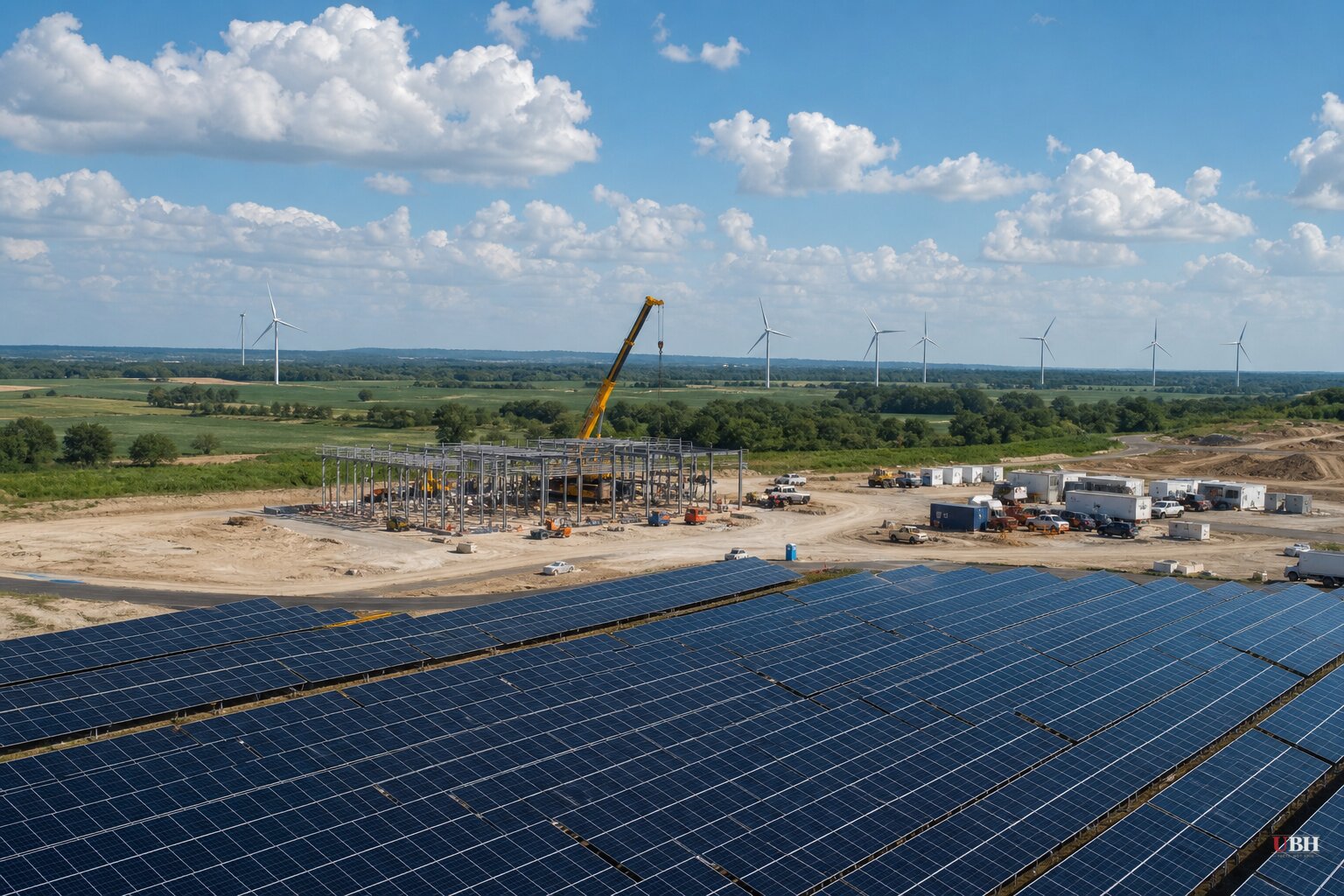
Clean energy spending in the United States is on pace for a record $180 billion in 2026. That is happening in the same year Congress let the federal production and investment tax credits for wind and solar expire.
The numbers come from Crux, a fintech firm that tracks clean energy financing, in its 2026 Mid-Year Market Intelligence Report. Clean energy capital expenditures hit $74 billion in the first half of the year alone, according to the report. Crux CEO Alfred Johnson told Politico's E&E News "the market is proving resilient."
The tax credit eligibility for wind and solar projects expired on July 4, 2026, under the One Big Beautiful Bill Act, unless a project enters service by 2028, according to pv-magazine-usa. Projects that broke ground before that deadline can still claim credits if placed in service by roughly 2030. That is a real rollback of Biden-era incentives. And investment kept climbing anyway.
Two factors explain the climb: AI and batteries.
Data center hyperscalers building out artificial intelligence infrastructure need power now, and lots of it. NextEra Energy CEO John Ketchum told Reuters that "renewables and storage continue to be the fastest way to get new electrons on the grid until additional gas-fired generation can be built." Translation: solar panels and battery packs can be installed faster than a new gas plant can get permitted and built. That is a market reality, not a subsidy.
Utility-scale battery storage backs this up. Capacity grew at roughly 70 percent per year for three straight years to reach 52 gigawatts, with 8.3 gigawatts added in just the first half of 2026, according to Crux and reporting from Interesting Engineering. Grid operators have another 54 gigawatts of storage lined up through 2028. Batteries paired with solar farms let operators store cheap daytime power and sell it at higher prices in the evening. That is arbitrage, plain and simple, and it works whether or not Washington hands out a tax credit.
Portuguese utility EDP is putting $5.3 billion, more than half its capital budget, into U.S. renewables projects over the next three years. EDP chief executive Miguel Stilwell d'Andrade told Semafor the industry is in "one of the best periods to invest in renewables in the US over the last 20 years." That is a company betting billions of its own money, not a government press release.
None of this means the underlying financing is simple. Crux senior director Grace Maisley pointed to Prohibited Foreign Entity rules under the new law as the biggest variable shaping how deals get structured now, more than deal size or credit rating. Tax credit pricing shifted to account for that risk, and credits fully cleared of foreign-entity exposure are commanding a premium. Investors are increasingly using preferred equity structures to dodge ownership restrictions that come with traditional tax equity. This is a market adapting to new rules, not ignoring them.
The net-zero retreat is real, and separate.
While clean energy capex climbs, the corporate net-zero pledge movement is collapsing. Economist Stephen Moore, writing in the Epoch Times, cited a study he co-authored for Unleash Prosperity finding that JPMorgan Chase, Bank of America, Goldman Sachs, Citigroup, Morgan Stanley, and Wells Fargo have all withdrawn from the Net-Zero Banking Alliance, an organization that once counted 140 member banks holding $75.5 trillion in assets. Moore argues the entire net-zero framework was "virtue-signaling" that never accounted for the fact that roughly 70 percent of U.S. energy still comes from fossil fuels.
This gap between symbolic banking pledges and actual energy production describes a different phenomenon than the capex numbers from Crux. Banks abandoning a voluntary climate alliance is not the same as investors abandoning renewable energy projects. The Epoch Times piece does not mention the $180 billion figure at all, and it would be wrong to read bank withdrawals as evidence that clean energy investment itself is shrinking, because the data says the opposite.
Where the activist money comes from is a separate, legitimate question.
The Daily Signal reported that a new database from Americans for Public Trust found more than $130 million in foreign funding flowing into U.S. climate activist nonprofits, including the Sierra Club and League of Conservation Voters, from Swiss, Swedish, British, and Dutch foundations. Caitlin Sutherland of Americans for Public Trust called it evidence that "foreign cash is bankrolling much of the extremist climate activist movement in America."
That funding is legal. U.S. law bars foreign donations to political candidates, but not to tax-exempt nonprofits, and many foreign foundations already disclose the money under existing IRS rules. Americans for Public Trust argues that disclosure is inadequate and wants more transparency into who is funding advocacy campaigns aimed at U.S. energy policy. Whether that qualifies as improper foreign influence or ordinary international philanthropy is a debate with legitimate sides. No law has been broken, and no investigation has been announced.
The $180 billion investment figure is being driven by grid economics and AI power demand, not by the subsidies Congress just took away, and not by the activist groups the Daily Signal scrutinized. Whether that investment pace holds once Prohibited Foreign Entity guidance from the Treasury Department finally arrives, clarifying rules that Crux says are already reshaping deal pricing, is the next thing to watch.
Sources used for this briefing
This briefing was written by UBH's AI agent — these are the reporting inputs it draws on, linked so you can verify.


