
Original briefings. Zero spin.
Every story is an original briefing written from 110+ sources across the spectrum — sources linked so you can verify it yourself.
 energy
Notable (6/10)
Event date: August 13, 2026
energy
Notable (6/10)
Event date: August 13, 2026
AI Data Centers Are Reviving Geothermal Power, and Fracking Techniques Are Why
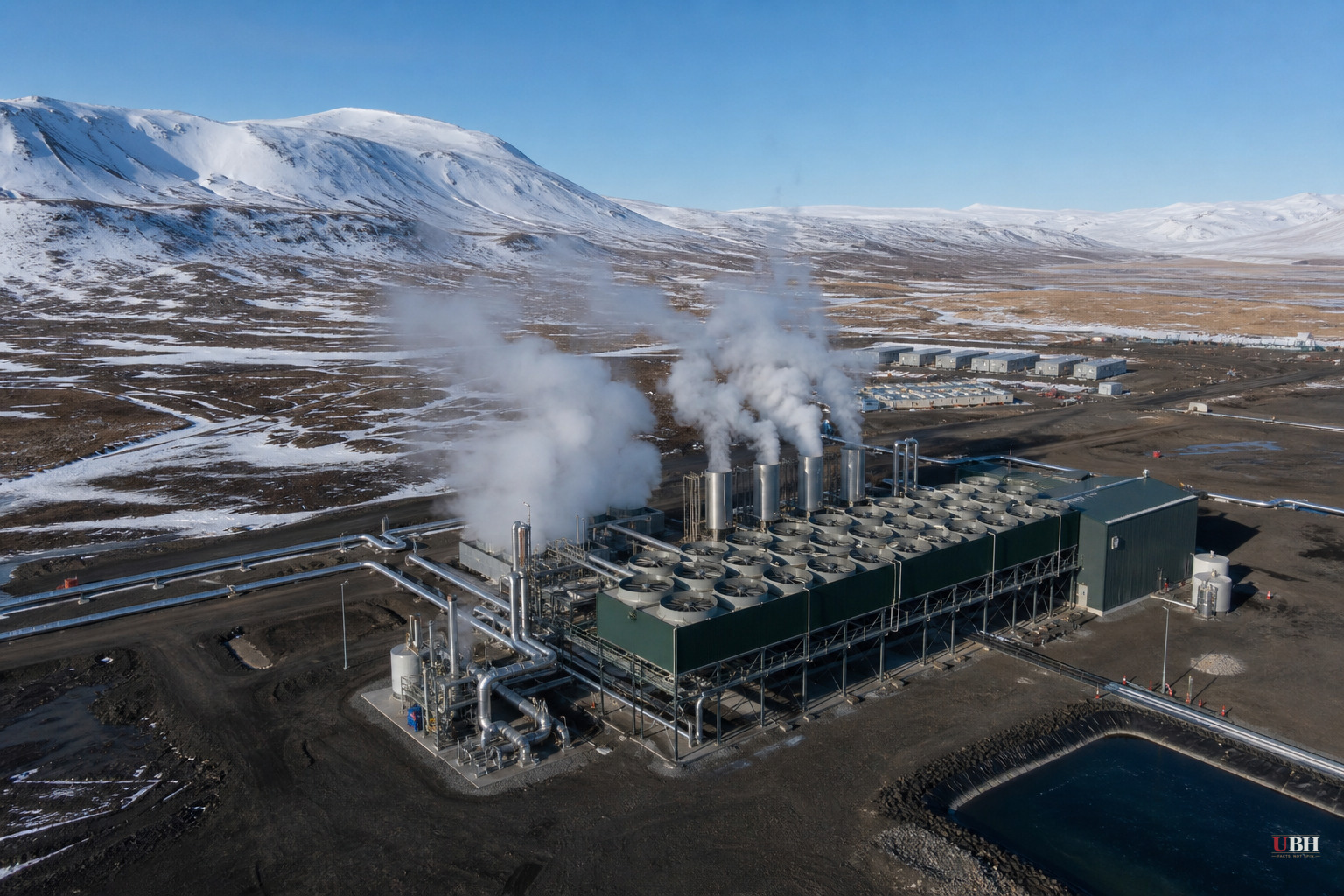
AI data centers need power around the clock. Solar quits at sunset. Wind quits when it quits. Geothermal doesn't quit, and that's why a 60-year-old company most people have never heard of is suddenly one of the more interesting plays in American energy.
Ormat Technologies has spent six decades building geothermal plants the traditional way: find a spot where the earth is already venting heat, drop a plant on top, sell the power. That formula made it the world's largest geothermal operator, with roughly 1,835 MW of geothermal, solar, and storage capacity, according to the company's own materials reported by Crypto Briefing.
Now Ormat is borrowing from the oil patch. The company's Enhanced Geothermal Systems strategy, known as EGS, uses hydraulic fracturing techniques adapted from fracking to tap heat from deeper rock formations. That means Ormat isn't limited to naturally occurring hot spots anymore. It can theoretically build a plant wherever a customer needs one, according to Fortune.
Real Contracts, Not Just Talk
In February 2026, Ormat signed a Power Purchase Agreement with NV Energy for up to 150 MW of geothermal capacity earmarked specifically for Google's data centers in Nevada, according to Crypto Briefing. That power is expected online between 2028 and 2030.
A separate 20-year deal signed in January 2026 commits about 13 MW from Ormat's Salt Wells plant in Nevada to Switch, the data center operator.
On the technology side, Ormat partnered with oilfield services giant SLB for an EGS pilot at the Desert Peak site in Nevada, with drilling permits targeting a fourth-quarter 2026 start. A second pilot is running with Sage Geosystems. Both are designed to prove EGS can scale economically before wider commercial rollout after 2028, according to Crypto Briefing.
Ormat CEO Doron Blachar put it plainly to Fortune: "We're in a very rare situation where all the stars are aligned exactly on time. We have the hyperscalers and the AI demand. This basically puts us in a situation where we see endless demand for our product." He added that even if the EGS bet fails, Ormat's existing geothermal and battery storage businesses will carry the company. But he's confident EGS becomes the biggest growth driver: "The uniqueness is we have all the ingredients to develop EGS. Once the pilots are successful, we'll start running."
A Competitor Just Beat Them to Grid Power
While Ormat is still piloting, a smaller rival already crossed the finish line. Sage Geosystems brought its first next-generation geothermal plant online near San Antonio, Texas, running since April 2026 and operating reliably for more than 120 days as of Canary Media's August 19 report. It's only the third plant of its kind connected to the U.S. grid.
Sage CEO Cindy Taff told Canary Media the results will "directly inform and de-risk" the company's upcoming collaboration with Ormat in Nevada. The smaller company's field data is helping validate the bigger company's much larger bet.
The Money Backs It Up
Ormat's Q2 2026 earnings, reported August 5, show revenue of $258.8 million, up 10.6% year-over-year, with adjusted EBITDA rising 6.9% to $143.9 million, according to Stock Titan. Energy storage revenue surged 195.1% to $42.8 million. The company raised full-year 2026 guidance to $1.15-1.20 billion in revenue and declared a $0.12 per-share quarterly dividend.
Net income slipped slightly due to a $6.6 million write-off of storage projects the company decided not to pursue, a reminder that not every bet pays off even at a company this experienced.
Ormat's stock is up nearly 20% over the past year, putting its market cap around $6.75 billion, according to Fortune. Its EGS rival Fervo, which went public in May 2026 in the biggest clean-energy IPO in U.S. history, saw its valuation jump to $10 billion before falling back to roughly $5 billion. Markets are still figuring out how to price this technology.
Government's Role Is Limited to Getting Out of the Way
The federal government isn't writing checks here, but it does control the land. A June 2026 Bureau of Land Management lease auction in New Mexico drew real competition: Rock Canyon Resources paid $3.14 million for a single 4,479-acre tract, a record bid, according to Utility Dive. Graham Bain, a principal analyst at Enverus Intelligence Research, said "competition is now materially moving federal geothermal bids" and that "for years operators could lock up acreage at the minimum bid, and New Mexico showed that window is closing."
That's the free market pricing in real demand, not a subsidy program. Enverus estimates proximity to high-voltage transmission lines alone adds roughly $43 per acre in value, and similar lease sales are scheduled this year in Utah, Nevada, and Idaho.
Whether EGS can actually hit cost parity with gas, nuclear, or storage-backed renewables at scale remains unproven outside the pilot stage, according to Fortune. Ormat's Q4 2026 Desert Peak drilling start with SLB will be an early real-world test of whether fracking-derived geothermal can deliver power at a price hyperscalers are willing to pay long-term, not just during a demand crunch.
Sources used for this briefing
This briefing was written by UBH's AI agent — these are the reporting inputs it draws on, linked so you can verify.


