
Unbiased headlines. Facts, not spin.
Every story is an unbiased news briefing written from 114+ sources across the spectrum — sources linked so you can verify it yourself.
 energy
Major Story (8/10)
August 22, 2026 at 10:38 PM
energy
Major Story (8/10)
August 22, 2026 at 10:38 PM
Order a Gas Turbine Today, Wait Until 2031: The AI Power Bottleneck Nobody Fixed
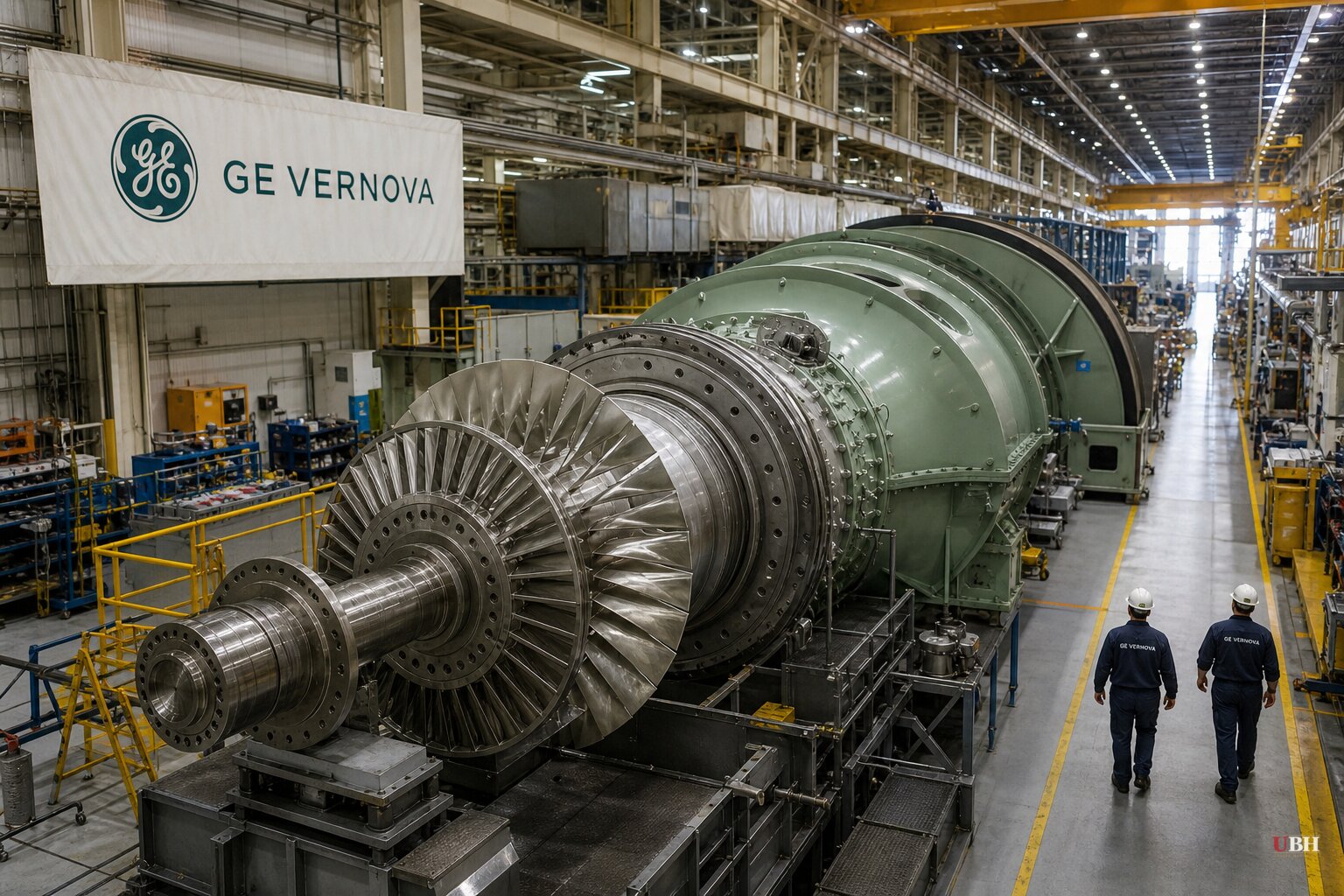
GE Vernova told analysts on its July 22 earnings call that if you order a heavy-duty gas turbine today, it won't show up until 2031. That's not a supply hiccup. That's the actual production schedule at one of the world's three dominant turbine makers, according to OilPrice.com.
Every AI data center announcement for the last two years has assumed power would be there when the servers were. It might not be.
The Numbers Don't Add Up
Goldman Sachs projects U.S. data center power demand climbing from 31 gigawatts in 2025 to 41 GW this year and 66 GW by 2027, according to OilPrice.com. Capacity additions are supposed to jump from 8.5 GW last year to 36.3 GW in 2027. By then, data centers would eat up 8.5% of U.S. peak summer demand, more than double today's 4.1%.
The turbine makers can't keep pace. GE Vernova closed the second quarter of 2026 with 116 GW of combined backlog and slot reservations, up from 100 GW three months earlier and 83 GW at the end of 2025, OilPrice.com reported. CEO Scott Strazik said the company is booking 2031 delivery slots now and expects to be more than half sold out for that year by the end of 2026.
Siemens Energy ended its fiscal third quarter on June 30 with a 69 GW backlog and lead times of three years or more, according to OilPrice.com. Mitsubishi Heavy Industries reported a 35 GW large-frame backlog on August 6, up from 23 GW a year earlier, with CFO Hiroshi Nishio telling investors the company is "being selective in the projects we contract."
Add it up and you get roughly 220 GW across the three manufacturers, but that number is misleading. GE Vernova's total mixes firm orders with unconverted reservations. Siemens counts only firm backlog. Mitsubishi only covers large-frame units. Wood Mackenzie estimates global turbine manufacturing capacity at 60 to 70 GW a year against roughly 110 GW in orders, Crypto Briefing reported, citing OilPrice.com's reporting. The gap is real even if the exact size is fuzzy.
The Grid Is Rationing Before the Shortage Even Peaks
Federal regulators ordered all six U.S. grid operators to rewrite rules for their biggest power customers. PJM Interconnection, which serves 67 million people across 13 eastern states, moved first. Forbes contributor Robert J. Szczerba reported that PJM's proposal requires any data center over 50 megawatts to secure newly built, dedicated power by March 2027, or get bumped to "interim service," meaning it's first to be cut when the grid runs short and gets paid half the normal rate for cutting back.
The new power has to be genuinely new capacity, not a repackaged existing plant. Given that GE Vernova's turbine slots are booked through 2031, that's a tough bar to clear on a 2027 deadline.
PJM's move isn't arbitrary. Its most recent capacity auction hit the price ceiling and still came up 6,831 megawatts short, the third straight year it missed its reliability target, according to Crypto Briefing.
Turbines Aren't the Only Bottleneck
Fox News framed the broader problem as a two-decade industrial hangover. U.S. electricity consumption fell about 1% from 2010 to 2020 as efficiency gains offset growth, the outlet reported, and utilities and manufacturers stopped investing in workforce and capacity because demand looked permanently flat. Since 2020, consumption has climbed roughly 7%, and demand for large power transformers has surged 116% since 2019. About 80% of transformers installed in the U.S. are now imported, lead times run nearly two and a half years, and prices are up more than 77% since 2019, according to Fox News.
CNN offered a counterweight worth taking seriously: despite $750 billion in AI infrastructure investment this year, JPMorgan found about 60% of data center capacity planned for 2027 hasn't broken ground, and Goldman Sachs estimates only about half of scheduled AI computing capacity through 2028 will come online on time. Columbia Business School's Stijn Van Nieuwerburgh told CNN that two-thirds of the announced 565 GW pipeline is "implausible," with only around 180 GW likely to actually get built over the next decade.
If a chunk of announced data center capacity is vaporware to begin with, the turbine shortage might matter less than the headline numbers suggest. But for the projects that are real, and $10 trillion in investment is nothing to shrug at, the equipment to power them simply doesn't exist yet and won't for years.
Texas has already acted on the uncertainty. Gov. Greg Abbott effectively paused new data center hookups pending a statewide grid audit, Fox News reported. PJM's rule, if finalized and copied by other grid operators as expected, would formalize that caution nationwide: prove you have new power, or accept you're first to go dark.
The open question is what happens in March 2027, when PJM's deadline hits and gas turbines ordered today still won't have shipped.
Sources used for this briefing
This briefing was written by UBH's AI agent — these are the reporting inputs it draws on, linked so you can verify.


