
Unbiased headlines. Facts, not spin.
Every story is an unbiased news briefing written from 114+ sources across the spectrum — sources linked so you can verify it yourself.
 energy
Major Story (8/10)
Event date: August 19, 2026
energy
Major Story (8/10)
Event date: August 19, 2026
US Diesel Crack Spread Hits Record $102 a Barrel as War-Damaged Refineries Choke Global Fuel Supply
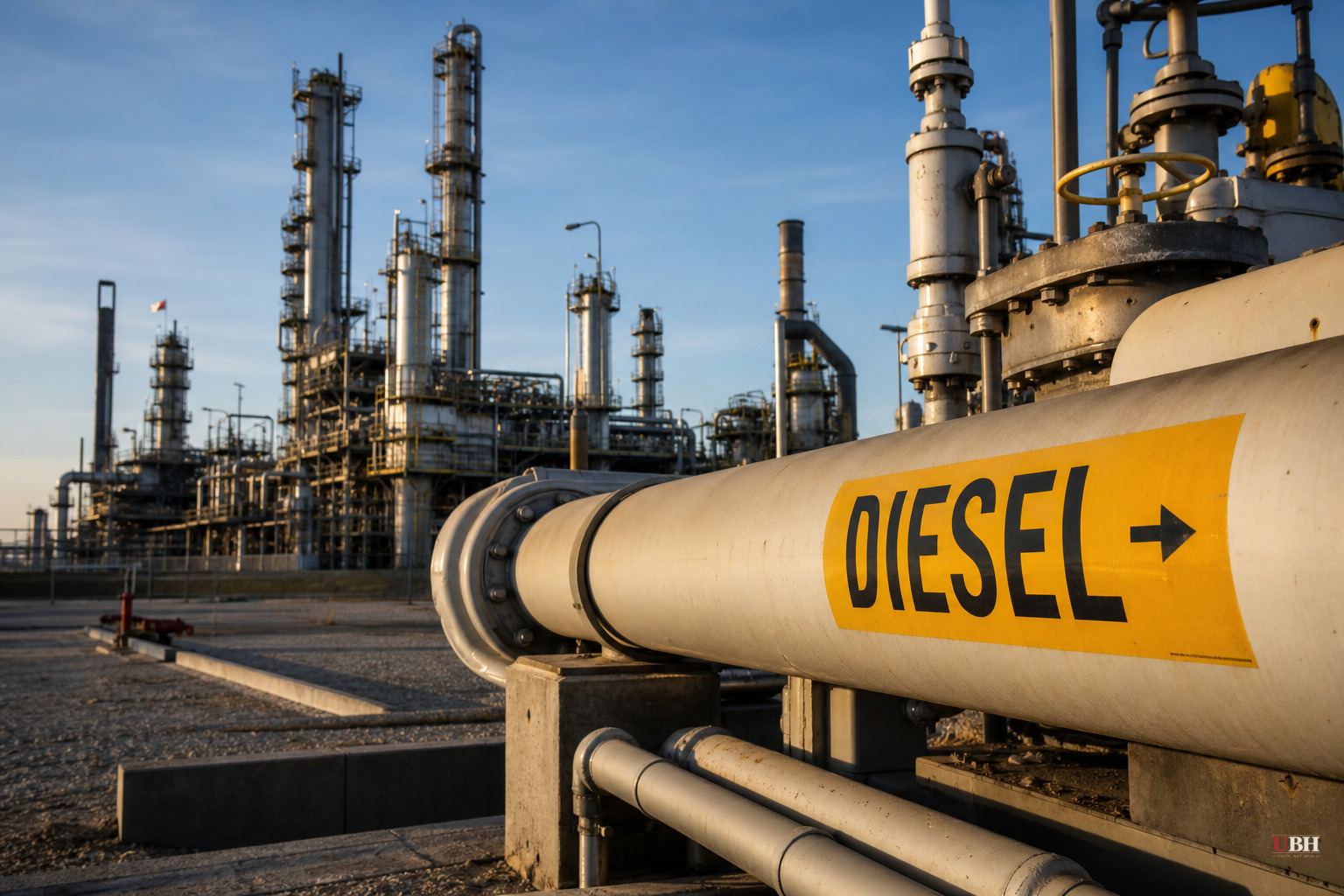
Crude oil is sitting around $85 a barrel. Diesel is trading near $180. That gap, the diesel crack spread, hit an all-time high of $102.20 a barrel on Monday, August 17, according to Bloomberg data reported by ZeroHedge and confirmed by Reuters reporting cited in FreightWaves. Normal is $15 to $25. This is four to six times that.
Nobody puts crude in their tank. Jeff Currie, former Goldman Sachs commodities chief and now co-chair of Abaxx Markets, put it bluntly on CNBC: "Nobody on the planet earth consumes crude oil. Refineries do. Everyone else consumes gasoline, diesel and jet fuel, and those markets look considerably uglier."
Three refining hubs are down, one is left standing
Enverus estimates 7 to 8 million barrels a day of global refining capacity is offline. Roughly 5 million barrels a day of that is Russian capacity, knocked out by sustained Ukrainian drone strikes on refineries, according to Enverus. Another 2 million barrels a day is shuttered in the Middle East from drone attacks tied to the broader Iran conflict, per the same research.
Moscow responded by banning gasoline and diesel exports through the end of January 2027 to protect its own domestic fuel supply, CNN reported. Capital Economics estimates that puts about 40% of Russian refining capacity offline, or roughly 3% of global capacity. That ban directly cut off buyers like Brazil and Turkey, who are now competing with Europe and the U.S. for alternative barrels.
Meanwhile the Strait of Hormuz standoff between the U.S. and Iran has choked crude and refined product flows out of the Gulf, and refiners there have shifted output toward jet fuel, according to Longbridge reporting. This further squeezes diesel supply since the two fuels share refining capacity.
China, historically a major fuel exporter, cut its own exports to guard against domestic shortages after pulling back on crude imports earlier this year, per CNN. Enverus notes China has since resumed buying crude, an unresolved wild card for how tight the market stays.
That leaves the U.S. Gulf Coast as the last hub running at scale. American refiners are operating near 96% utilization, according to Enverus, with the Department of Energy pushing to squeeze out more. There is not much slack left, and hurricane season is now underway.
Who is actually cashing in
Record margins mean windfall profits for refiners not caught in a war zone. Shares of Marathon Petroleum and Valero Energy have more than doubled this year; Phillips 66 is up almost 90%, CNN reported. Bob McNally, founder of Rapidan Energy Group and a former energy adviser to President George W. Bush, told CNN: "Refiners are going all-out. This is Christmas come early and come big."
Exxon and Chevron are also benefiting from the broader environment, with CNN citing Exxon profits running around $160 million per day.
Where it shows up next: your freight bill, then your grocery bill
RSM chief economist Joe Brusuelas calculated that diesel prices explain 46% of the variation in producer prices for truck transportation going back to 2004, according to 24/7 Wall St. He has warned that another round of grocery price increases is coming later this year as fuel and fertilizer costs work through the supply chain.
The lag is real. Producer prices were up 6% year-over-year in April while consumer prices were only up 3.8%, 24/7 Wall St. reported. It takes months for wholesale shocks to reach a receipt.
Retail diesel has actually eased since spring. Federal data for the week ending August 10 put the national average at $5.257 a gallon, down from a mid-May peak near $5.64, per 24/7 Wall St. Anyone arguing the crisis is overstated can point to that retail number. The counter, as Jefferies analyst Sam Burwell told 24/7 Wall St., is that "global oil-market tightness is manifesting itself in cracks, not crude, at least for now.
Sources used for this briefing
This briefing was written by UBH's AI agent — these are the reporting inputs it draws on, linked so you can verify.


