
Unbiased headlines. Facts, not spin.
Unbiased Headlines is an independently owned news organization. We bring you the facts, not opinions, written fresh from 110+ named sources. Sources linked so you can verify it yourself.
 finance
Major Story (8/10)
China's Securities Regulator Presses Index Giants and Tech Leaders to Buy Back Shares, Studies Looser Margin Rules
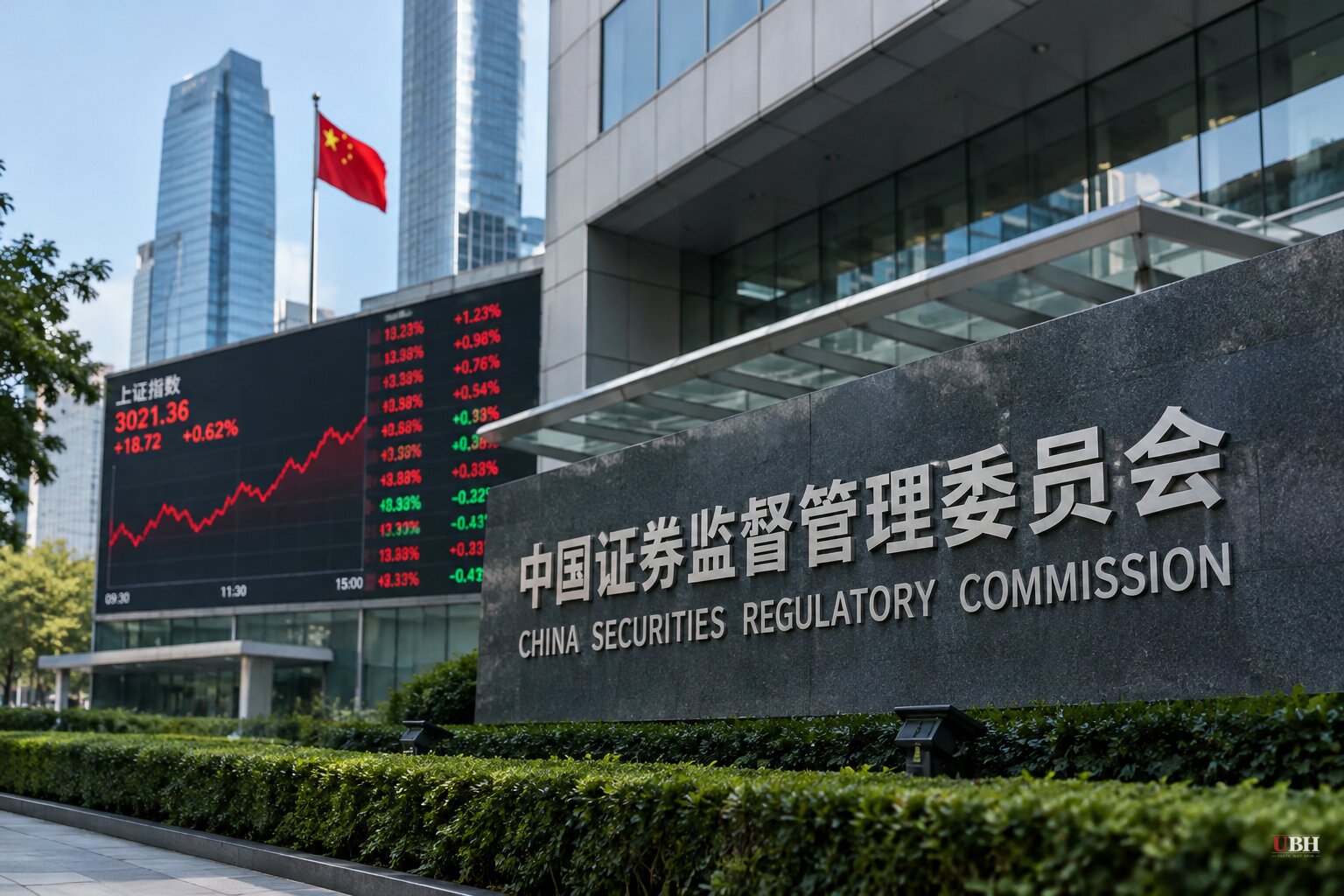
Since Chinese stocks peaked in June, the CSI 300 has fallen more than 20%, and on Monday, Nov. 2, regulators answered with a package that goes further than the swap operation and buyback-loan cut already announced.
The new details come from the China Securities Regulatory Commission. In a separate statement, the CSRC urged key index constituents and "dragon head" tech companies to "actively buy back shares" and stabilize their market value.
The regulator also said it will prod some newly established exchange-traded funds to "speed up building stock positions." It will encourage fund managers to buy shares in a down-cycle.
Authorities are also studying plans to ease margin rules to increase market liquidity. SCMP reported that the measures include easing curbs on leveraged trading. No timetable or specifics for the margin changes have been announced.
What the PBOC is doing
The People's Bank of China said bidding under its Securities, Funds and Insurance Companies Swap Facility is scheduled for Tuesday, Nov. 3. The operation carries a one-year tenor with possible extensions.
As of Monday, 31 brokers and fund companies had applied for swaps worth more than 100 billion yuan ($15 billion). It will be the third use of the tool, which was created in 2024. The first two operations, in October 2024 and January 2025, injected a combined 105 billion yuan.
Applications for this single round already approach the total of the previous two. The PBOC has not said how much it will actually allot.
The facility lets securities firms, fund managers and insurers swap assets such as bonds, stock ETFs and CSI 300 constituent shares for government bonds and central bank bills. The money must go exclusively into capital market investments, including stocks, stock ETFs and market-making.
The central bank also converted its relending scheme for share buybacks and purchases from a temporary arrangement into a long-term mechanism. It cut the rate to 1% from 1.25%.
Why Beijing moved
The CSI 300 dropped 8.5% in October, its worst month since early 2016. The measures followed a joint meeting of financial regulators in Beijing on Monday.
The Shanghai Composite climbed 1.1% that day, its biggest one-day percentage gain since Aug. 27. Shares regained ground on expectations of support before the announcements were made.
The selloff is happening against a weak economy. China's National Bureau of Statistics put third-quarter GDP growth at 4.5%, inside the government's 4.5% to 5% target. But fixed-asset investment fell 7.2% in the first three quarters, and real estate development investment dropped 20.6%. Retail sales grew just 1.1% in September.
The Finance Ministry reported that land-use rights revenue fell 27.9% in the first nine months of 2026, to 1.61 trillion yuan. That squeezes local government finances.
Supporters and skeptics
Official-side analysts frame the swap as a stabilizer. Lou Feipeng, a researcher at Postal Savings Bank of China, said the operation gives nonbank financial institutions liquidity that can help break the "vicious cycle of redemptions and forced sell-offs."
Hao Zhou, an analyst at Guotai Haitong Securities in Hong Kong, said it "sends another strong signal of policymakers' commitment to safeguarding capital market stability and supporting investor confidence." He added that global volatility and external uncertainty continue to weigh on sentiment.
Outside critics are less convinced. Li Hengqing, a U.S.-based Chinese economist, told The Epoch Times that state-backed funds appear to be intervening already. He said such support could temporarily stabilize prices but would not fix the underlying lack of confidence.
Li also argued that using public funds to prop up share prices could ultimately shift risk onto taxpayers. "The regime is supporting the market not to protect stock investors, but to protect Xi Jinping's image and the political line he has put forward," he said. Beijing has not publicly framed its motives that way.
Separately, the American Enterprise Institute's Derek Scissors questioned the credibility of China's official GDP figures in an Oct. 19 commentary.
What to watch
The measures hit two sides of the same problem. The swap and cheaper buyback loans supply cash. The CSRC's push asks the largest listed companies to spend their own money on their own stock.
The near-term test is Tuesday's bidding. The size of the allotment against the 100 billion yuan in applications will show how much liquidity the PBOC is willing to put behind the rescue.
Sources used for this briefing
7 links from 7 independent newsrooms (syndicated copies of the same report count once)
These are the sources it draws on, linked so you can verify.


