
Unbiased headlines. Facts, not spin.
Unbiased Headlines is an independently owned news organization. We bring you the facts, not opinions, written fresh from 110+ named sources. Sources linked so you can verify it yourself.
 finance
Major Story (7/10)
China Raises Bank FX Reserve Ratio to 6% From 4% After Yuan Gains More Than 5% This Year
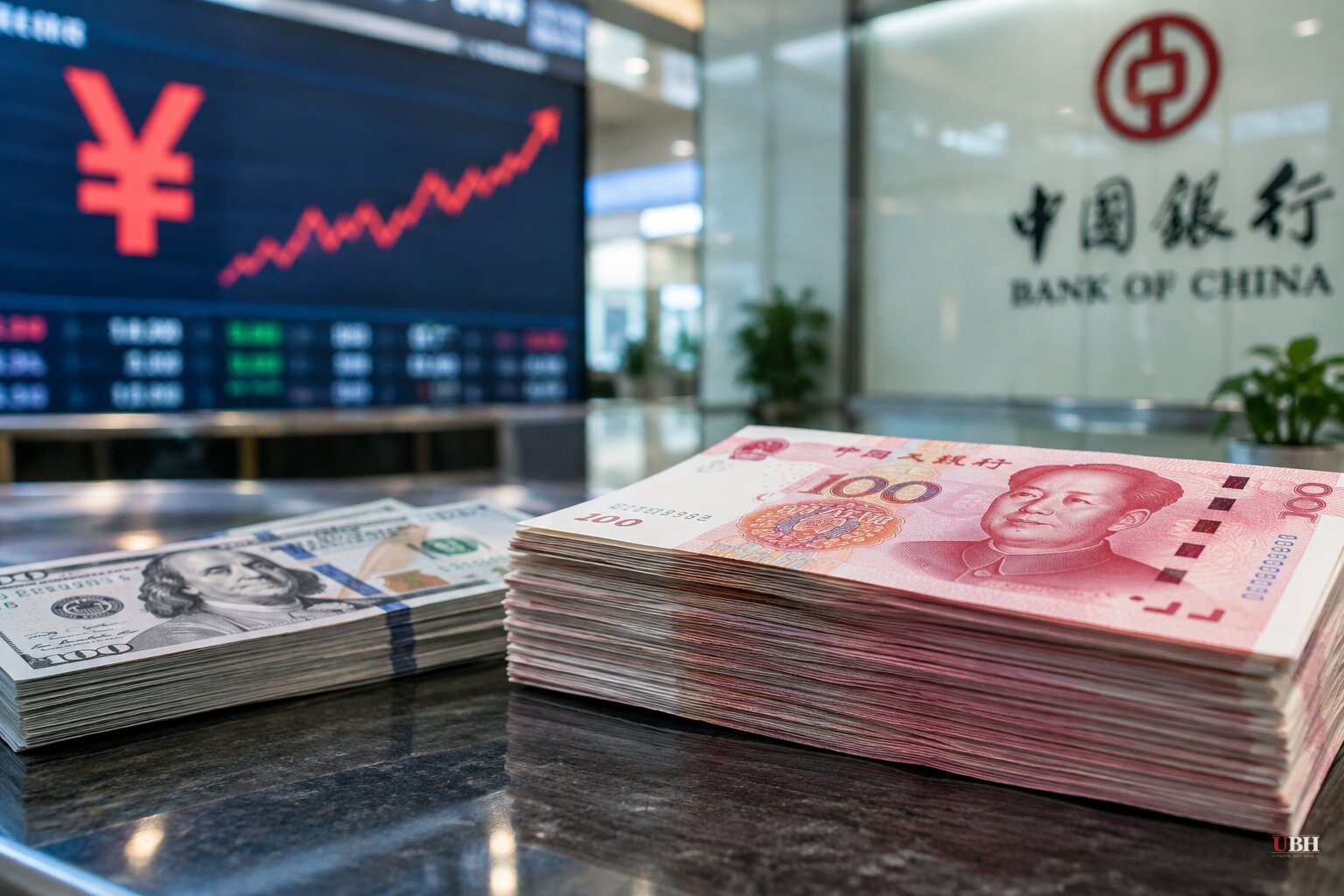
The yuan has gained more than 5% against the dollar this year, making it one of Asia's best-performing currencies. On Tuesday, Nov. 3 in Beijing (Monday night in New York), the People's Bank of China moved to slow that run.
The central bank said it will raise the foreign exchange reserve requirement ratio for financial institutions by 2 percentage points, to 6% from 4%, effective Nov. 15. In its online statement, the PBOC said the change is "aimed at strengthening the management of foreign exchange liquidity in financial institutions."
It did not mention the yuan's rate.
How the tool works
The ratio applies to deposits held in foreign currencies, mostly U.S. dollars. A higher ratio forces banks to park more of those dollars with the central bank. That leaves fewer to lend, invest or sell onshore.
Scarcer dollars at home make the yuan relatively cheaper against them. That takes some heat out of appreciation.
Reuters calculated, using official FX deposit data, that the change will withdraw an extra $24 billion from the financial system. That is a modest sum against the size of China's currency market. When the PBOC cut the ratio by the same 2 points in 2022, ANZ estimated the move would add roughly $20 billion of foreign currency to the market.
The market reaction
The offshore yuan weakened as much as 0.3% to 6.6664 per dollar, heading for its first decline in almost three weeks, according to Bloomberg. Dow Jones Newswires put the dollar up 0.3% at 6.6639 yuan after touching 6.6666.
The move reverses the PBOC's September 2023 decision to cut the ratio. That cut came when the yuan was falling quickly and capital was leaving the country. The problem now is the opposite.
The yuan's strength has been underpinned by robust exports, massive trade surpluses and heavy corporate FX conversion, according to Reuters. The currency reached a multi-year high against the dollar, Dow Jones reported.
What analysts say
Marco Sun, chief financial market analyst at MUFG (China), said the PBOC "is responding to strong market-driven yuan appreciation." By absorbing dollar liquidity, he said, it is trying "to reduce the momentum behind yuan appreciation and prevent the market from developing excessive one-way expectations."
Zhiwei Zhang, chief economist at Pinpoint Asset Management, said the PBOC "has sent a clear message to the market that it is concerned about the fast appreciation of the yuan." He added: "China's economy heavily depends on exports. A moderate appreciation may be tolerated, but the speed in October likely raised concerns."
That comment points to a tension. Dow Jones reported that Beijing has come under pressure from major trading partners to let the yuan strengthen faster, which would make Chinese exports less competitive and help rebalance trade surpluses. Chinese policymakers, by contrast, have signaled a preference for mild, gradual appreciation.
Investing Live described the step as a "warning shot" with a modest direct liquidity effect. Its analysis said it gives USD/CNY and USD/CNH a floor near current levels rather than reversing the trend outright.
It also said a PBOC leaning against appreciation tends to temper gains in currencies that trade alongside the yuan, such as the Korean won and Taiwan dollar, and can weigh at the margin on the Australian dollar. Those are the outlet's projections, not observed moves.
Not the only lever
The PBOC has other tools in play. The Standard's headlines the same day pointed to a central bank liquidity tool being used to fund share purchases and a continued shift toward an overnight policy rate as its anchor. A separate Bloomberg item cited China vowing to boost yuan liquidity and back Hong Kong markets.
So the central bank is managing a stronger currency on one side while supporting domestic markets on the other.
Investing Live also noted that the U.S. dollar was already softer on hopes for Iran diplomacy. If the dollar weakens further, it said, the PBOC may need stronger signals to hold the line.
What comes next
The higher ratio takes effect Nov. 15. Until then, the daily yuan fixing is the main thing traders will watch for follow-through. If the yuan resumes its climb after the rule kicks in, traders will want to know whether Beijing reaches for a bigger move or accepts faster gains.
Sources used for this briefing
5 links from 5 independent newsrooms (syndicated copies of the same report count once)
These are the sources it draws on, linked so you can verify.


