
Unbiased headlines. Facts, not spin.
Unbiased Headlines is an independently owned news organization. We bring you the facts, not opinions, written fresh from 110+ named sources. Sources linked so you can verify it yourself.
 finance
Major Story (7/10)
Event date: November 1, 2026 ·
JPMorgan Puts Democratic Sweep at 66% Ahead of Tuesday's Midterms, Expects Only a Small Market Move
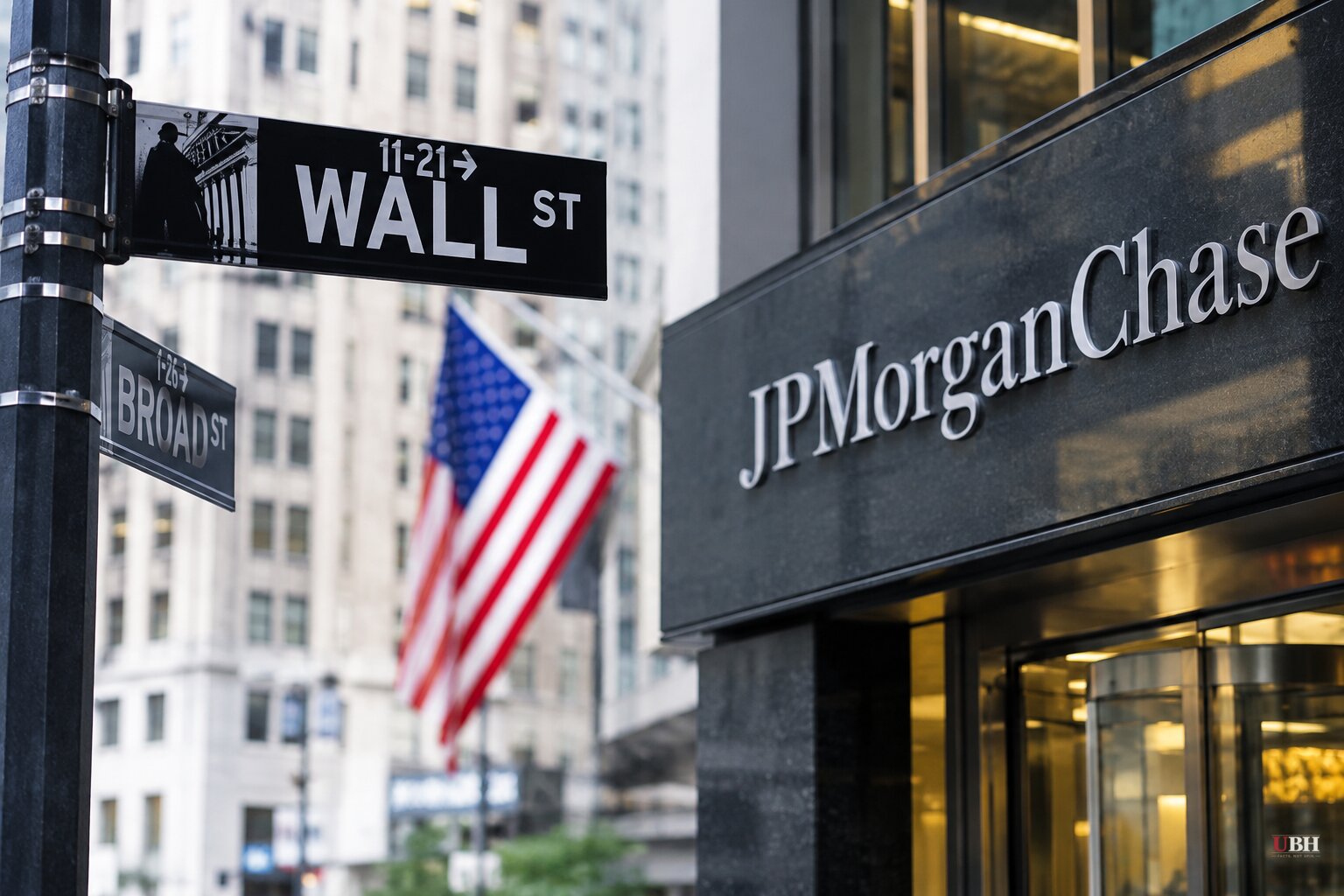
Voters go to the polls Tuesday, Nov. 3, with all members of the House of Representatives and about one-third of the Senate on the ballot. Wall Street has already priced in a view of how it might go.
JPMorgan's scenario work, published ahead of the vote, assigns a 66% likelihood to a Democratic sweep of the House and Senate. It puts a split Congress with Democrats running the House and Republicans the Senate at 26%. Republicans holding both chambers is 7%. A GOP House with a Democratic Senate is 1%.
What JPMorgan expects stocks to do
The firm's projected S&P 500 moves are small in every case.
- Democratic sweep: anywhere from a 0.25% drop to a 0.50% gain.
- Democratic House, GOP Senate: a gain of 0.5% to 1%, on relief that gridlock leaves neither party with enough power to push policies or increase spending.
- Republicans hold both chambers: a gain of 1% to 1.25%, because it introduces no new regulatory risks.
- GOP House, Democratic Senate: a gain of 0.25% to 0.75%.
In the sweep scenario, JPMorgan flags a possible selloff in AI stocks if the result means greater regulation of data centers and tech companies. But the firm expects any bill limiting AI expansion would be unlikely to overcome a Trump veto, and it says traders should buy any dip in tech stocks.
The firm also expects lower long-dated Treasury yields if Democrats control government finances. A Republican hold, by contrast, could push those yields higher on ever higher deficit spending.
JPMorgan lists "investigation risk" for business leaders tied to donations to Trump as a factor in the Democratic sweep scenario, and says investigation risk for certain business sectors and leaders would also remain in the Democratic House/GOP Senate split. In the GOP House/Democratic Senate case, it notes the Senate holds investigative powers.
Why the firm says not to overreact
Ian Hui, a global market strategist at J.P. Morgan Asset Management, wrote on Oct. 14 that polls pointed to Democrats potentially taking at least one chamber, with a rising chance of winning both. He said that would make Trump's domestic agenda harder to pass, though major shifts in policy direction are still unlikely.
Hui's advice to clients: "Investors should stay focused on fundamentals rather than politics." He argued that growth, inflation, earnings, interest rates and Fed policy should remain the bigger drivers of returns.
JPMorgan's Chase analysts Kriti Gupta and Nick Roberts made a similar point on Oct. 30. They wrote that the S&P 500 remains within 1% of its all-time high despite questions over AI spending, strain in European government bond markets, uncertainty around the midterms and renewed fears of military escalation in Iran.
They also cited history. Over the last 29 years, the S&P 500 has averaged a 2.3% gain in November, the strongest of any calendar month. In midterm election cycles, when the White House isn't on the ballot, November has averaged a 2.75% return. In the six months that follow, the S&P 500 has averaged gains of about 13%. Their note carries the standard caveat that outlooks and past performance are no guarantee of future results.
The Chase analysts added that the midterm cycle's two key long-term market implications, the AI debate and fiscal spending, may already be priced in by investors.
On AI, they said investor fears of a federal freeze on the data center buildout shifted over the summer to the state level, where most of the public backlash was felt. New York and Texas, two states on opposite sides of the political spectrum, announced data center moratoriums or holds that served as an overhang on the utilities sector.
Where the market stands going in
The S&P 500 and the Nasdaq Composite opened November's trading with losses as investors sold off tech stocks on Monday. The Wall Street Journal described the session as mixed, with percolating AI fears offsetting oil relief.
Iran is the other open variable. Asked whether the U.S. plans to resume strikes on Iran after the midterms, Trump twice replied "No." The Chase analysts nonetheless flagged renewed fears of military escalation in Iran, which could happen shortly after the vote, as a market risk. JPMorgan's scenario, as reported by CNBC, notes that a Republican hold could mean Trump continuing his war with Iran.
Money on the outcome
More than $1.2 billion has been traded on Kalshi's midterm markets for the 2026 election, surpassing the platform's volume during the 2024 presidential election year, according to data Kalshi shared exclusively with Fox News Digital. The markets cover House, Senate and gubernatorial races, plus control of each chamber come January 2027.
The data shows a gap between local and outside bettors in two Senate races. In Maine, out-of-state traders are putting more money on Democrat Troy Jackson than in-state traders: 61% versus 36%. In Michigan, 65% of out-of-state traders' money is on Democrat Abdul El-Sayed, compared with 49% of in-state traders' money.
Traders also split by profession. Law enforcement traders put 67.9% of their dollars on Republicans, the biggest GOP lean among the listed industries. Arts and entertainment traders put 60.1% on Democrats, the strongest Democratic tilt. Mining, energy and chemicals traders put 62.6% on Republicans, and education traders put 58.3% on Democrats. Legal services and electronics traders were nearly split. Fox News notes the figures show where traders expect the races to land, not which party they personally support or how workers in those industries plan to vote.
What comes next
Polls open Tuesday, Nov. 3. The result will show whether stocks stay inside JPMorgan's narrow projected ranges. The Senate result is the sharper dividing line in the firm's scenarios: whether it goes Democratic determines if its stock-market range runs from slightly negative to slightly positive, or stays positive across the board.
Sources used for this briefing
7 links from 5 independent newsrooms (syndicated copies of the same report count once)
These are the sources it draws on, linked so you can verify.


