
Unbiased headlines. Facts, not spin.
Unbiased Headlines is an independently owned news organization. We bring you the facts, not opinions, written fresh from 110+ named sources. Sources linked so you can verify it yourself.
 finance
Major Story (8/10)
PBOC Schedules $15 Billion Swap Operation and Cuts Buyback Loan Rate to 1% After CSI 300's Worst Month Since 2016
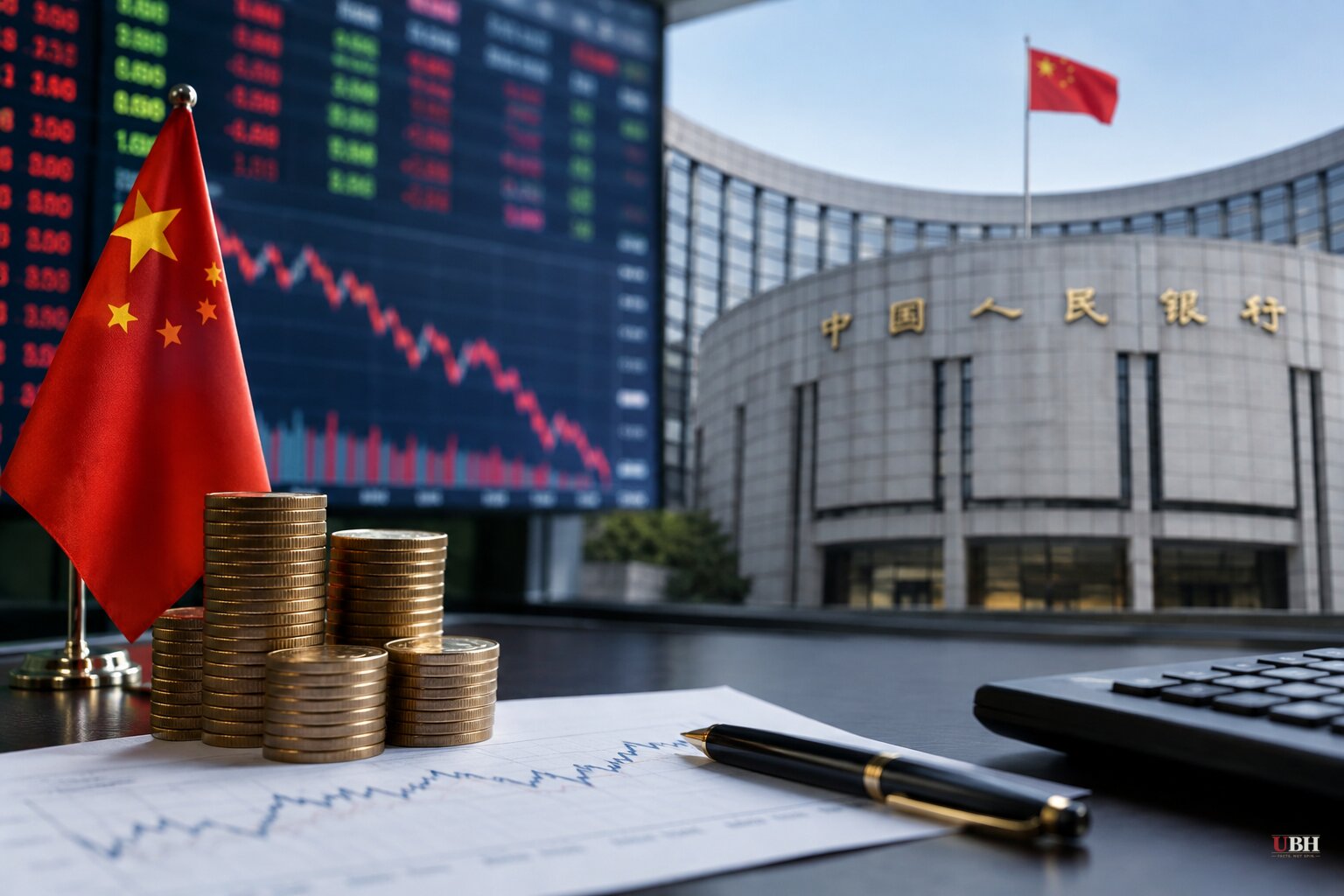
Since China's key stock indexes peaked in June and slid more than 20% into bear-market territory, Beijing has been intervening in pieces. On Monday, Nov. 2, it unveiled a broader package.
The People's Bank of China said it will conduct a new round of its securities, funds and insurance companies swap facility (SFISF) on Tuesday, Nov. 3. The tenor is one year, with possible extensions, the central bank said in a statement.
Thirty-one securities firms and fund managers have already applied for more than 100 billion yuan (about $15 billion), according to the PBOC.
How the facility works
The SFISF was introduced in October 2024. It lets eligible brokers, fund managers and insurers swap assets such as bonds, stock ETFs and CSI 300 constituent shares for highly liquid assets such as government bonds and central bank bills.
The PBOC says money raised through the facility must go exclusively to capital-market investment, including stocks, stock ETFs and market-making.
This is the third time the central bank has used the tool.
The rest of the package
The PBOC also said its re-lending scheme for share buybacks and purchases will move from a temporary arrangement to a long-term mechanism. The interest rate on the expanded scheme drops to 1% from 1.25%.
The China Securities Regulatory Commission put out a separate statement. It urged key index constituents and "dragon head" tech companies to "actively buy back shares" and stabilize their market value.
The regulator will also push some newly established ETFs to "speed up building stock positions." It is encouraging fund managers to buy shares in a down-cycle.
Regulators are also studying plans to ease margin rules to boost market liquidity, and the South China Morning Post reported the measures include easing curbs on leveraged trading. No final margin rule has been announced.
The announcements followed a joint meeting of the PBOC, the CSRC and other financial regulators in Beijing on Monday.
The slide behind it
The benchmark CSI 300 fell 8.5% in October, its worst month since early 2016. ZeroHedge reported the index also logged a record 12 straight weekly losses through last Friday.
Shares regained ground Monday on expectations of support, and ZeroHedge put the CSI 300's gain at 0.8% and the STAR 50's at more than 3%.
The damage runs deepest in tech. CNN reports the STAR 50, which holds China's homegrown AI and chip leaders, is down more than 40% from its June peak. Humanoid robot maker Unitree, which jumped 600% in its August Shanghai debut, has since halved. Memory chipmaker CXMT is down nearly 30% from its August high.
The Hang Seng is down more than 12% this year, per CNN.
Last week Beijing put roughly $19 billion into exchange-traded funds, according to Bloomberg data cited by CNN. That was its largest intervention since early 2025. The CSI 300 still closed down 1% on Thursday.
Will it hold?
Supporters of the move see it as a liquidity fix. Hao Zhou, an analyst at Guotai Haitong Securities, said the new swap round "sends another strong signal of policymakers' commitment to safeguarding capital market stability and supporting investor confidence."
Yuan Weitao, a fund manager at Guofulianhe, told Bloomberg the move supplies "crucial incremental liquidity at a time when the market lacks fresh capital to absorb selling pressure." He described the approach as more measured than large-scale funding after every sharp decline.
Others doubt the staying power. Lorraine Tan, director of equity research in Asia at Morningstar, told CNN that measures to lift sentiment "tend to be short-lived if there are no policies to address underlying key issues." She pointed to excess capacity in many sectors, a drag from weak fiscal spending this year, and the need to boost domestic consumption.
Gary Ng, senior economist at Natixis, attributed the selloff to "a repricing of crowded AI trades, weak domestic demand, and the lack of stimulus."
Stephen Innes of SPI Asset Management said Beijing seems "increasingly uncomfortable" letting the rout build momentum while the AI trade is under pressure globally. Whether officially encouraged buying can restore genuine confidence, he said, is "another matter."
The backdrop is a Chinese economy weighed down by sluggish consumption and a prolonged property-sector debt crisis, as the Business Times describes it.
What comes next
The swap bidding takes place Tuesday, Nov. 3. The PBOC has said applications exceed 100 billion yuan, but the final allotment and how much of it reaches the stock market will only be known after the operation.
The margin-rule changes regulators are studying have no announced details or timeline.
Sources used for this briefing
6 links from 5 independent newsrooms (syndicated copies of the same report count once)
These are the sources it draws on, linked so you can verify.


